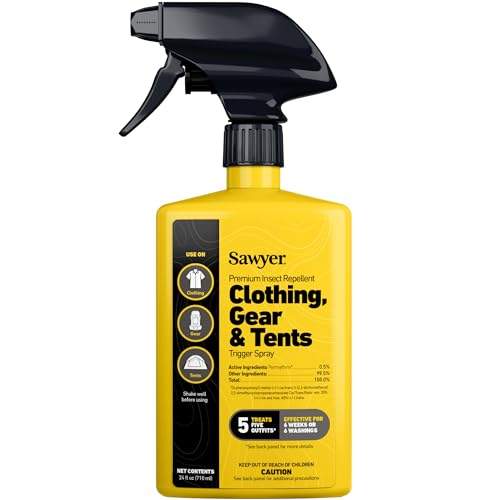
Sawyer Permethrin Fabric Treatment Insect Repellent, 24 oz Trigger Spray
The clothing-and-gear treatment the CDC's tick advice points at: Sawyer says it bonds to fabric fibers for up to 6 weeks or 6 washings, at 4.5 oz per outfit, and it is the only product here with a cited tick-bite study behind it.
#ad · Price as of November 20, 2026 · Disclosure for the link to Sawyer Permethrin Fabric Treatment Insect Repellent, 24 oz Trigger Spray
Quick picks
The rankings at a glance
| # | Product | Best for | Score | Price |
|---|---|---|---|---|
| 1 | Sawyer Permethrin Fabric Treatment Insect Repellent, 24 oz Trigger Spray The clothing-and-gear treatment the CDC's tick advice points at: Sawyer says it bonds to fabric fibers for up to 6 weeks or 6 washings, at 4.5 oz per outfit, and it is the only product here with a cited tick-bite study behind it. | Best tick repellent for turkey huntingBug repeller | 9.3out of 10 | $15.70Sawyer Permethrin Fabric Treatment |
| 2 | 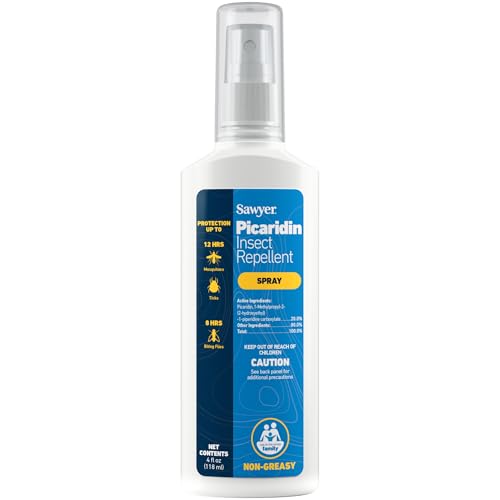 Sawyer Premium 20% Picaridin Insect Repellent, 4 oz Pump Spray Ties the permethrin at 9.3 on the rubric and does a completely different job: 12 published hours on ticks and mosquitoes, 8 on biting flies, gnats and chiggers, and the only pick whose maker says it is safe on synthetic fabrics and optics. | Best skin repellent, and the one to pair with the permethrinBug repeller | 9.3out of 10 | $10.99Sawyer Premium 20% Picaridin |
| 3 | 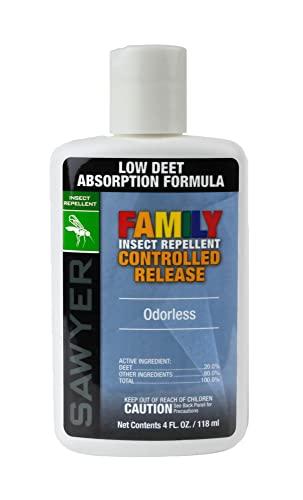 Sawyer Premium Family Insect Repellent Controlled Release, 20% DEET 4 oz Lotion Eleven published hours from one application, with a 67 percent cut in DEET absorption - but Sawyer does not claim gnats or biting flies for it, and says nothing about DEET on your synthetics. | Best DEET option for an all-day sitBug repeller | 9.1out of 10 | $8.49Sawyer Premium Family Insect |
| 4 | 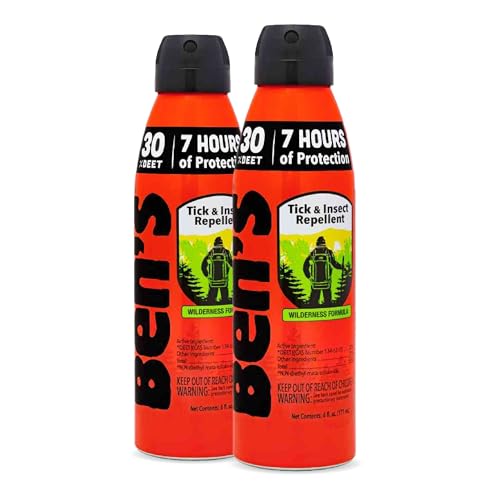 Ben's 30 Tick & Insect Repellent, 6 oz Eco-Spray 30% DEET and the only maker here that reprints its whole label, including the lines that keep it off synthetics, plastics and leather - which is most of what you are wearing and carrying. | Strongest DEET concentration, with the honest labelBug repeller | 8.6out of 10 | $15.10Ben's 30 Tick & Insect Repellent |
#ad · Prices come live from Amazon, last checked November 20, 2026. Scores are ours, built from published specs and maker claims against the rubric on our methodology page, and published on our 8.4-9.8 recommendation scale. Photos come from each product's Amazon listing. Tap a row for the full write-up.
How we picked
Four rules decided this list before any product was looked at, and the first one rules out most of what gets sold as a hunting bug product.
- It has to be labeled for ticks. Not “insects,” not “bugs,” not mosquitoes with ticks implied. All four picks name ticks on the maker's own page, and three of them name Lyme disease. That alone eliminated the mosquito repellers already in our registry.
- The active ingredient has to be one the CDC points at. The CDC's tick-prevention guidance names two routes: treating clothing and gear with products containing 0.5% permethrin, and using an EPA-registered repellent on skin. Permethrin, picaridin and DEET are the three chemicals below.
- The maker has to publish specifications we can link. Every figure on this page is the company's own published claim, read on 2026-11-09, and every one of them links back to the page it came from. Where a maker publishes nothing we have written that, rather than borrowing a number off a retailer listing.
- It has to be purchasable right now. All four returned a live, in-stock Amazon listing on 2026-11-09.
From there the ranking is the accessory rubric published with our First-Season Score — documented function 30%, ease of use 25%, build 20%, carry and weight 15%, warranty 10%. Two of those metrics need reading differently for a bottle of chemicals than for a piece of hardware, so here is exactly how we read them:
- Carry and weight (15%) is what you have to take into the woods and how often you have to stop and use it. On that reading the permethrin scores a 10 for carrying nothing at all: the treatment is on your clothes before you leave the truck, and Sawyer says it holds for six weeks.
- Warranty (10%) separates nothing here. Not one of these four publishes a warranty, so all four score the same 4 and the metric does no work. We show it anyway, because dropping a metric when a category performs badly on it would flatter the category.
Why this matters in spring specifically
There is no gentle way to put this: spring gobbler season and peak nymphal tick activity are the same weeks of the calendar in most of the turkey range. You are sitting still on the ground, with your back against a tree, in leaf litter, in the exact habitat and the exact months when ticks are looking for a host. Deer season puts you in a stand above the ground in November. Turkey season puts you on the ground in May.
And the way you hunt makes it worse rather than better. Run-and-gun hunting means walking through brush and tall grass between setups, which is how ticks get picked up, and then sitting down in it for forty minutes, which is how they get time to find skin. If you hunt out of a ground blind you are better off; if you are moving and sitting, moving and sitting, you are collecting them all morning.
This is the same reason the legs get their own gear page on this site. Best turkey hunting pants ranks spring pants partly on insect treatment, and best turkey hunting camo covers factory-treated garments. If you would rather buy the protection built in than spray it on, the EPA says it has reviewed the data for permethrin factory-treated clothing and found the clothing effective in repelling target pests. That is the expensive route. This page is the cheap one.
This is a two-product problem
The single most useful thing to understand before you spend anything: permethrin and skin repellent are not competitors. They cover different surfaces and they fail in different places, and the CDC's guidance names both because neither is sufficient alone.
Permethrin goes on fabric. Clothing, boots, the outside of a vest, a seat cushion, a blind. Sawyer says it bonds to fabric fibers for up to 6 weeks or 6 washings, whichever comes first. It is not a barrier you reapply; it is a treatment you do once before the season and forget. It never goes on skin.
Picaridin and DEET go on skin. Hands, wrists, neck, face, the gap between a glove and a sleeve. They are measured in hours, which means they are a reapplication schedule, not a treatment.
A tick that climbs your boot and pant leg meets permethrin. A tick that drops onto your wrist while you are reaching for a call meets whatever is on your skin. Buy one and you have covered half the routes in. This is why the top two picks here tie rather than one beating the other.
The four, side by side
Every value links to the maker page it came from. A dash means the company does not publish that figure anywhere a buyer can read it, and the score treats the silence as missing rather than assuming the best.
Read the gaps as findings. Not one of these four prints an EPA registration number on its product page. Sawyer never states the permethrin percentage, which is the one number the CDC's guidance names. Ben's names 30% DEET but no duration. These are consumer pesticides sold on documentation, and the documentation is thinner than the category's confidence suggests.
Why the top two tie, and how we broke it
The Sawyer permethrin and the Sawyer 20% picaridin both score 7.9 rubric points and both publish at 9.3. That is not a fudge; they arrive there from opposite directions.
The permethrin wins documented function and carry. It is the only pick with a cited third-party tick figure behind it — Sawyer points to a 2011 University of Rhode Island study in which treated shoes and socks made a tick bite 73.6 times less likely — it publishes a dose (4.5 oz per outfit, which it attributes to the EPA), a duration, and a drying time. And you carry nothing: a 24 oz bottle treats roughly five complete outfits and then sits in the garage for six weeks.
The picaridin wins ease of use. It is a pump spray. There is no drying window, no planning, no “I should have done this on Thursday.” Sawyer also publishes the thing no other pick here addresses: picaridin is “safe for use on clothing, backpacks, synthetic fabrics, watches, sunglasses” and “won't damage plastics or synthetic coatings.” If you have ever watched DEET haze a scope ring or go tacky on a rifle stock, that sentence is worth money.
We broke the tie toward the permethrin for one reason, and it is a turkey-hunting reason rather than a chemistry one. Ticks reach you from the ground up: through leaf litter onto boots, up pant legs, onto the back of a vest leaned against a tree. The CDC's tick guidance names clothing treatment first for exactly that reason. A skin repellent protects the places a tick arrives at last.
Permethrin, picaridin and DEET
Permethrin. A synthetic pyrethroid — Sawyer calls it “a synthetic version of the Chrysanthemum flower's natural insect repellent pyrethrin.” It goes on fabric, bonds to the fibers, survives washing a published six times, and both repels and kills. It is the only chemical here that is not a barrier on you. Two cautions that are not marketing: it is toxic to cats until it has completely dried, and it is harmful to fish, so where you spray and where it dries both matter.
Picaridin. Sawyer describes it as “derived from piperine in pepper plants.” At 20% it publishes up to 12 hours on mosquitoes and ticks and 8 hours on biting flies, gnats, chiggers and sand flies, and it is the one skin repellent here that its maker clears for use around synthetic fabric and optics. Sawyer also publishes use during pregnancy and on children as young as six months, which neither DEET pick addresses.
DEET. The oldest and most studied of the three, and the one with a materials problem. Sawyer's controlled-release lotion runs 20% DEET encapsulated in a protein that dissolves slowly, which it says extends effectiveness to 11 hours and cuts absorption by 67 percent per application — a genuinely interesting trade. Ben's 30 runs the strongest concentration here at 30% and is water-based rather than alcohol-based, so it goes on without the sting. But Ben's own label says to keep it “off synthetics, plastics, furniture, and painted surfaces” and that it “may damage leather.”
Take that last line seriously in this sport specifically. A turkey hunter is wearing synthetic camo, sitting on a synthetic vest seat, with a plastic-stocked shotgun, a coated red dot and leather boots. There is almost nothing in a turkey setup that a DEET label does not warn you about. It is still a legitimate choice for skin — just wash your hands before you touch your binoculars or your optic.
What nobody in this category publishes
Three gaps run across all four picks, and they are the reason no product here breaks 9.4.
- EPA registration numbers. These are registered pesticides and the number is printed on every bottle, but not one of the four product pages shows it. That matters because the registration is what the EPA's own search tool indexes: without the number you cannot look up what a product is actually registered to repel and for how long.
- The permethrin percentage. Sawyer's page never states it. The CDC's guidance names 0.5% specifically, so a buyer following that guidance has to read the physical label to confirm the match. It is a strange thing to leave off the page that sells the product.
- Warranties. None, from anyone. Sawyer offers an open-ended “if at any point you are unhappy with a Sawyer product, email us” and a published 10+ year shelf life, which is more than the others give you, and it is still not a warranty.
There is also one internal contradiction worth naming, because we docked a point for it. The Sawyer picaridin product page says the spray is “effective for up to 12 hours against mosquitoes and ticks,” and the FAQ on the same page says “up to 14 hours.” Sawyer attributes 14 hours to the lotion elsewhere, so the likeliest reading is a shared FAQ block. We scored the 12-hour figure because that is the one in the spray's own description.
Treating a vest, boots and a blind
Permethrin is the pick that needs instructions, so here is the whole job in Sawyer's own published numbers.
- Do it outdoors, and do it early. Not the morning of the hunt. Sawyer says to let treated items air dry “at least 2 hours or longer, until fully dry,” and its FAQ puts the real figure at 2 to 4 hours depending on humidity. Treat on a Saturday afternoon for the following weekend and you will never think about it again.
- Use the published dose. Sawyer says the EPA recommends 4.5 oz per outfit — shirt, pants and socks. That is why the 24 oz bottle is the one to buy: it is roughly five complete outfits, and a turkey hunter has more than one set of camo.
- Spend the spray where ticks arrive. Boots and the tops of socks first, then pant legs from the knee down, then the cuffs. That is the route. Shirt and sleeves next. The boots page makes the same argument from the other direction: boots count as gear under the CDC's wording.
- Treat the things that are not clothing. The outside of your vest. The seat cushion you sit on in leaf litter. The ground blind, if you leave it out. A turkey chair or cushion is the single most overlooked permethrin target, because it is in contact with the leaf litter for the whole sit.
- Hang it where the cat cannot get to it. Sawyer is explicit that permethrin is toxic to cats until it has completely dried, and harmful to fish. A garage line or a fence, not the laundry room floor.
- Redo it at six weeks or six washings. Whichever comes first. In most states that is one treatment for the whole spring season, or two if you wash camo often.
Your Thermacell is not a tick product
This needs saying because it is the most common mix-up in spring hunting gear, and we have a whole page on the device in question. A Thermacell repeller creates a zone of vapor-phase repellent around you and Thermacell publishes that zone in feet — 15 ft on the fuel models, 20 ft on the rechargeable. What Thermacell does not claim anywhere for those repellers is tick protection, and the reason is structural rather than a marketing oversight: ticks do not fly into a zone. They climb onto you from the vegetation you are sitting in.
Thermacell sells a separate tick product — tick control tubes you place on a property — which tells you how the company itself understands the difference. If mosquitoes and gnats are ruining your sits, the repeller is a genuinely good purchase and our Thermacell page reads the whole line against its own spec sheets. It is simply not on this page, because this page is about ticks.
The part no repellent does for you
Every product here is a reduction in risk, not an exemption from it, and the two habits that close the gap cost nothing.
Check yourself, properly, every time. The CDC's guidance pairs repellent use with a full body check after coming indoors and with showering within two hours. The checks that matter on a turkey hunter are the ones you will not do standing up: behind the knees, the belt line, the back of the neck under a face mask, and the hairline. That is where a nymph the size of a poppy seed goes unnoticed for two days.
Deal with the clothes. Heat kills ticks on fabric. Putting hunting clothes straight into a hot dryer rather than into a hamper is the simplest habit in this entire subject, and it does not conflict with permethrin: Sawyer's treatment is rated for six machine washings, so a tumble-dry costs you nothing.
If this is your first spring, both of those belong on the same list as the gear itself. The turkey hunting gear list has repellent in it for a reason, and what to wear turkey hunting covers tucking, layering and the gaps that a tick finds first. Where snakes are also a concern, the tall-boot argument in best snake boots for turkey hunting overlaps this one: the same boot height that keeps a fang out keeps a tick off a bare ankle.
In detail
The picks, in full
Rank 1
Best tick repellent for turkey hunting
Sawyer Permethrin Fabric Treatment Insect Repellent, 24 oz Trigger Spray
The clothing-and-gear treatment the CDC's tick advice points at: Sawyer says it bonds to fabric fibers for up to 6 weeks or 6 washings, at 4.5 oz per outfit, and it is the only product here with a cited tick-bite study behind it.
Spec sheetEvery row sourced to the maker
The rubric behind the 9.3
- Documented function (30%)
- 9
- Ease of use (25%)
- 6
- Build (20%)
- 9
- Carry & weight (15%)
- 10
- Warranty (10%)
- 4
Rubric points: 7.9 of 10, weighted as shown. Published as 9.3 on our recommendation scale, where 8.4 is the floor for a pick we would put in front of a first-season hunter. How the scale works.
What the specs support
- The only product here aimed squarely at ticks on clothing, which is the route the CDC's own tick-prevention page names.
- One treatment covers six weeks or six washings, so a single pre-season afternoon covers most of a spring.
- A 24 oz bottle treats roughly five complete outfits at Sawyer's published 4.5 oz dose - boots, vest and blind included.
- Odorless and non-staining once dry, which matters on camo you are about to sit still in for four hours.
- Sawyer publishes a cited third-party tick figure rather than a vague claim.
Where it falls short
- Sawyer does not print the permethrin percentage anywhere on the product page, and 0.5% is the number the CDC's guidance actually names - you have to read the bottle's own label to confirm it.
- Treating takes planning: outdoors, then at least 2 hours of drying (Sawyer's FAQ says 2 to 4), so it is useless as a fix on the morning of a hunt.
- Never goes on skin, so it does nothing for your hands, neck or face - you still need a second product.
- Toxic to cats until completely dry and harmful to fish, so where you spray and where it dries both matter.
- No warranty, and no EPA registration number published on the page.
Skip this if…
…you need protection today - the treatment has to be sprayed outdoors and air dried for at least two hours before the clothing can be worn, so there is no same-morning version of this product.
#ad · Price as of November 20, 2026 · Disclosure for the link to Sawyer Permethrin Fabric Treatment Insect Repellent, 24 oz Trigger Spray
Rank 2
Best skin repellent, and the one to pair with the permethrin
Sawyer Premium 20% Picaridin Insect Repellent, 4 oz Pump Spray
Ties the permethrin at 9.3 on the rubric and does a completely different job: 12 published hours on ticks and mosquitoes, 8 on biting flies, gnats and chiggers, and the only pick whose maker says it is safe on synthetic fabrics and optics.
Spec sheetEvery row sourced to the maker
The rubric behind the 9.3
- Documented function (30%)
- 8
- Ease of use (25%)
- 9
- Build (20%)
- 8
- Carry & weight (15%)
- 8
- Warranty (10%)
- 4
Rubric points: 7.9 of 10, weighted as shown. Published as 9.3 on our recommendation scale, where 8.4 is the floor for a pick we would put in front of a first-season hunter. How the scale works.
What the specs support
- Published tick protection, not just mosquito protection: up to 12 hours on both.
- The only picked repellent whose maker says outright that it is safe on synthetic fabrics, packs, watches and sunglasses.
- Covers the spring woods' other biters - biting flies, gnats, chiggers and sand flies - for a published 8 hours.
- Fragrance-free and non-greasy, which matters when you are trying not to announce yourself.
- Sawyer publishes use during pregnancy and on children as young as six months, which the DEET products here do not address.
Where it falls short
- The product page contradicts itself: 12 hours in the description, "up to 14 hours" in its own FAQ.
- A skin repellent does nothing about the ticks already climbing your boots and pant legs - that is the permethrin's job.
- No EPA registration number and no water- or sweat-resistance figure published for the spray.
- 4 oz does not go far if you are treating hands, neck and face twice a day for a two-week season.
- No warranty published.
Skip this if…
…you want one product to do the whole job - picaridin goes on skin, and the published 12 hours is a reapplication schedule, not a season-long treatment.
#ad · Price as of November 20, 2026 · Disclosure for the link to Sawyer Premium 20% Picaridin Insect Repellent, 4 oz Pump Spray
Rank 3
Best DEET option for an all-day sit
Sawyer Premium Family Insect Repellent Controlled Release, 20% DEET 4 oz Lotion
Eleven published hours from one application, with a 67 percent cut in DEET absorption - but Sawyer does not claim gnats or biting flies for it, and says nothing about DEET on your synthetics.
Spec sheetEvery row sourced to the maker
The rubric behind the 9.1
- Documented function (30%)
- 7
- Ease of use (25%)
- 8
- Build (20%)
- 6
- Carry & weight (15%)
- 9
- Warranty (10%)
- 4
Rubric points: 7.1 of 10, weighted as shown. Published as 9.1 on our recommendation scale, where 8.4 is the floor for a pick we would put in front of a first-season hunter. How the scale works.
What the specs support
- Eleven published hours on one application is the longest single-application figure of the skin repellents here.
- A lotion puts the repellent where you aim it, which beats spraying near your face in a breeze.
- Odorless, sweat resistant and water resistant, all published - the useful combination for a long sit in warm weather.
- 20% DEET rather than 98%, and Sawyer's encapsulation claim is a 67 percent cut in absorption per application.
- Ticks and Lyme disease are named on the label, not implied.
Where it falls short
- Sawyer does not claim biting flies, gnats or chiggers for it, and its own FAQ sends you to the picaridin for flies - that is most of what bites you in May.
- The product page says nothing at all about DEET on synthetics, plastics or finishes, which is the one question a hunter with a scope, a red dot and polyester camo needs answered.
- Rubbing lotion on by hand before a hunt puts repellent on the hands you are about to run a call with.
- No EPA registration number published.
- No warranty published.
Skip this if…
…gnats and biting flies are your actual problem - Sawyer does not claim them for this formula and points you at its picaridin instead.
#ad · Price as of November 20, 2026 · Disclosure for the link to Sawyer Premium Family Insect Repellent Controlled Release, 20% DEET 4 oz Lotion
Rank 4
Strongest DEET concentration, with the honest label
Ben's 30 Tick & Insect Repellent, 6 oz Eco-Spray
30% DEET and the only maker here that reprints its whole label, including the lines that keep it off synthetics, plastics and leather - which is most of what you are wearing and carrying.
Spec sheetEvery row sourced to the maker
The rubric behind the 8.6
- Documented function (30%)
- 6
- Ease of use (25%)
- 5
- Build (20%)
- 6
- Carry & weight (15%)
- 6
- Warranty (10%)
- 4
Rubric points: 5.6 of 10, weighted as shown. Published as 8.6 on our recommendation scale, where 8.4 is the floor for a pick we would put in front of a first-season hunter. How the scale works.
What the specs support
- 30% DEET is the highest concentration in this group, and ticks are named on the label rather than implied.
- Water-based, so Ben's says it goes on "without the stinging or drying effect of alcohol".
- The maker publishes the complete label - active and inactive ingredients, hazards, first aid, storage - which nobody else here does.
- Ben's ties the choice to the CDC's recommended active ingredients rather than to its own marketing.
- 6 oz is the biggest skin-repellent bottle of the three.
Where it falls short
- No hours figure on Ben's own product page: "hours of lasting protection" is the entire durability claim there, so the maker gives you nothing to plan a reapplication around.
- The label says to keep it "off synthetics, plastics, furniture, and painted surfaces" and that it "may damage leather" - which is most of a turkey hunter's camo, vest, optics and boots.
- "Causes substantial but temporary eye injury" on a product you apply to your face and neck before dark.
- Contents under pressure, with a published bursting risk above 130 F - a real consideration for a bottle that lives in a truck in May.
- No warranty and no EPA registration number published.
Skip this if…
…you are wearing synthetic camo or carrying coated optics - Ben's own label says to keep it off synthetics, plastics and painted surfaces and that it may damage leather.
#ad · Price as of November 20, 2026 · Disclosure for the link to Ben's 30 Tick & Insect Repellent, 6 oz Eco-Spray
What to actually buy
If you buy one thing: the Sawyer Permethrin Fabric Treatment, 24 oz. Treat boots, pant legs, your vest and your seat cushion on a dry afternoon before the opener, let it dry the published two hours or more, and you are covered for six weeks on the route ticks actually use. A single 24 oz bottle is about five outfits at Sawyer's own dose, so one purchase covers a hunting partner too.
If you buy two: add the Sawyer 20% Picaridin pump spray for skin. Twelve published hours on ticks and mosquitoes, 8 on gnats and biting flies, fragrance-free, and the only pick cleared by its maker for contact with synthetic fabric, packs, watches and sunglasses. In a turkey vest full of plastic and coated glass that last point decides it.
If you sit all day and want one application: the Sawyer Controlled Release 20% DEET lotion. Eleven published hours is the longest single-application figure here, a lotion goes where you aim it rather than into the breeze, and it is published as odorless, sweat resistant and water resistant. Know what you are giving up: Sawyer does not claim gnats or biting flies for it and sends you to its own picaridin for those.
If you want the strongest DEET and the most honest label: Ben's 30. It is the only maker here that reprints its entire label, hazards included, and 30% is the highest concentration in the group. It also tells you to keep it off synthetics, plastics and painted surfaces, and that it may damage leather. Buy it for skin, apply it before you pick up your gun, and wash your hands.
On price: the whole category is cheap relative to everything else in a turkey vest, and the buy buttons on this page carry today's live price rather than a number we typed. The honest summary is that the permethrin bottle costs less than a box of turkey shells and lasts a season, and the skin repellents cost less than a single box call. Compared to the cost of a tick-borne illness, this is the least interesting money you will spend on turkey hunting.
The bottom line
Our recommendation
Sawyer Permethrin Fabric Treatment Insect Repellent, 24 oz Trigger Spray
Best tick repellent for turkey hunting
The clothing-and-gear treatment the CDC's tick advice points at: Sawyer says it bonds to fabric fibers for up to 6 weeks or 6 washings, at 4.5 oz per outfit, and it is the only product here with a cited tick-bite study behind it.
#ad · Price as of November 20, 2026 · Disclosure for the link to Sawyer Permethrin Fabric Treatment Insect Repellent, 24 oz Trigger Spray
Sawyer Premium 20% Picaridin Insect Repellent, 4 oz Pump Spray
Best skin repellent, and the one to pair with the permethrin
Ties the permethrin at 9.3 on the rubric and does a completely different job: 12 published hours on ticks and mosquitoes, 8 on biting flies, gnats and chiggers, and the only pick whose maker says it is safe on synthetic fabrics and optics.
#ad · Price as of November 20, 2026 · Disclosure for the link to Sawyer Premium 20% Picaridin Insect Repellent, 4 oz Pump Spray
How we picked this
Scored on the specs that decide your season
Every pick is read off the maker's own specs, materials and instructions, then scored on a public rubric built around a first-season hunter: the sounds a call is made to produce and how it holds up in rain, a choke's load ratings and thread chart, the weights, pockets and seat heights you carry all morning. Each figure links straight to the page it came from, so you can check any pick in one click.
Scores come from that documented research with fixed bands, and prices come live from Amazon with the date they were checked. Commissions never set a score or decide a pick. The rubric and its bands are published.
Corrections & updates
- First published. Four tick-labeled repellents, every figure from the maker's own product page read 2026-11-09, scored on the accessory rubric with carry read as what you take into the woods. Availability checked 2026-11-09: all four returned live in-stock Amazon listings. The Sawyer permethrin is listed on the single SP657 24 oz trigger spray rather than the twin pack. Thermacell's repellers are deliberately excluded because Thermacell makes no tick claim for them.
Questions
Frequently asked
What is the best tick repellent for turkey hunting?
On published evidence, the Sawyer Permethrin Fabric Treatment, used on clothing and gear rather than skin. Sawyer says one treatment bonds to fabric fibers for up to 6 weeks or 6 washings, at a published 4.5 oz per outfit, and it is the only pick here with a cited third-party tick study behind it. Pair it with a 20% picaridin spray for hands, neck and face — the two together is what the CDC's guidance actually describes.
Can you spray permethrin on your skin?
No. Sawyer states it directly: “do not apply Permethrin directly to skin, face, or eyes. It is for clothing and gear treatment only.” Permethrin is a fabric treatment that bonds to fibers; on skin it is both outside the label and pointless. Use picaridin or DEET on skin.
How long does permethrin last on hunting clothes?
Sawyer publishes up to 6 weeks or through 6 washings, whichever comes first, and says to retreat after that. For most spring seasons that is one treatment, or two if you wash camo frequently. The treated items have to air dry for at least two hours before they are worn — Sawyer's FAQ puts it at 2 to 4 hours depending on humidity.
Is picaridin or DEET better for ticks?
Both are EPA-registered and both name ticks. On published numbers the 20% picaridin spray claims up to 12 hours against ticks and mosquitoes plus 8 hours against biting flies, gnats and chiggers; Sawyer's 20% DEET controlled-release lotion claims 11 hours against ticks and mosquitoes but does not claim gnats or flies at all. The practical tiebreaker for a hunter is materials: Sawyer says picaridin will not damage plastics or synthetic coatings, while Ben's DEET label says to keep it off synthetics, plastics and painted surfaces.
Will DEET damage a scope, a red dot or synthetic camo?
Ben's own label for its 30% DEET spray says to keep it “off synthetics, plastics, furniture, and painted surfaces” and that it “may damage leather.” Sawyer's controlled-release DEET page says nothing at all on the subject, which is its own kind of answer. If you are handling optics, either use picaridin instead or apply the DEET and wash your hands before you touch anything.
Does a Thermacell repel ticks?
Thermacell does not claim tick protection for its portable repellers, and its published zones (15 ft on the fuel models, 20 ft on the rechargeable) are mosquito claims. Ticks climb onto you from vegetation rather than flying into a zone, which is also why Thermacell sells a separate property-treatment tick product. A repeller is a good purchase for mosquitoes and gnats; it is not tick protection.
What percentage of permethrin should you use on clothing?
The CDC's tick-prevention guidance names products containing 0.5% permethrin for treating clothing and gear. Worth knowing: Sawyer does not print a percentage anywhere on its product page, so you have to read the physical label to confirm the match. The EPA's repellent search tool is the place to check what a registered product is actually approved to repel.
Should you treat a turkey vest and seat cushion with permethrin?
Yes, and the seat is the most overlooked target on the list. A turkey hunter sits directly in leaf litter for long stretches, so the cushion and the back of the vest are in continuous contact with tick habitat. Permethrin is labeled for gear as well as clothing, so the vest, the cushion and a ground blind are all fair targets.
Do you still need to check for ticks if you use repellent?
Yes. Every product on this page reduces risk rather than removing it, and the CDC pairs repellent use with a full body check after coming indoors and a shower within two hours. Check behind the knees, the belt line, the back of the neck under a face mask and the hairline — the four places a nymph goes unnoticed. Putting hunting clothes straight into a hot dryer is the other free habit, and it does not harm a permethrin treatment rated for six washings.
Keep reading
Related on Strut & Slate
- Thermacell for turkey huntingThe mosquito half of the problem, and why it is not the tick half.
- Best turkey hunting pantsWhere factory insect treatment is part of the ranking.
- Best snake boots for turkey huntingThe boot height that keeps ticks off a bare ankle too.
- Turkey hunting gear listWhere repellent sits in a first-season kit.
Receipts
Sources
- Sawyer Products — Permethrin Fabric Treatment Insect Repellent, 24 oz trigger spray product page (read 2026-11-09)
- Sawyer Products — Help Center, "Permethrin Repellents": application dose, drying time and retreatment interval (read 2026-11-09)
- Sawyer Products — 20% Picaridin Insect Repellent, 4 oz pump spray product page (read 2026-11-09)
- Sawyer Products — Premium Family Insect Repellent Controlled Release, 20% DEET 4 oz lotion product page (read 2026-11-09)
- Adventure Ready Brands — Ben's 30 Tick & Insect Repellent, 6 oz Eco-Spray product page, including the full label warnings (read 2026-11-09)
- CDC — Preventing Tick Bites (read 2026-09-22)
- US EPA — Find the Repellent that is Right for You (read 2026-09-22)
- US EPA — Repellent-Treated Clothing (read 2026-09-22)
- Thermacell — Tick Control Tubes product page (read 2026-09-22)
- Thermacell — "Mosquito Repellent for Hunting" article (read 2026-09-22)
Every spec on this page comes from the maker's own product pages and manuals (or a named dealer's copy where the maker's site blocked us), with sound and performance claims attributed to the maker and any third-party observation attributed to whoever made it. Prices come live from Amazon with the date they were checked. Where a maker leaves a figure unpublished, the page says so and that spec earns the lowest band. Read the full method.
Brands: want your product tested? For Brands.