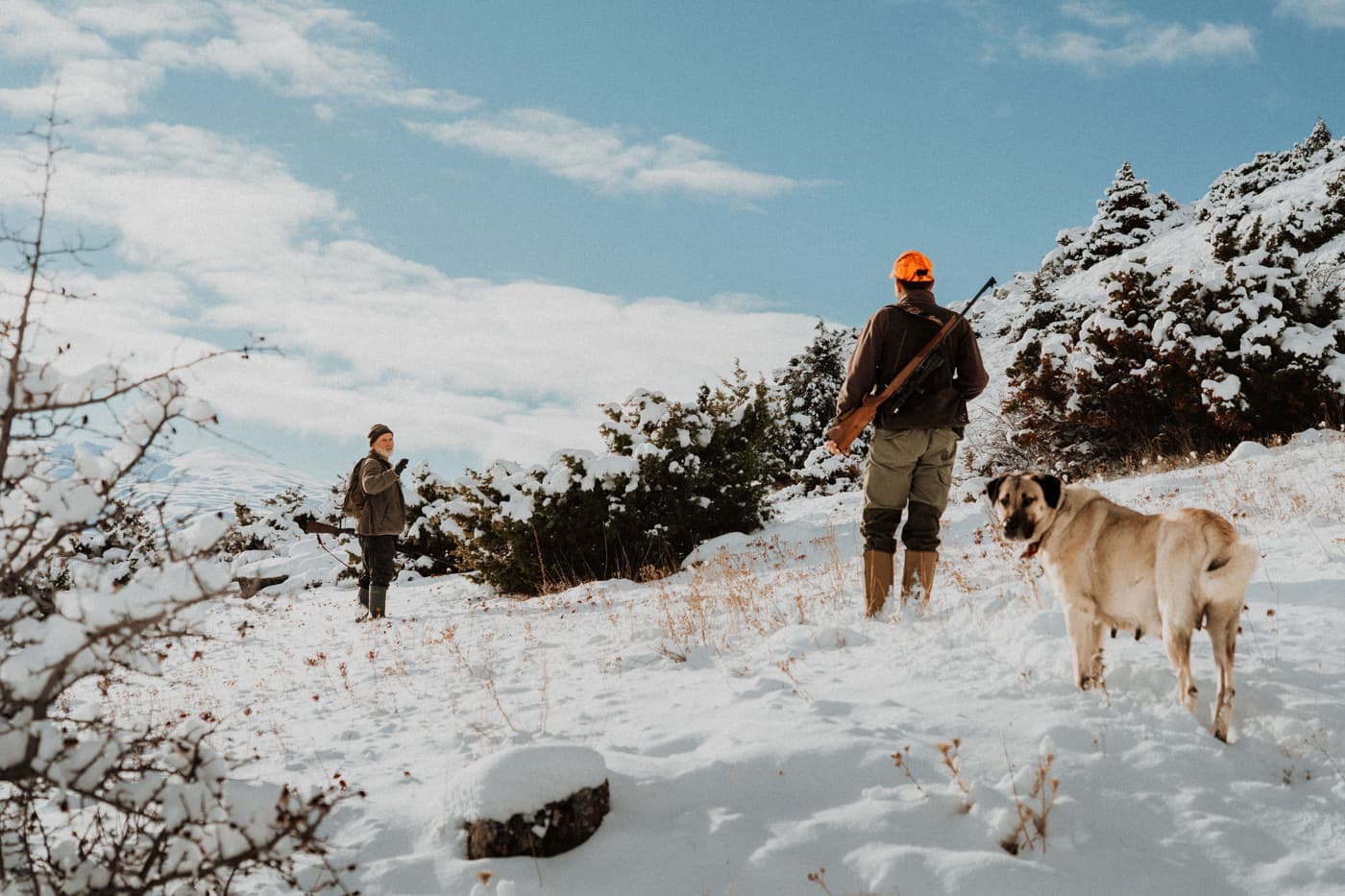
The outfit, head to toe
A turkey's defense is its eyes. You are not trying to disappear so much as trying to be a shapeless lump at the base of a tree that doesn't move and doesn't shine. That gives a simple checklist, and it is the same list whether you spend a little or a lot. The gear that goes over it all lives in the vests and gear hub.
- Head and face. A cap plus a 3/4 mask, a full hood, or a hooded top with a face mask built in.
- Top. A quiet, breathable camo shirt or hoodie in a pattern that matches your woods, with a thin layer underneath for the first hour.
- Hands. Camo gloves, full-finger or with the thumb and index bare for trigger feel.
- Legs. Camo or drab pants with pockets, and long pants regardless of the temperature.
- Feet. Waterproof boots, tall enough for the ground you hunt.
- In the vest. A rain shell, an orange item for the walk in and out, and something dry to sit on.
Nothing on that list has to be expensive. Florida FWC's guidance for turkey hunters is simply to wear “camouflage or drab green and brown clothing, including gloves and a face mask.” Drab green and brown you already own plus a mask and gloves beats a full camo suit worn with bare hands and a bright face.
The four colors to never wear
This is the rule that has nothing to do with the turkey. A mature gobbler's head is red, white and blue, and his body is black. Those four colors on a person, in the woods, during a season when everyone is looking for exactly that combination, are the reason turkey hunting has its own safety literature.
The rest of turkey safety follows the same logic: positively identify your target before the safety comes off, never stalk a gobble because the sound may be another hunter, sit against a tree wider than your shoulders, and if someone walks in on your setup, call out in a clear voice rather than waving or making a turkey sound.
Layering a spring morning
Spring turkey hunting has the widest temperature swing of any season you will hunt. You leave the truck in the dark, sit still for two hours while frost burns off, then walk a ridge in the sun. One garment cannot do both ends of that, so the camo you buy should be warm-weather camo, with the cold hour handled by a layer underneath that comes off.
That is how the makers build it. Mossy Oak calls its Tibbee Flex fabric “ultra-breathable, lightweight” with 4-way stretch. NOMAD calls the Ambush Pant lightweight, quick-drying and breathable, and its own page rates that pant low for warmth and wind protection, which is a useful admission: on a 30-degree fly-down you want a base layer under it. SITKA publishes 6.5 oz for the Equinox Guard Hoodie. Buy for the sit, add for the dark hour, and carry a rain shell, because none of this clothing is waterproof.
Two details beginners learn the hard way. Fabric noise matters: a stiff shell that rustles when you raise the gun will cost you a bird that quiet cotton or knit would not. And you will put a loaded vest over everything, so size your layers to leave room for it; the fit ranges are in our guide to choosing a turkey vest.
The three pieces below are scored from the makers' own published specs on our First-Season Score. We haven't worn or hunted in any of them, and every figure on their cards links to the page it came from.
Our picks for this
Three pieces that cover the outfit
One for the top and face, one for the hands, one for the feet, scored on our published rubric from the makers' own specs. We haven't worn or hunted in any of them.
- Illustrative photo
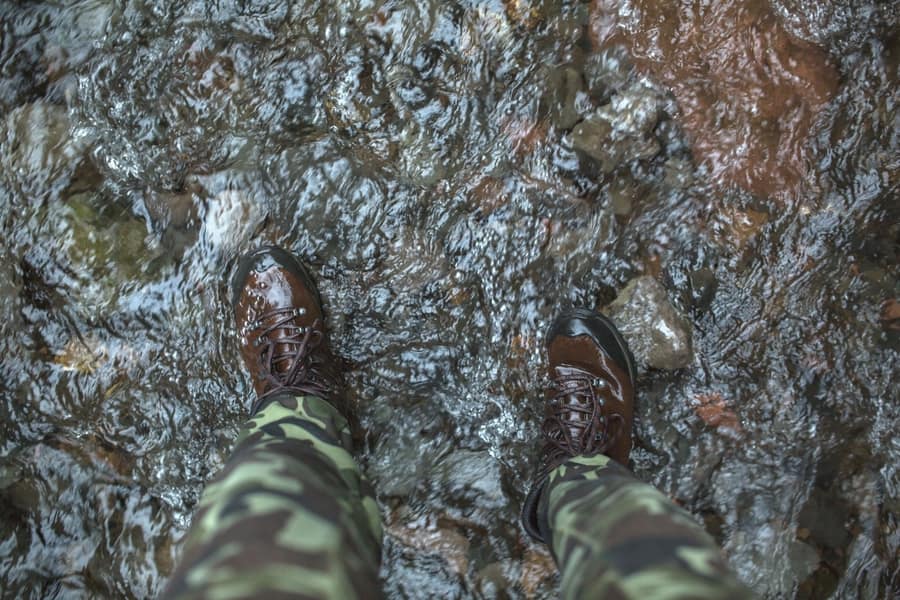
Best camo top with a built-in face mask
SITKA Equinox Guard Hoodie
Camo8.3/10A 6.5 oz hoodie with a breathable mesh face mask built into the hood and a scent-free Insect Shield treatment, per SITKA. Sizes M to 3XL, so no Small.
Check price on Amazon#ad · Price set by Amazon · Disclosure for the link to SITKA Equinox Guard Hoodie
- Illustrative photo
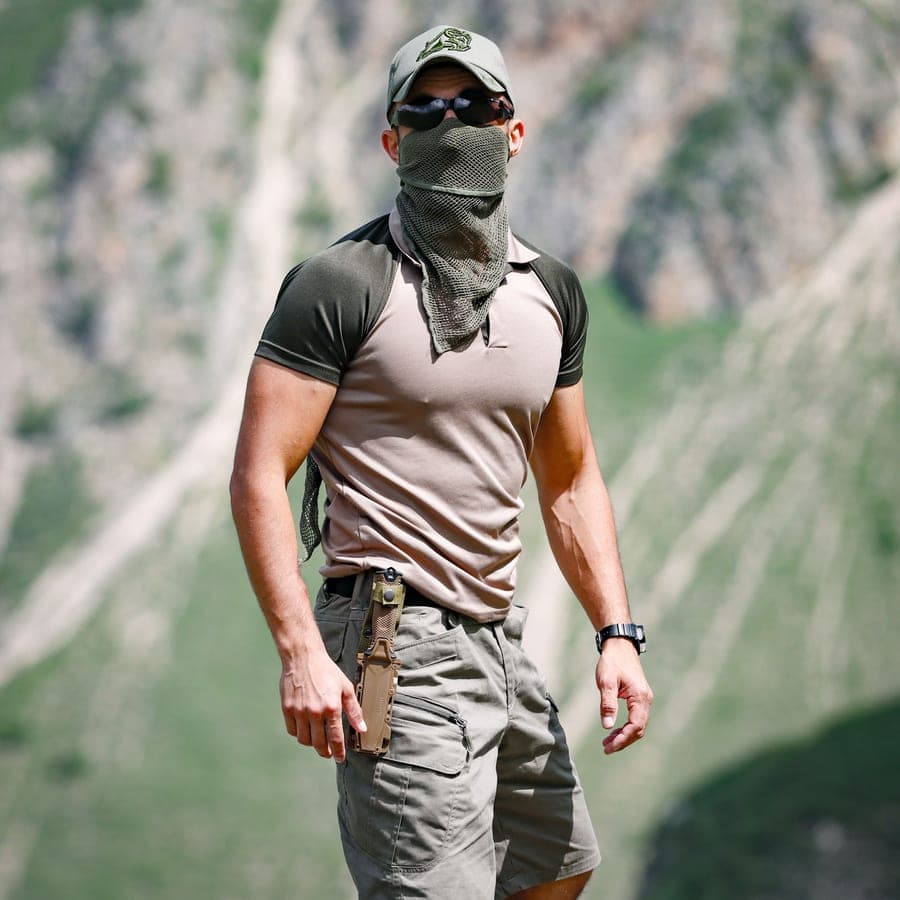
Best full-finger turkey glove
Mossy Oak Tibbee Flex Grip Glove
Mask / gloves8.0/10Full-finger gloves with an extended cuff, a silicone grip palm and touchscreen thumb and index pads, in a fabric Mossy Oak builds for maximum breathability.
Check price on Amazon#ad · Price set by Amazon · Disclosure for the link to Mossy Oak Tibbee Flex Grip Glove
- Illustrative photo
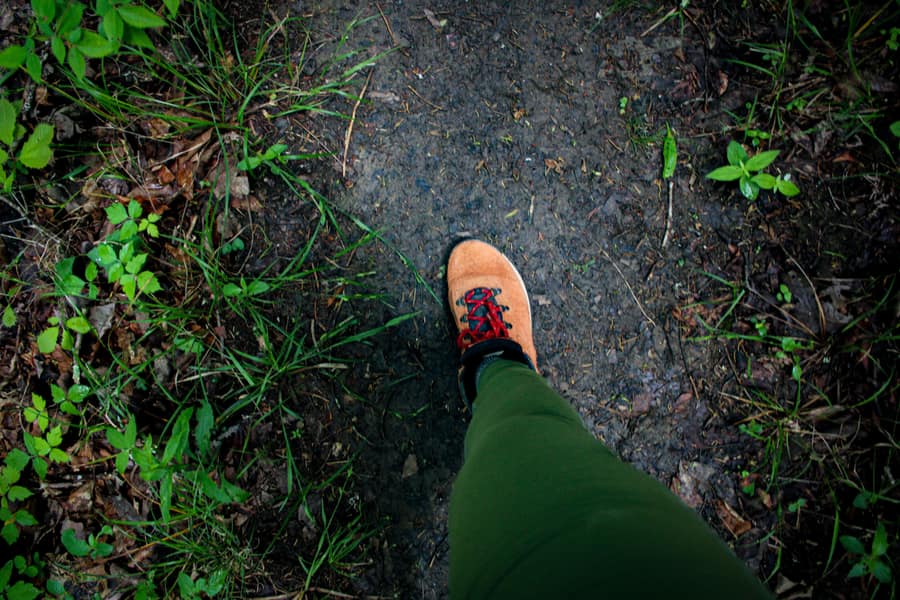
Best lightweight turkey boot
Danner Recurve 7" Hunting Boot
Boots7.4/10A 7 in, non-insulated boot at 45 oz per pair on a Vibram outsole, with a 365-day warranty. No snake protection: in snake country, see our boot picks.
Check price on Amazon#ad · Price set by Amazon · Disclosure for the link to Danner Recurve 7" Hunting Boot
Face, neck and hands
If you only fix two things, fix these. The NWTF's advice is direct: keep your hands covered, as well as your neck and face, because turkeys spot the slightest movements. A bare face at the base of a tree is a pale oval that turns when you look; bare hands are two more, and they are the parts that have to move to work a call and raise a gun.
Masks come in three shapes: a full hood, a hat with the mask attached, and the 3/4 mask that leaves room for your own cap. A hooded top with a built-in mask does the same job in one piece. Gloves come full-finger for maximum coverage, or with the thumb and index exposed for trigger feel and for running a pot call striker. Whichever you choose, practice shooting and calling with them on before opening day, not on a gobbling bird. The ranked picks, including one mask made for hunters who wear glasses and one budget-friendly net mask, are in our face mask and glove roundup.
Glasses complicate this. Warm breath escaping past a loose nose bridge is what fogs lenses, so look for a mask that fits closely around the nose and vents at the mouth and cheeks, and keep a wipe on you. No maker promises a mask will not fog.
Boots and legs
You will walk in the dark through wet grass, and you will sit on ground that is damper than it looks. Waterproof is not optional. How tall depends on where you hunt: a 7 in boot is plenty for dry ridges, a 16 in rubber boot handles creek crossings and flooded bottoms, and a 16 to 18 in snake boot is the answer in country with venomous snakes. Weight matters more than beginners expect, because turkey hunting is walking; the published range across our turkey boot picks runs from 45 oz per pair to 4.9 lb per pair.
Long pants, always, even when it is warm. They are your first defense against ticks, briars and the tall grass where snakes sit. CDC NIOSH's guidance for people working outdoors in snake country is exactly that: wear boots and long pants, stay out of tall grass and leaf piles where you can, and never handle a snake.
Ticks, permethrin and repellent
Spring turkey season is peak tick season, and you spend it sitting in leaf litter. This is the part of the outfit that matters after the hunt is over.
Treat the cuffs, ankles and collar first, since that is where ticks climb aboard, and tuck your pants into your boots when you walk through grass. A repeller at the setup handles mosquitoes rather than ticks; how those work is in our Thermacell guide.
Hunter orange: it depends on your state
There is no national rule, and the spring turkey answer is genuinely different from the deer-season answer you may already know. Three real examples show the range.
The practical habit, required or not, is the one Vermont recommends: wear hunter orange while moving from setup to setup, and take it off once you are in position. That is when you are walking, when another hunter can see something moving through brush, and when you are not depending on camo anyway. An orange hat in a vest pocket, or an orange cover for a decoy bag, costs nothing and solves it.
What to buy first
If the budget is thin, buy in this order, because it is the order of how much each piece hides:
- A face mask and gloves. The least expensive turkey purchase there is, and they cover the two things that move and shine.
- Waterproof boots. Wet, cold feet end hunts before the birds do.
- A quiet, breathable camo top. A hooded one can replace the mask; the ranked picks are in our turkey camo roundup.
- Camo pants. Your legs are usually behind a tree, a vest seat or brush, so drab pants you own will do for a season.
What you wear is only half of staying hidden. The other half is a tree wider than your shoulders, a setup that doesn't make you move, and the patience to sit still when a bird hangs up. The habits that undo a good outfit are collected in common turkey hunting mistakes.
How we picked this
Gear we claim to have field-tested: none
Plenty of turkey sites say they ran every call on the list all spring. We don't say that, and we say so on every page. What we do instead: read each maker's published specs, materials and instructions; note the sounds a maker says a call makes and how it says the call handles rain; check a choke's load ratings and thread chart; compare published weights, pockets and seat heights; and score all of it on a published rubric built around a first-season hunter. Every spec links to where it came from.
Scores are computed from that documented research with fixed bands, not field trials. Commissions never set a score or decide a pick. The rubric and its bands are published.
Questions
Frequently asked
What should you wear turkey hunting?
Quiet, breathable camo in a woodland pattern, with your face, neck and hands covered, long pants and waterproof boots. Add a thin layer underneath for the cold first hour and carry a rain shell. Never wear red, white, blue or black.
What colors should you not wear turkey hunting?
Red, white, blue and black. Pennsylvania's Game Commission says those are the colors found on mature gobblers, and Vermont Fish & Wildlife extends it to equipment as well as clothing. The rule applies to undershirts, socks, glove liners and cap logos too.
Do you have to wear orange turkey hunting?
It depends on the state. Pennsylvania requires no fluorescent orange during spring turkey season but recommends it while moving; Missouri requires it at certain times and locations; Wisconsin calls a blaze orange cap or gloves a good idea while walking. Check your state's current regulations.
What camo pattern is best for turkey hunting?
The one that matches where you sit. The NWTF calls a good pattern for your terrain essential: bark-toned patterns for gray spring timber, greener patterns for May undergrowth. Coverage of your face and hands matters more than the print itself.
How do you keep ticks off while turkey hunting?
The CDC recommends treating clothing and gear with products containing 0.5% permethrin and using an EPA-registered repellent on skin. Afterward, tumble dry clothes on high for 10 minutes and shower within two hours. Always read the product label.
What should I wear turkey hunting in warm weather?
A lightweight, breathable camo top and pants, a mesh 3/4 face mask and thin gloves, and long pants regardless of the heat for ticks and briars. Most turkey clothing is built for warm mornings; you add underneath for the cold hour rather than buying heavy.
Do I need camo to turkey hunt?
Not to start. Florida FWC advises camouflage or drab green and brown clothing, including gloves and a face mask. A plain olive or brown outfit with your face and hands covered hides you better than head-to-toe camo with bare hands.
Keep reading
Related on Strut & Slate
- Best turkey hunting camoShirts, pants and a hoodie with the face mask built in.
- Best turkey face masks and glovesFull hoods, 3/4 masks and gloves, including a glasses pick.
- Best turkey hunting bootsSnake boots, rubber boots and a 45 oz lightweight pair.
- Common turkey hunting mistakesThe habits that undo a good outfit.
- Turkey hunting gear listEverything else for opening morning, in buying order.
- Thermacell for turkey huntingFor the mosquitoes that arrive with warm mornings.
Receipts
Sources
- SITKA Gear — Equinox Guard Hoodie product page (read 2026-09-22)
- Mossy Oak Store — Tibbee Flex Grip Glove product page (read 2026-09-22)
- Danner — Recurve 7" Mossy Oak Original Bottomland product page (read 2026-09-22)
- Danner — Recurve 7" Brown Danner Dry product page (read 2026-09-22)
- SCHEELS — Men's Danner Recurve Boots (dealer page, read 2026-09-22)
- Mossy Oak Store — Men's Tibbee Flex Hunt Shirt product page (read 2026-09-22)
- NOMAD Outdoor — Ambush Pant, Mossy Oak Bottomland, product page (read 2026-09-22)
- Pennsylvania Game Commission — Safe Hunting Tips (read 2026-09-22)
- Pennsylvania Game Commission — 2026-27 Regulations Pocket Guide, Fluorescent Orange section (PDF, read 2026-09-22)
- Missouri Department of Conservation — Turkey Hunter Safety and Ethics (read 2026-09-22)
- Missouri Department of Conservation — Turkey Regulations (read 2026-09-22)
- Wisconsin DNR — Turkey Hunting (safety tips section) (read 2026-09-22)
- NWTF — Turkey Hunting 101 (read 2026-09-22)
- Vermont Fish & Wildlife — Turkey Hunting Safety Tips from VTF&W (read 2026-09-22)
- Pennsylvania Game Commission — Gobblers Take Center Stage In Penn's Woods (2026 spring news release) (read 2026-09-22)
- Florida FWC — Safe Hunt (turkey) (read 2026-09-22)
- CDC — Preventing Tick Bites (read 2026-09-22)
- US EPA — Repellent-Treated Clothing (read 2026-09-22)
- US EPA — Find the Repellent that is Right for You (read 2026-09-22)
- CDC NIOSH — Venomous Snakes at Work (read 2026-09-22)
We don't claim to have field-tested, owned or hunted with the products on this page. Specs come from the maker's own product pages and manuals (or a named dealer's copy when the maker's site blocked us), sound and performance claims are attributed to the maker, and any third-party observation is attributed to whoever made it. Amazon prices change often, so we don't print them. Where a figure isn't published, we say so and it earns the lowest band. Read the full method.