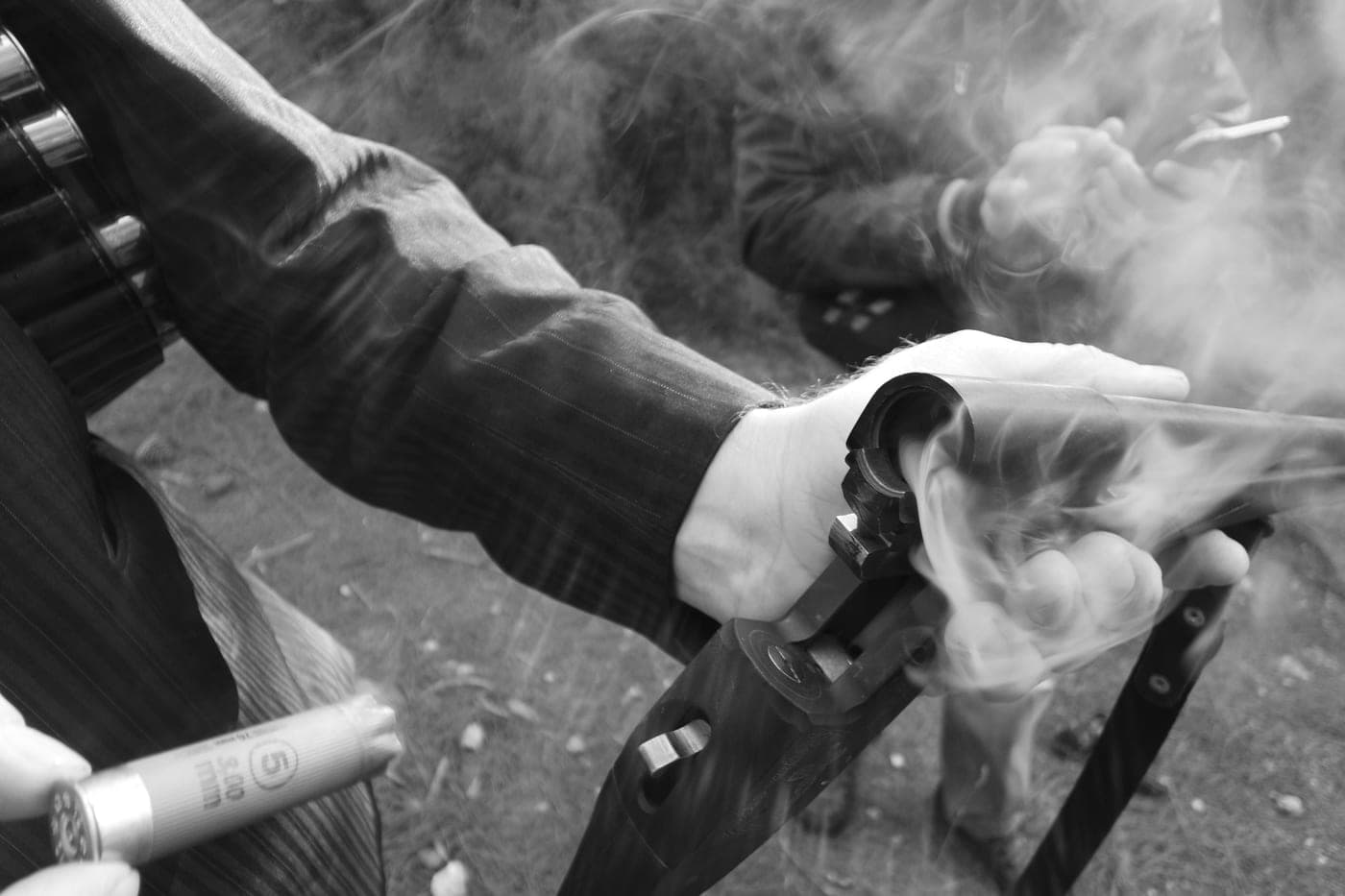
The ten mistakes
Beginners lose birds to habits, not to equipment. Eight of the ten below cost nothing to fix, and the two that involve buying something are cheap compared with the gear most first-season hunters actually buy. If you are still working out the season arc, start at our first-season hub and come back to this page the week before your opener.
- Calling too much, and too loud
- Moving at the moment a bird can see you
- Hunting with a bare face and bare hands
- Setting up somewhere a gobbler will not walk to
- Sitting somewhere so uncomfortable you fidget
- Arriving late
- Never patterning the gun you are going to shoot
- Shooting too far, or too close
- Unsafe habits: stalking, shooting at sound, carrying an uncovered decoy
- Assuming the rules you read somewhere are the rules where you hunt
We have not hunted with the products on this page. The technique and safety points come from the National Wild Turkey Federation and state wildlife agencies, quoted and linked in the sources, and every product detail is the maker's own.
1. Calling too much, and too loud
This is the beginner mistake, and it is easy to understand why: calling is the only thing you are doing, so it feels like the thing to do more of. In the NWTF's article on the calling gaffes hunters keep repeating Brian Lovett describes the failure exactly: hunters “are just making every sound they can think of without trying to communicate to the turkey.” The problem is not volume alone; it is that a sequence of unrelated sounds does not say anything a gobbler recognizes.
The harder skill is going quiet. The same NWTF piece says “not being able to soften up your calling is a huge disadvantage in the turkey woods,” and it gives the one rule worth memorizing before your first morning: “if there's a gobbler in front of you and he's walking to you, no calling at all is the best call.” When he is coming, you have already won the argument. Every extra yelp gives him a reason to stop and wait for the hen to come to him.
A second NWTF article on subtle calling puts the alternative plainly: “soft tree yelps, light clucks, subtle purrs and occasional leaf scratching create curiosity in a way aggressive calling rarely can,” and that good callers “do not call constantly” but “use cadence, pauses and emotional realism.” Its rule for a bird that gobbles but will not move: “when he gobbles in place, do less, not more.” There is a time for loud, the article adds, “especially when locating birds, dealing with windy conditions or striking a responsive tom at distance.”
The fix: decide your calling plan before you sit down, not while a bird is gobbling. Our guide to how often to call turkeys gives the cadence, and turkey calls and what they mean explains what each sound is telling him.
2. Moving at the moment a bird can see you
The movement that ruins a hunt is almost never a big one. It is reaching for the call when he is already inside 60 yards, turning your head to look, or lifting the gun after he is in the open. Vermont Fish & Wildlife's safety guidance covers both reasons to stay still at once: unnecessary movement alerts turkeys and attracts hunters.
The fix: get the gun up on your knee, pointed where you expect him, before there is anything to see. Then the last movement you have to make is a few inches of barrel, not a whole body. Where that sits in the morning is step five of how to turkey hunt for beginners.
3. Hunting with a bare face and bare hands
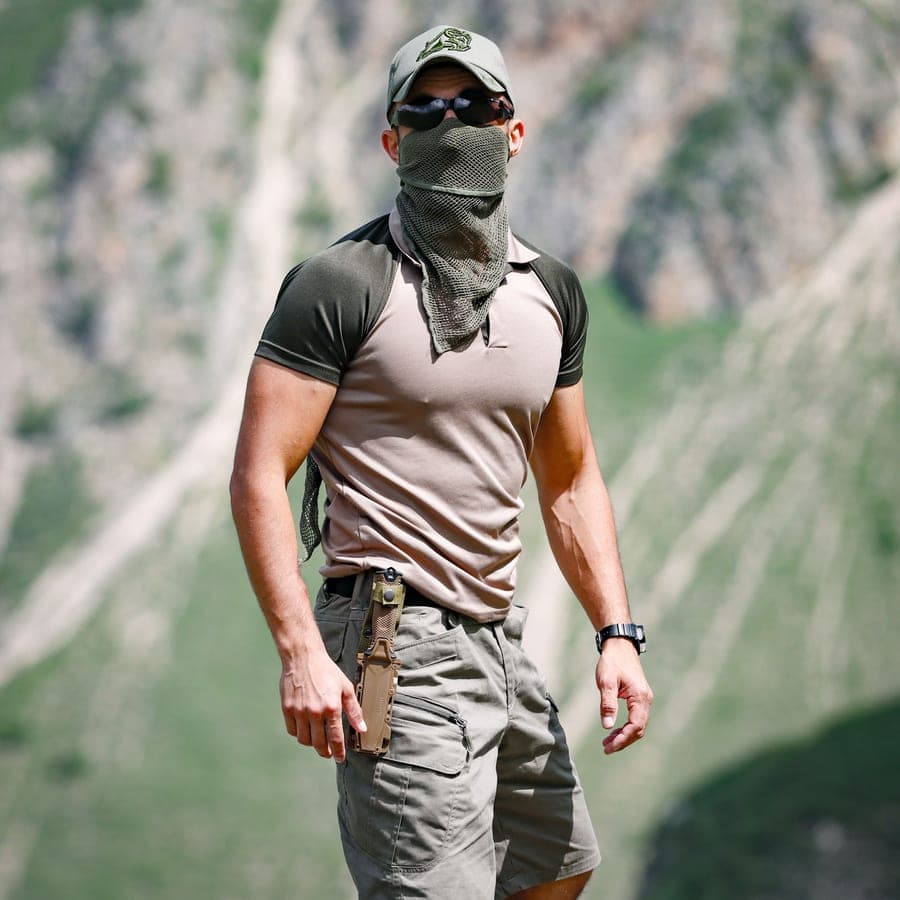
You can be dressed head to toe in camouflage and still be two bright, moving patches at eye level. Florida FWC writes the clothing rule as a single instruction that includes both: “When turkey hunting, wear camouflage or drab green and brown clothing, including gloves and a face mask.” Hands are the worse offender, because hands are what move: they run the call, they adjust the gun, they wave at a mosquito. The same FWC safe-hunt page tells hunters to “never shoot at sounds, color or movement,” which is the other half of the reason to cover skin.
There is a second reason, and it is the one the agencies care about. The NWTF's safety task force history notes that historically “most incidents were due to mistaken target identification,” and lists “improper camouflage use” among the contributing behaviors. Covering skin is a safety measure as much as a concealment one.
The fix: buy a mask and gloves and put them in the pocket you can reach sitting down, not in the bottom of the pack. If you wear glasses, buy a mask that says it works with them rather than fighting fog all morning. Our picks are in the best turkey hunting face masks and gloves and the rest of the outfit is in what to wear turkey hunting.
4. Setting up somewhere a gobbler will not walk to
A bird that gobbles at your call and then hangs up is often telling you something about your spot, not about your calling. Two rules from the NWTF's tree guide do most of the work. First, the tree: “the tree you lean up against should be as wide as, or wider than your back and shoulders so that your body outline is concealed.” Second, the space in front of it: your ideal tree “should have a five-foot radius of space in the directions you plan to shoot.”
The NWTF adds a detail beginners miss entirely: find a tree with “a 90 degree angle between its trunk and the ground.” A leaning tree sounds comfortable and is not, because “if you needed to swing your gun barrel, you'd have to pick it up and over the tree,” which “might hinder your shot opportunity.”
Then look at what is between you and him. A creek, a fence, a thicket or a steep bank will stop a bird that is otherwise coming. Move before you call, not after he hangs up.
The fix: spend two minutes picking the tree instead of twenty seconds. Our setup guide walks the whole decision, and how to set up turkey decoys covers where a decoy goes so that a bird has to come into your opening.
5. Sitting somewhere so uncomfortable you fidget
This one gets laughed at until the second morning. Sitting on a root for three hours with your knees up and no back support is not a test of character; it is a guarantee that you will shift, stand up to stretch, or quit twenty minutes before the bird arrives. Every rule above depends on staying put, and staying put depends on being comfortable enough to do it.
It is also why the seat is a safety item. Vermont tells hunters to “always sit with your back against a tree trunk, big log or a boulder that is wider than your body,” and Maryland DNR specifies something “wider than your shoulders and higher than your head when calling wild turkeys.” You will only hold that position if the ground under you is tolerable.
The fix: a cushion at minimum, a low chair if you can carry it. Low matters: a seat that lifts you high off the ground pushes your head above the tree trunk and puts your knees where the gun should be. Options are ranked in the best turkey hunting chairs, and several turkey vests carry a seat built in, which is covered in turkey vests with seats.
6. Arriving late
The NWTF's list of top mistakes nobody likes to admit as a new turkey hunter leads with this one: “arriving late to your hunting spot gives turkeys a distinct advantage, as they can see and hear you approaching.” Its advice is to “arrive well before dawn to give yourself enough time to set up.” A bird in a tree at 100 yards hears a truck door, a headlamp sweeping the trunks and boots in dry leaves, and he will fly down the other way.
The fix: work backward from legal shooting time, add the walk, then add twenty minutes for picking the tree in the dark. And know your legal hours, because they are not the same everywhere: see turkey hunting morning vs evening.
7. Never patterning the gun you are going to shoot
Most first-season hunters shoot a gun they have never fired at a turkey-sized target, with a choke and a load they picked from a shelf. The NWTF names the missing piece: “understanding the triangulation between your shotgun, choke and ammo allows you to understand at what distances and under what circumstances you can take an ethical shot.” Elsewhere it puts it more simply: “knowing how it shoots with a specific load and choke at various distances takes the guesswork out of shooting a gobbler.”
Patterning also tells you where your gun actually shoots, which is not always where it points. Mississippi State University Extension publishes a step-by-step turkey patterning method for exactly this.
The fix: one afternoon at a range with paper, your choke and a few boxes of one load. Our how to pattern a turkey gun is the whole session, and what size shot for turkey covers the load choice by gauge before you buy shells.
8. Shooting too far, or too close
Both ends of this are real. Missouri's hunter ethics guidance says to “never shoot at a turkey beyond the effective range of your shotgun,” and puts the typical ceiling at “30 to 40 yards” as an average limit for a clean kill. The NWTF's article on missed turkeys recommends aiming to shoot “at 20 to 40 yards, where you're sure to have a good, thick pattern.”
Too close is the miss nobody warns beginners about. “With today's ultra-tight chokes, shooting a turkey closer than 20 steps can be tough,” the NWTF writes, and the writer's own example is worth reading twice: “at 11 steps, my pattern was the size of a quarter. I'd merely lobbed 2 ounces of expensive shot right past the gobbler's head.” A tight turkey choke turns a close bird into a rifle shot.
The fix: know two numbers before opening day, your near limit and your far limit, both from paper. Then pick a landmark at your far limit when you sit down, so you are not judging yardage with a gobbler strutting. Range is covered in how far can you shoot a turkey, and the aim point in where to aim on a turkey.
9. Unsafe habits
These are not performance mistakes. They are the ones that hurt people, and every one of them has a beginner version that feels reasonable in the moment.
If you hunt ground other people can hunt too, read public land turkey hunting before the opener; the rules above matter more when you cannot see who else is in the woods.
10. Assuming the rules you read somewhere are the rules where you hunt
Beginners learn turkey hunting from videos and articles written in other states, then carry those states' rules into their own woods. Shooting hours, legal shot sizes, decoy and blind rules, whether a bird needs a beard and whether an electronic call can even be in your vest are all set state by state.
The three fixes you can buy
Three of the ten mistakes above have a purchase attached. Here is what to look for in each before any product name.
- Gloves (mistake 3): full-finger coverage with a cuff long enough to meet your sleeve, fabric light enough to wear in May, and enough grip and dexterity that you still run the call and the safety without taking them off.
- A seat (mistake 5): a low front edge so you stay below the line of the tree trunk, a backrest, a published weight you will actually carry, and a capacity rating that covers you with gear on.
- A box call (mistake 1): a call the maker says is made for beginners, and one that can be run quietly. Loud is easy; soft is the skill, and a call with written technique on the maker's page gives you something to practice against.
Our picks for this
Three picks that fix three mistakes
One glove, one low chair and one beginner box call, chosen against the rules above. Every spec is the maker's own.
- Illustrative photo
Best full-finger turkey glove
Mossy Oak Tibbee Flex Grip Glove
Mask / gloves8.0/10Full-finger with an extended cuff, in 90/10 polyester/spandex Mossy Oak builds for "maximum breathability," with a silicone grip palm and touchscreen thumb and index pads. Two sizes only: M/L and L/XL.
Check price on Amazon#ad · Price set by Amazon · Disclosure for the link to Mossy Oak Tibbee Flex Grip Glove
- Illustrative photo

Best turkey chair for a first season
ALPS OutdoorZ Vanish
Turkey seat7.0/108 in front and 5 in back seat heights, arms, a 21 in backrest, 300 lb capacity and 7 lb, folding into a 27 x 7 x 7.5 in bag, with ALPS's lifetime defect warranty.
Check price on Amazon#ad · Price set by Amazon · Disclosure for the link to ALPS OutdoorZ Vanish
- Illustrative photo
Best box call for beginners
Knight & Hale HD Long Range Hen Box Call
Box call7.1/10Knight & Hale calls this two-sided cherry box "easy to use, making it a great option for beginners," with written technique for five sounds and a 1-year warranty. It is pre-chalked wood with no weather claim.
Check price on Amazon#ad · Price set by Amazon · Disclosure for the link to Knight & Hale HD Long Range Hen Box Call
Two honest caveats. The Knight & Hale box is a traditional chalked wood call with no wet-weather claim, so if spring where you hunt means rain, look at the all-weather boxes in our box call picks instead. And its product page includes a gobble technique using a rubber band: skip that in your first season, for the reason Vermont gives, which is that a gobbler call can draw in other hunters. On the seat, if you already own a turkey vest with a seat cushion, you do not need a chair as well until you decide you want a backrest.
The rest of the fixes are free. For the full picture of what is worth buying and what is not, our turkey hunting gear list sorts every item into what you need, what helps and what can wait.
How we picked this
Gear we claim to have field-tested: none
Plenty of turkey sites say they ran every call on the list all spring. We don't say that, and we say so on every page. What we do instead: read each maker's published specs, materials and instructions; note the sounds a maker says a call makes and how it says the call handles rain; check a choke's load ratings and thread chart; compare published weights, pockets and seat heights; and score all of it on a published rubric built around a first-season hunter. Every spec links to where it came from.
Scores are computed from that documented research with fixed bands, not field trials. Commissions never set a score or decide a pick. The rubric and its bands are published.
Questions
Frequently asked
What are the most common turkey hunting mistakes?
Calling too much, moving at the wrong moment, leaving your face and hands uncovered, setting up where a bird will not walk, being too uncomfortable to sit still, arriving late, skipping patterning, shooting outside your proven range, unsafe habits and assuming another state's rules apply to you.
Can you call too much turkey hunting?
Yes. The NWTF says that when “there's a gobbler in front of you and he's walking to you, no calling at all is the best call,” and that failing to soften your calling is “a huge disadvantage.” The practice path for running a call quietly is in how to call a turkey for beginners.
Why do turkeys hang up out of range?
Often it is the setup rather than the calling: a barrier between you and him, no open lane inside your range, or a bird waiting for the hen to come to him. Check the ground in front of your tree before you call, and stop calling once he is committed.
How close is too close to shoot a turkey?
The NWTF warns that “with today's ultra-tight chokes, shooting a turkey closer than 20 steps can be tough,” and recommends shots at 20 to 40 yards. Your own near and far limits come from patterning your gun with the load and choke you will hunt with.
Do I really need a face mask and gloves to turkey hunt?
Florida FWC's guidance is to wear camouflage or drab green and brown clothing “including gloves and a face mask.” Hands move more than anything else you have, and the NWTF lists improper camouflage use among the behaviors behind turkey hunting incidents.
Is it safe to stalk a gobbling turkey?
No. The Pennsylvania hunter safety course says never to stalk turkey sounds because it could be another hunter calling, and Vermont Fish & Wildlife says your chances of getting close are poor either way. In Pennsylvania, stalking turkeys or turkey sounds is also unlawful.
What time should I get to my turkey spot?
Well before dawn. The NWTF says arriving late “gives turkeys a distinct advantage, as they can see and hear you approaching,” and advises arriving with enough time to set up in the dark. Work backward from your state's legal shooting hours.
Do turkey hunting rules change from state to state?
Yes, substantially. Shooting hours, legal shot sizes, bag limits, whether only bearded birds are legal and whether electronic calls may even be possessed all differ. Read your own state wildlife agency's current turkey regulations each season.
Keep reading
Related on Strut & Slate
- Turkey hunting gear listWhat to buy, what helps and what to skip in year one.
- Turkey hunting setupFixes mistakes 2, 4 and 5 in one sit.
- How often to call turkeysThe cadence that stops you calling too much.
- Best turkey hunting face masks and glovesCover the two things a gobbler sees move.
- What to wear turkey huntingDrab, quiet and never in turkey colors.
- How to pattern a turkey gunOne afternoon that fixes mistakes 7 and 8.
Receipts
Sources
- NWTF — Top 5 Mistakes Nobody Likes to Admit as a New Turkey Hunter (read 2026-09-22)
- NWTF — Calling Gaffes Turkey Hunters Keep Repeating (read 2026-09-22)
- NWTF — Soft Talk Kills: Why Subtle Calling Consistently Outperforms Loud Yelp Sequences (read 2026-09-22)
- NWTF — Anatomy of a Miss: Why Turkey Hunters Whiff and How to Avoid It (read 2026-09-22)
- NWTF — How to Pick a Turkey Hunting Tree (read 2026-09-22)
- NWTF — Setting the Standard for Turkey Hunting Safety (read 2026-09-22)
- NWTF — 10 Commandments Of Public Land Turkey Hunting (read 2026-09-22)
- Florida FWC — Safe Hunt (turkey) (read 2026-09-22)
- Vermont Fish & Wildlife — Turkey Hunting Safety Tips from VTF&W (read 2026-09-22)
- Hunter-ed.com (Pennsylvania Hunter Safety Course) — Turkey Hunting Safety (read 2026-09-22)
- Pennsylvania Game Commission — Safe Hunting Tips (read 2026-09-22)
- Maryland DNR — Turkey Hunting Safety Tips (read 2026-09-22)
- Missouri Department of Conservation — Turkey Hunter Safety and Ethics (read 2026-09-22)
- Mississippi State University Extension — How to Pattern a Shotgun for Turkey Hunting (P3234) (read 2026-09-22)
- New York State DEC — Turkey Hunting Regulations (read 2026-09-22)
- Missouri Department of Conservation — Turkey: Regulations (read 2026-09-22)
- Pennsylvania Game Commission — Gobblers Take Center Stage In Penn's Woods (2026 spring news release) (read 2026-09-22)
- Wisconsin DNR — Turkey Hunting (read 2026-09-22)
- Mossy Oak Store — Tibbee Flex Grip Glove product page (read 2026-09-22)
- ALPS OutdoorZ — Vanish chair product page (read 2026-09-22)
- ALPS OutdoorZ — Warranty and return policy (read 2026-09-22)
- Knight & Hale — HD Long Range Hen Box Call product page, SKU KHT0207 (read 2026-09-22)
- Knight & Hale — Warranty Information page (read 2026-09-22)
We don't claim to have field-tested, owned or hunted with the products on this page. Specs come from the maker's own product pages and manuals (or a named dealer's copy when the maker's site blocked us), sound and performance claims are attributed to the maker, and any third-party observation is attributed to whoever made it. Amazon prices change often, so we don't print them. Where a figure isn't published, we say so and it earns the lowest band. Read the full method.