The contenders
Side by side
- Illustrative photo
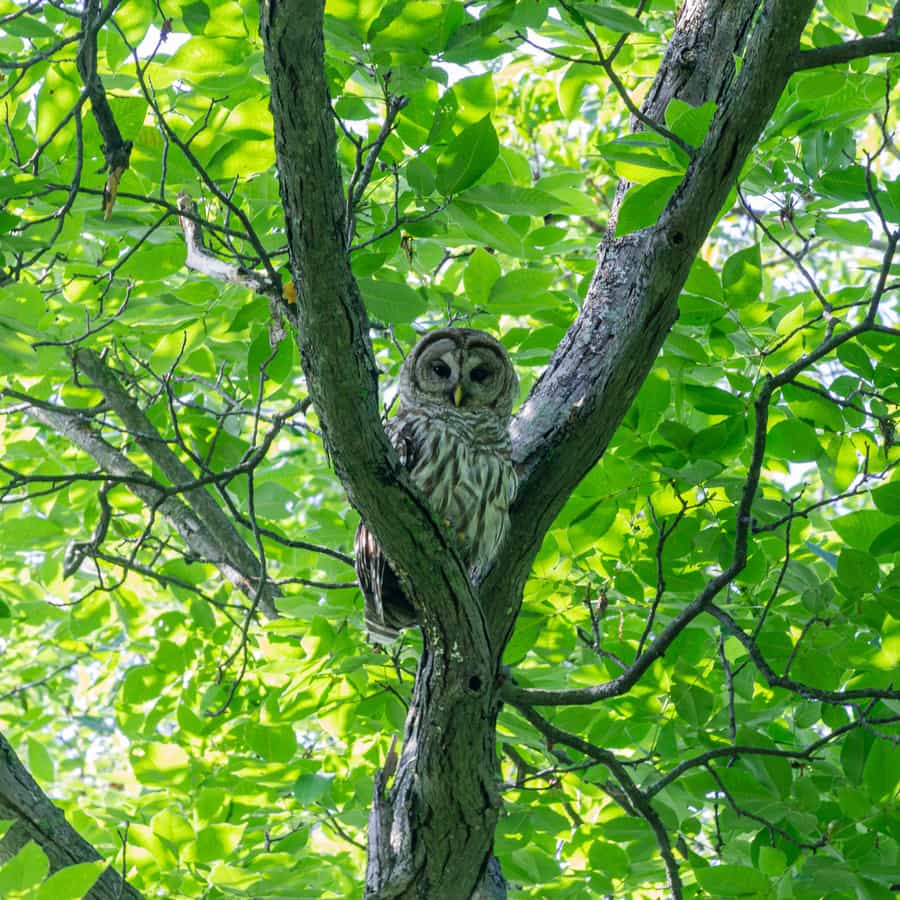
Best for first light and dusk roosting
WoodHaven Ninja Owl Locator Call
Locator call6.6out of 10A rubber-bodied barred-owl hooter designed by champion owl hooter Scott Ellis that WoodHaven calls "easy-to-run," tuned for a controlled, slightly muted tone at close to mid range.
Check price on Amazon#ad · Price set by Amazon · Disclosure for the link to WoodHaven Ninja Owl Locator Call
- Illustrative photo
Best for mid-morning locating
Quaker Boy Crankin' Crow
Locator call7.4out of 10A compact acrylic-barrel crow call with a Mylar reed that Quaker Boy says "creates every crow sound easily and accurately" and is "extra loud," made in the USA.
Check price on Amazon#ad · Price set by Amazon · Disclosure for the link to Quaker Boy Crankin' Crow
- Illustrative photo
Best for wet spring mornings
Primos Waterboard Turkey Box Call
Box call7.8out of 10A two-sided mahogany box with a canary paddle that Primos says "works wet or dry," with each side producing a different tone for cuts, clucks, purrs and yelps.
Check price on Amazon#ad · Price set by Amazon · Disclosure for the link to Primos Waterboard Turkey Box Call
The verdict
This page is part of our first-season guides. We haven't hunted with the calls compared here. The timing advice is quoted from the National Wild Turkey Federation (NWTF), the legal hours from state agency pages, and the call descriptions from their makers, each linked in the sources.
Morning vs evening at a glance
| Question | Morning | Evening |
|---|---|---|
| Is it legal in spring? | Yes, in all four states we checked: hours start a half hour before sunrise (NY, PA, VA, MO) | Only where hours run late: not in New York (noon); Pennsylvania from May 18; Virginia from April 26; Missouri on private land only |
| Where are the birds? | On the roost, then fly-down zones, then feeding areas farther from the roost (NWTF) | Heading back toward the roost, feeding until the last minutes before fly-up (NWTF) |
| Locator call | Owl hoot at first light; crow for mid-morning (WoodHaven) | Owl hoots once birds have roosted, with the sun low (NWTF) |
| Calling | Light tree yelps to a roosted bird, “but don't overdo it” (NWTF) | Fly-up cackles on a friction call if the owl gets no answer (NWTF) |
| Biggest risk | Bumping the roost on the walk in | Spooking birds at the roost and ruining tomorrow |
| Best use for a beginner | Hunt it | Scout it: roost a bird for the next morning |
Legal hours come first, and they vary a lot
Before you plan an evening hunt, check whether one is legal. The NWTF's all-day plan ends with the same reminder: “Make sure to abide by legal shooting hours in the state you are hunting.” Here is how four states set their spring hours.
Notice the pattern in those examples: the morning is open everywhere, and the afternoon opens late in the season, only on some land, or not at all. That alone makes the morning the default for a first spring.
The morning hunt: start at the roost
A morning hunt can start the evening before, with a bird you've roosted (more on that below). Get in early. The NWTF says to “arrive a minimum of 30 minutes before shooting light; 45 minutes is even better,” and for a roosted bird, to “be under the bird a half-hour or more before light starts to appear in the east.” Sit where he is likely to land: the NWTF's all-day plan says to “camp out over roost landing zones. These fly-down zones can put a gobbler in range.”
If you don't know where a bird is, first light is locator time. WoodHaven, which makes the Ninja Owl compared below, calls an owl hoot “one of the most trusted ways to strike a gobble at first light.” Once you're set up on a bird that is still in the tree, keep the calling small. The NWTF's advice: “Utter some light tree yelps if you want, but don't overdo it.” Our guide to how to find turkeys covers finding roosts before the season, and our best locator calls ranks the owl and crow calls.
After fly-down, the birds move. The NWTF notes that in the early morning turkeys “shift toward feeding areas that are further from their roost sites.” If your bird walks off with hens, that's not the end of the morning; it's the start of the next part.
Late morning and midday: the in-between
Where it's legal, the hours after the fly-down rush can still produce. The NWTF's plan for late morning is “light to moderate calling aggressiveness,” and when the gobblers are “all henned up, call to the hens instead.” For daytime locating, crow calls fill in: WoodHaven pitches its own crow call for everything “from early fly-down setups to mid-morning repositioning.”
Watch the clock. In New York, and for the first part of the season in Pennsylvania and Virginia, the hunt ends at noon. For how often to call once you're set up at this time of day, see how often to call turkeys.
The evening hunt: where your state allows it
In the afternoon, according to the NWTF, “turkeys are beginning to head back toward the roost,” and they “continue feeding until the last few minutes before fly-up.” An evening setup belongs on that route. The same article warns that hunting right at roosting sites can “mess up the next day's hunt,” and suggests sitting “along transition routes that lead to roost sites” instead.
Two cautions for beginners. First, legal hours end at a set time, a half hour after sunset in Pennsylvania's late season and sunset in Virginia's, so know yours and stop there. Second, fading light makes identification harder, and the rule doesn't change: the Pennsylvania Game Commission says to “positively identify your target” and be certain nothing is in your line of fire, between you and the bird or beyond it, before you pull the trigger.
Using the evening to set up tomorrow
Even where you can't hunt the evening, you can use it. Roosting means finding the tree a gobbler sleeps in so you know where to be at dawn. The NWTF's evening routine: “Find a good listening spot, and wait until the sun is low before trying to elicit gobbles.” When you're sure birds have roosted, “start with owl hoots to provoke a shock gobble,” and if that nets nothing, “wait a minute, and then make some fly-up cackles on a friction call.”
Then leave him alone. Another NWTF article advises approaching roosts “at safe distances (75-300 yards)” with cover between you and the birds, and says flatly that “bumping the bird is a critical mistake.” If your state's rules say anything about being afield after legal hours, follow them; roosting is listening, not hunting. The whole path, from roost to shot, is in how to turkey hunt for beginners.
The calls for each end of the day
You need three sounds across a spring day: an owl for first light and for roosting at dusk, a crow for daytime locating, and a hen call for the hunt itself. “Beginners usually find a box call the easiest to get a consistent sound,” the NWTF says, so that is the hen call here. Here is what we paired with each part of the day:
- WoodHaven Ninja Owl for first light and dusk. WoodHaven calls it “easy-to-run” and aims it at “close-to-mid-range locating at fly-down or in tight terrain.” Skip it for big, open country where you need reach.
- Quaker Boy Crankin' Crow for daytime. Quaker Boy says it “creates every crow sound easily and accurately” and calls the design “extra loud.” It is our top-scored locator call.
- Primos Waterboard as the hen call. Primos says it “works wet or dry,” which matters on rainy spring mornings, and that each side has a different tone. A new caller should learn one side first.
| Evidence | WoodHaven Ninja Owl Locator Call | Quaker Boy Crankin' Crow | Primos Waterboard Turkey Box Call |
|---|---|---|---|
| Type | Owl hooter locator (barred owl), blow call | Crow locator tube call; also a crow-hunting call | Two-sided box call; "each side producing different tones" (per Primos) |
| Sounds (per maker) | Barred owl hoots | "Every crow sound" (per Quaker Boy) | Cuts, clucks, purrs, yelps (per Primos) |
| Material | Rubber body (per WoodHaven) | Acrylic barrel, Mylar reed | Mahogany box, canary paddle |
| Weather | "Durable rubber body built for all-weather hunts" | — | "Works wet or dry"; for making a gobbler talk "rain or shine" (per Primos) |
| Warranty | Not published; WoodHaven states it "does not accept returns or refunds on products" | Not published | 1 year against defects, original purchaser only (Primos warranty page) |
| Score | 6.6/10 | 7.4/10 | 7.8/10 |
Locators help, but don't overdo them either: the NWTF warns that “using locator calls too much can draw attention from other hunters.” Box call alternatives, including ones made for beginners, are in our best box calls.
Which to pick in your first season
Put the two together and a beginner's week looks like this: evenings, listen and roost; mornings, hunt the bird you found. If your state opens afternoons late in the season, add an evening sit on a travel route once you've had a few mornings to learn how birds move on your ground. And whatever time you hunt, the setup is the same: our turkey hunting setup guide covers the tree, the seat and the gun.
In detail
The contenders, in full
Best for first light and dusk roosting
WoodHaven Ninja Owl Locator Call
A rubber-bodied barred-owl hooter designed by champion owl hooter Scott Ellis that WoodHaven calls "easy-to-run," tuned for a controlled, slightly muted tone at close to mid range.
Spec sheetSourced · not field-tested by us
How the 6.6 score breaks down
- Volume & carry (30%)
- 6
- Ease for a beginner (30%)
- 8
- Build (20%)
- 6
- Carry in the vest (20%)
- 6
What the specs support
- WoodHaven calls it "easy-to-run" and says the rubber body is built for all-weather hunts.
- Designed by champion owl hooter Scott Ellis (per WoodHaven).
- WoodHaven says it is "Quiet in your vest."
Where it falls short
- WoodHaven describes the tone as "slightly muted" and aims it at close-to-mid range, not at reaching birds far off.
- No weight, lanyard or warranty published, and WoodHaven does not accept returns.
Skip this if…
…you hunt big, open country and need maximum reach; WoodHaven positions this as a close-to-mid-range owl.
#ad · Price set by Amazon · Disclosure for the link to WoodHaven Ninja Owl Locator Call
Best for mid-morning locating
Quaker Boy Crankin' Crow
A compact acrylic-barrel crow call with a Mylar reed that Quaker Boy says "creates every crow sound easily and accurately" and is "extra loud," made in the USA.
Spec sheetSourced · not field-tested by us
| Category | Locator call |
|---|---|
| Type | Crow locator tube call; also a crow-hunting call |
| Sounds (per maker) | "Every crow sound" (per Quaker Boy) |
| Material | Acrylic barrel, Mylar reed |
| Weight | Not published |
| Features | Compact; "extra loud with unmatched realism"; made in the USA |
| Included | No lanyard or accessories listed |
| Warranty | Not published |
How the 7.4 score breaks down
- Volume & carry (30%)
- 8
- Ease for a beginner (30%)
- 8
- Build (20%)
- 7
- Carry in the vest (20%)
- 6
What the specs support
- Quaker Boy claims both ease ("creates every crow sound easily") and volume ("extra loud").
- Acrylic barrel and Mylar reed, both named by the maker.
- Compact and made in the USA (per Quaker Boy).
Where it falls short
- No lanyard, weight or warranty published.
- Quaker Boy lists no instructions with the call.
Skip this if…
…you want a first-light roost locator; WoodHaven calls an owl hoot "one of the most trusted ways to strike a gobble at first light," so pick an owl hooter for that job.
#ad · Price set by Amazon · Disclosure for the link to Quaker Boy Crankin' Crow
Best for wet spring mornings
Primos Waterboard Turkey Box Call
A two-sided mahogany box with a canary paddle that Primos says "works wet or dry," with each side producing a different tone for cuts, clucks, purrs and yelps.
Spec sheetSourced · not field-tested by us
| Category | Box call |
|---|---|
| Type | Two-sided box call; "each side producing different tones" (per Primos) |
| Sounds (per maker) | Cuts, clucks, purrs, yelps (per Primos) |
| Waterproofing | "Works wet or dry"; for making a gobbler talk "rain or shine" (per Primos) |
| Material | Mahogany box, canary paddle |
| Weight | Not published |
| Dimensions | Not published |
| Warranty | 1 year against defects, original purchaser only (Primos warranty page) |
How the 7.8 score breaks down
- Beginner learning curve (30%)
- 8
- Sound range (20%)
- 8
- Weather tolerance (20%)
- 9
- Build & materials (15%)
- 8
- Carry & vest noise (15%)
- 5
What the specs support
- Primos says it "works wet or dry," the rain-day answer among these box calls.
- Each side has a different tone, so one box gives you two hen voices (per Primos).
- Named hardwoods: a mahogany box and a canary paddle.
- Covered by Primos's 1-year warranty.
Where it falls short
- No lid band or silencer is listed, so plan how you'll keep the lid quiet in the vest.
- Primos publishes no dimensions or weight.
- Primos does not market it specifically to beginners.
Skip this if…
…you want the simplest possible first box; two different-toned sides give a new caller more to learn than one side.
#ad · Price set by Amazon · Disclosure for the link to Primos Waterboard Turkey Box Call
How we picked this
Gear we claim to have field-tested: none
Plenty of turkey sites say they ran every call on the list all spring. We don't say that, and we say so on every page. What we do instead: read each maker's published specs, materials and instructions; note the sounds a maker says a call makes and how it says the call handles rain; check a choke's load ratings and thread chart; compare published weights, pockets and seat heights; and score all of it on a published rubric built around a first-season hunter. Every spec links to where it came from.
Scores are computed from that documented research with fixed bands, not field trials. Commissions never set a score or decide a pick. The rubric and its bands are published.
Corrections & updates
- First published. Specs read from maker pages and legal hours from state agency pages 2026-09-22.
Questions
Frequently asked
Is it better to turkey hunt in the morning or evening?
For a beginner, the morning. You can set up on a gobbler you roosted the evening before, and every state page we checked opens spring hunting a half hour before sunrise. Evening hunting is legal only in some states and weeks.
Can you turkey hunt in the evening?
It depends on your state. New York's spring hours end at noon, Pennsylvania and Virginia open afternoons only late in the season, and Missouri allows hunting to sunset on private land but only to 1 p.m. on public land.
How do you hunt turkeys in the afternoon?
Where it is legal, sit along the routes birds use to get back to their roost. The NWTF says turkeys head toward the roost in the late afternoon and feed until just before fly-up, and warns that hunting right at the roost can spoil the next morning.
What time should you get to your turkey spot in the morning?
The NWTF says to arrive at least 30 minutes before shooting light, and 45 minutes is even better. For a roosted bird, it advises being under him a half-hour or more before light shows in the east.
When should you use an owl call for turkeys?
At both ends of the day. WoodHaven calls an owl hoot one of the most trusted ways to strike a gobble at first light, and the NWTF advises owl hoots at dusk, once birds have roosted, to make a gobbler give away his tree.
Should you hunt near the roost in the evening?
No. The NWTF warns that hunting at roosting sites can mess up the next day's hunt, and that bumping a bird is a critical mistake. Listen from a distance, then come back in the morning.
Keep reading
Related on Strut & Slate
- How often to call turkeysCadence from first light to late morning.
- Best locator callsOwl, crow and multi-sound locators ranked.
- How to find turkeysScouting and roosting before the season.
- How to turkey hunt for beginnersThe whole first spring in eight steps.
- Turkey hunting setupThe same setup, morning or evening.
Receipts
Sources
- National Wild Turkey Federation — The All-Day Turkey Hunting Game Plan (Josh Honeycutt, 2024-03-26) (read 2026-09-22)
- National Wild Turkey Federation — Great Roost Hunts (Brian Lovett, 2021-08-25) (read 2026-09-22)
- National Wild Turkey Federation — Plan to Roost (Laurie Lee Dovey, 2025-09-08) (read 2026-09-22)
- National Wild Turkey Federation — Ten Tips to Get Them Close (2022-03-29) (read 2026-09-22)
- National Wild Turkey Federation — Turkey Hunting 101 (NWTF Editorial Staff, 2021-11-19) (read 2026-09-22)
- National Wild Turkey Federation — 10 Commandments Of Public Land Turkey Hunting (Josh Honeycutt, 2024-01-22) (read 2026-09-22)
- Pennsylvania Game Commission — Gobblers Take Center Stage in Penn's Woods (2026-04-20) (read 2026-09-22)
- New York State DEC — Turkey Hunting Regulations (read 2026-09-22)
- Virginia DWR — Turkey Hunting Regulations and Seasons (read 2026-09-22)
- Missouri Department of Conservation — Turkey (seasons and hunting hours) (read 2026-09-22)
- WoodHaven Custom Calls — Ninja Crow product page (read 2026-09-22)
- WoodHaven Custom Calls — Ninja Owl locator call product page, SKU WH220 (read 2026-09-22)
- WoodHaven Custom Calls — Returns & Shipping page (read 2026-09-22)
- Quaker Boy — Crankin' Crow product page, SKU #02613 (read 2026-09-22)
- Primos — Waterboard Turkey Box Call product page, SKU PS257 (read 2026-09-22)
- Primos — Warranty page (read 2026-09-22)
We don't claim to have field-tested, owned or hunted with the products on this page. Specs come from the maker's own product pages and manuals (or a named dealer's copy when the maker's site blocked us), sound and performance claims are attributed to the maker, and any third-party observation is attributed to whoever made it. Amazon prices change often, so we don't print them. Where a figure isn't published, we say so and it earns the lowest band. Read the full method.