
Is it worth going?
Yes, with one honest qualification. You will probably hear fewer gobbles than on a still, clear morning. Gobbling is a display behavior driven by the breeding season, and the NWTF's work on the science of gobbling describes it as something that peaks and ebbs through the spring rather than something weather switches off. Rain and especially wind make a gobble carry less far, which means you hear fewer of them even when the same number are happening.
Here is what you gain in exchange, and it is more than most hunters admit:
- Birds come to you. Turkeys leave thick cover for openings when it rains, and openings are where you can see and set up.
- The woods are silent. Wet leaves do not crunch. A hunter who normally cannot move without being heard can reposition on a bird for the first time all season.
- Public ground empties out. On heavily hunted land, the forecast does more to clear a parking lot than any amount of walking, which matters a lot on the ground described in public land turkey hunting.
Where turkeys go in the rain
A turkey's feathers shed water well, but a bird in dripping timber is a bird that can neither see nor hear anything coming. Rain in the canopy is loud, and the woods go dark. So they do the obvious thing: they walk out.
Hunt the openings. Field edges, pastures, mature open hardwoods, logging roads, power line cuts, food plots and hilltop benches are all better bets in rain than the creek bottom thicket that held birds last week. A gobbler standing in a wet pasture at mid-morning is a classic rain-day sighting, and it is also a bird you can see from 300 yards away and plan an approach on.
Timing shifts too. Birds often fly down later and stay out longer, and the NWTF's all-day turkey hunting game plan makes the general case for staying in the woods past nine o'clock — which applies double on a wet morning, because the sky clearing at ten often triggers a burst of activity as birds spread out to dry. If you can only hunt half a day in the rain, hunt the back half.
Changing your setup
Everything about a rain setup follows from one fact: you are hunting a bird in the open and he can see a long way.
- Set up with a view, not with cover. On a normal morning you pick a tree for concealment. On a wet morning, pick one that lets you watch 150 yards of field edge, because a silent bird will simply appear. The NWTF's guidance on picking a tree still applies for the basics — wider than your shoulders, back to cover.
- Expect silent birds. This is the single biggest rain-day mistake: a hunter who stops watching because he stopped hearing. Birds that do not gobble still come. Keep your eyes up and your gun on your knee.
- A decoy earns more in the rain. In an opening at distance, a visible hen is doing the work your calling cannot do through rainfall, and the lightest ones are a few ounces. See best hen decoys.
- A blind is worth carrying if you own one. Sitting still for three hours in rain is the hardest part, and that is where a pop-up earns its weight — see do you need a blind for turkey hunting.
Calling in the rain
Rain absorbs sound and wind scatters it, which changes both how much you call and what you call with.
Louder, and in shorter bursts. A box call is the loudest friction call most hunters own, and it is the right tool for cutting through rainfall. Give him a sequence he can locate, then stop and watch — this is not the morning for soft clucks at 200 yards.
Call less often, not more. It is tempting to call constantly because you cannot hear a response. Resist it; a silent bird that is already walking to you does not need more information. How often to call at all is worked through in how often to call turkeys.
Switch to soft calling only when he is close. Once a bird is inside 60 yards in an open field, the loud box is a liability. That is the moment for a mouth call you can run without moving your hands.
The gear that stops working
Three things fail in rain, and all three are predictable.
Chalked box calls. Water removes the chalk and the paddle slides silently. Full routine in box call chalk and care, and the short version is that chalk cannot be applied to a damp paddle.
Slate pot calls. Slate works because the stone surface is slightly rough; wet it and the striker glides. Aluminum and glass surfaces keep gripping, which is the whole argument in slate vs glass vs aluminum pot calls.
Your own patience. Wet, cold and bored is how good rain hunts end at 7:30. Rubber boots and a packable rain layer are not comfort items on this particular morning; they are the difference between staying until the sky clears and leaving before the best hour.
What to carry on a wet morning
Our picks for this
A loud call that runs wet, a pot call that does the same, and dry feet
Three things that solve the three rain-day problems: reaching a bird through rainfall, having a second voice that still works, and staying out long enough for the sky to clear.
Best two-voice waterproof box call
Primos Waterboard Turkey Box Call
Box call7.8/10A two-sided mahogany box with a canary paddle, each side a different tone, which Primos says works wet or dry. A box is the loudest friction call most hunters own, which is what rain calls for.
$35.18Amazon#ad · Price as of November 2, 2026 · Disclosure for the link to Primos Waterboard Turkey Box Call
Best pot call for rainy mornings
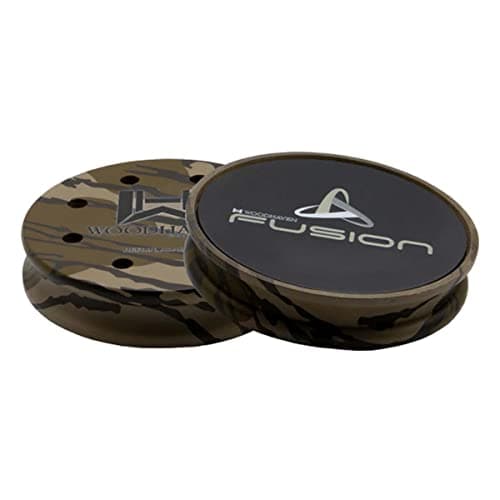
WoodHaven Fusion Aluminum Pot Call
Pot call7.2/10Anodized aluminum on a machined acrylic pot, with a Rain Check striker and a carbon striker in the box, both of which WoodHaven lists as running when wet. WoodHaven calls it an all-weather performer.
$94.99Amazon#ad · Price as of November 2, 2026 · Disclosure for the link to WoodHaven Fusion Aluminum Pot Call
Best budget rubber boot
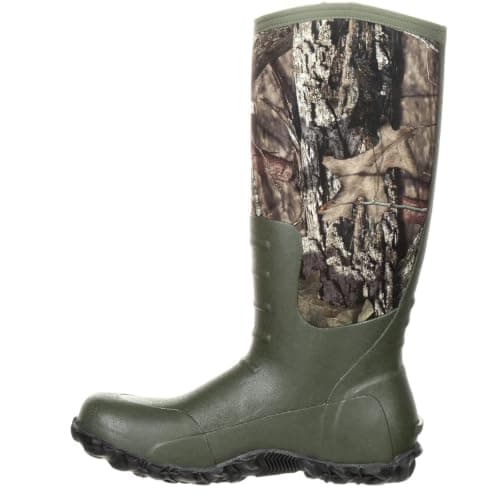
Rocky Core Rubber Waterproof Outdoor Boot
Boots6.2/10A plain 16 in rubber and 5 mm neoprene knee boot, 4.8 lb per pair in a size 10, with a self-cleaning tread and a 1-year limited warranty. Waterproof by construction rather than by membrane.
$88.05Amazon#ad · Price as of November 2, 2026 · Disclosure for the link to Rocky Core Rubber Waterproof Outdoor Boot
If you expect to hunt wet springs regularly, the whole category is ranked in best waterproof turkey calls, and a mouth call in a zip bag is the cheapest genuinely weatherproof backup there is.
Safety on a wet morning
One last practical note: a creek you waded across at daylight can be a different creek at noon after an inch of rain. Plan your way out before you walk in, and tell someone where you parked.
What to wear for all of this is its own short category, and the deciding spec is not waterproofing but noise: best turkey hunting rain gear ranks three options on published fabrics, seams and weights.
How we picked this
Scored on the specs that decide your season
Every pick is read off the maker's own specs, materials and instructions, then scored on a public rubric built around a first-season hunter: the sounds a call is made to produce and how it holds up in rain, a choke's load ratings and thread chart, the weights, pockets and seat heights you carry all morning. Each figure links straight to the page it came from, so you can check any pick in one click.
Scores come from that documented research with fixed bands, and prices come live from Amazon with the date they were checked. Commissions never set a score or decide a pick. The rubric and its bands are published.
Corrections & updates
- First published. Gobbling, all-day and tree-selection guidance from the NWTF; product claims from maker pages.
Questions
Frequently asked
Is turkey hunting good in the rain?
It can be very good, and it is usually quiet. You will likely hear fewer gobbles, because rain and wind cut how far a gobble carries, but birds move out of thick cover into openings where you can see them, wet leaves let you move silently for once, and public ground empties out. Hunt the open ground and stay late.
Do turkeys gobble in the rain?
Yes, generally less, and you hear less of what happens because rain and wind absorb and scatter sound. Gobbling is driven by the breeding season rather than switched off by weather. Expect silent birds to walk in without announcing themselves, which is the main thing to prepare for.
Where do turkeys go when it rains?
To open ground: field edges, pastures, logging roads, power line cuts, food plots, open mature hardwoods and hilltop benches. Dripping timber is loud and dark, so a bird there can neither see nor hear danger. Openings let them watch for predators and dry their feathers when the sky breaks.
Should you call more or less in the rain?
Louder, in shorter bursts, and less often overall. A box call cuts through rainfall better than soft pot calling, so give a bird a sequence he can locate and then watch rather than calling continuously because you cannot hear a reply. Switch to soft calling only once he is close.
What turkey call works in the rain?
A mouth call, which is latex and plastic and does not care about water; a sealed or coated all-weather box call; a no-chalk push-button; or an aluminum or glass pot call with a water-resistant or carbon striker. What does not work is a chalked wooden box or a slate surface, both of which go silent when wet.
Keep reading
Related on Strut & Slate
- Best waterproof turkey callsThe calls that keep working when the chalked box goes quiet.
- Turkey hunting setupPicking a tree and a sight line, which rain changes completely.
- How often to call turkeysWhy calling more because you hear less is the wrong instinct.
- Public land turkey huntingThe ground a wet forecast clears out for you.
- Do you need a blind for turkey huntingSitting still for three hours is the hard part of a rain hunt.
Receipts
Sources
- NWTF — The Science of Gobbling (read 2026-09-22)
- NWTF — The All-Day Turkey Hunting Game Plan (read 2026-09-22)
- NWTF — How to Pick a Turkey Hunting Tree (read 2026-09-22)
- NWTF — Turkey Hunting 101 (read 2026-09-22)
- Primos — Waterboard Turkey Box Call product page, SKU PS257 (read 2026-09-22)
- WoodHaven Custom Calls — Fusion Aluminum product page, SKU WH210 (read 2026-09-22)
- Rocky Boots — Rocky Core Rubber Waterproof Outdoor Boot, RKS0350, product page (read 2026-09-22)
Every spec on this page comes from the maker's own product pages and manuals (or a named dealer's copy where the maker's site blocked us), with sound and performance claims attributed to the maker and any third-party observation attributed to whoever made it. Prices come live from Amazon with the date they were checked. Where a maker leaves a figure unpublished, the page says so and that spec earns the lowest band. Read the full method.