The turkey hunting setup in seven steps
In spring you don't walk up on a turkey; you get in the right place and let him come to you. The NWTF's advice is to “stick to traditional calling setups,” and in Pennsylvania spring gobblers may be hunted “only by calling birds.” A good setup is what makes that work. This is step 5 of our first-season path, broken down piece by piece.
- Pick the spot between the gobbler and where he wants to go: a fly-down zone, a field edge or a small opening.
- Get there early: at least 30 minutes before shooting light, 45 if you can (NWTF).
- Sit against something wide: a trunk, stump or boulder wider than your shoulders and higher than your head.
- Sit low and face his likely approach, knees up, back on the trunk.
- Stake one hen decoy in the open where he has to show himself to see it, inside your patterned range.
- Get the gun up now, resting on your knee and pointed where you expect him, so the last move is small.
- Call from where you sit, then stop moving.
We haven't hunted from these setups or used the gear on this page. The technique is quoted from the NWTF and state wildlife agencies, and product specs are the makers', each linked in the sources.
Pick the spot: between him and where he wants to go
The best tree in the woods doesn't help if the bird has no reason to walk past it. Start with where he is and where he is headed. For a roosted bird, the NWTF's all-day plan says to “camp out over roost landing zones. These fly-down zones can put a gobbler in range.” Another NWTF article notes that “nearby fields often attract roosted toms” and suggests setting up “between the roost and the turkey's next destination.” How to find those places before the season is covered in how to find turkeys.
Two more NWTF tips shape the choice. First, avoid setting up in the middle of a big open field and “search for smaller openings for a meet-and-greet.” Second, use the ground: “Rolling hills, swales, coulees and ditches can be just the right amount of elevation,” the same article says. A rise between you and the bird hides you until he tops it.
Distance is a judgment call, and the NWTF's own writers set it differently. One piece says to “stay approximately 100 yards from the suspected turkey's location” before you start calling. Another, on roosting, describes a hunter who stays 200 to 300 yards back from a roost early in the season and closes to 75 to 100 yards in dense late-season cover, and warns that “bumping the bird is a critical mistake.” A third says that if you set up close to the roost, “closer is usually better,” as long as you are there “a half-hour or more before light.” For a first season, the safe read is: close enough to hear him clearly, never so close that you risk flushing him walking in.
How the setup changes through the day
The same rules for the tree, the seat and the gun hold all day. What changes is where you sit, because the birds move. The NWTF's all-day plan lays out the pattern:
- Daybreak: sit over the fly-down zone near a roost, since “these fly-down zones can put a gobbler in range.”
- Early morning: turkeys “shift toward feeding areas that are further from their roost sites,” so a second setup belongs along the way to those feeding areas.
- Late morning: if the gobblers are “all henned up, call to the hens instead,” with “light to moderate calling aggressiveness.”
- Late afternoon: “turkeys are beginning to head back toward the roost,” and the same article warns that hunting right at roosting sites can “mess up the next day's hunt.” It suggests sitting “along transition routes that lead to roost sites” instead.
Whether you can hunt the afternoon at all depends on your state's legal hours. New York, Pennsylvania and Virginia all close spring hunting at noon for all or part of the season, per their agency pages. Our morning vs evening guide compares the two ends of the day and shows how much the hours differ from state to state.
Pick the tree: wider than your shoulders, taller than your head
This is the safety decision, not just a comfort one. The Pennsylvania Game Commission's rule: “Sit against a large stump, tree trunk or boulder that is wider than your shoulders and higher than your head. This hides your movement from turkeys and offers protection from other hunters who might approach from the rear.” Vermont Fish & Wildlife says the same: “Always sit with your back against a tree trunk, big log or a boulder that is wider than your body.”
The NWTF lists skinny trees among its public-land commandments: “Sitting against tree trunks smaller than your profile doesn't offer the protection you need. Also, it doesn't provide good cover from a turkey's vision.” Two more rules for the tree you choose:
- You still need to see. “Don't hide so well that you impair your field of vision,” Vermont says. A wall of brush in front of you blocks your shot as well as his view.
- Clear a comfortable seat. The NWTF's beginner guide says to “find a substantial tree to lean against during your hunt” and get comfortable. Brush away the sticks under you before you sit, not after.
How to sit, and where the gun goes
“Wild turkeys have incredible eyesight, so you will want to conceal your movements as much as possible,” the NWTF says. Every choice in how you sit is about making the final movement small. Face the direction you expect the bird to come from. Sit with your knees up and rest the gun on your knee, pointed at the spot you expect him to appear, before you make your first call. When he steps out, you should need to move the barrel a little, not raise the gun.
A seat is what makes that position bearable on a long sit. For sitting against a trunk, you want a low front edge, some back support and a weight you'll actually carry in. Here is how four seats in our registry compare on the numbers their makers publish:
| Evidence | ALPS OutdoorZ Vanish | Barronett Blinds Ground Gobbler Chair | ALPS OutdoorZ Terrain Seat 3" | Barronett Blinds Aluminum XL Blind Chair |
|---|---|---|---|---|
| Type | Low-profile folding chair with arms (per ALPS OutdoorZ) | Low-profile folding hunting chair with padded armrests (per Barronett) | Seat cushion, 4 times as thick as the original Terrain Seat; also adds cushion to a chair, stool or stand (per ALPS OutdoorZ) | Folding blind chair with padded seat and backrest (per Barronett) |
| Seat height | 8 in front, 5 in back | 6 in | 3 in (cushion thickness) | 18 in ("ideal position for clear sight lines within your hub blind," per Barronett) |
| Rated capacity | 300 lb | 300 lb | Not published | 400 lb |
| Weight | 7 lb | 7 lb | 1 lb 2 oz | 4 lb |
| Score | 7.0/10 | 6.2/10 | 6.0/10 | 7.2/10 |
The two low chairs and the cushion keep you low enough to sit with your back on a trunk. The Barronett Aluminum XL is a different tool: at 18 in, Barronett pitches it for “clear sight lines within your hub blind,” and it sits high for leaning on a trunk. If you're weighing a blind at all, read whether you need a blind for turkey hunting first. The full chair field is in our best turkey hunting chairs.
A seat vest is the other route. A kickstand frame like the one on the ALPS Grand Slam gives you a backrest where the right tree isn't. Keep the safety point in mind: the frame supports your back, but it doesn't protect it. Wherever you can, still put a trunk, stump or boulder behind you. Vests with seats are compared in the best turkey vests with seats.
Where the decoy goes
A decoy gives an approaching gobbler something to look at besides the tree you're sitting against. The NWTF's tips are to “use a decoy placed in a smaller clearing” and to “keep it close so that a tom must expose vitals while surveying the hookup.” In practice that means three things:
- In the open, where a bird coming from his likely direction will see it without having to walk past you.
- Close, and inside your patterned range. Your pattern sets the distance you can trust, not a chart. See how to pattern a turkey gun.
- A hen, if other hunters could be around. A hen alone is the lowest-risk decoy on shared ground; a jake or a strutter looks like a gobbler to another hunter too.
Distances, angles and one-, two- and three-decoy spreads are covered step by step in how to set up turkey decoys.
Calling from the setup
Call from where you sit, and do it early, before the bird can see your hands. “Start soft and slow with your calls. When you get an answer, you are in business,” the NWTF says. A box call takes two hands, so run it while he's still out of sight and then set it down quietly beside you. This is where one-handed calls earn their place: H.S. Strut says its Push Button Yelper is “easily operated with one hand so you can keep the other hand on your gun as a gobbler approaches.”
How much to call, and when to stop, gets its own guide: how often to call turkeys, from first light to late morning.
When he shows up
Freeze. Vermont's advice, “Avoid unnecessary movement,” matters most in the last minutes. Let him walk into the open and toward the decoy. Before the shot, the Pennsylvania Game Commission's rule: “Positively identify your target. Be certain it's a legal turkey and that there's nothing in your line of fire, between you and the target or beyond it, before pulling the trigger.”
Shoot only inside the range your pattern proved. The aim point, and why it matters with a shotgun, is in where to aim on a turkey.
What to look for in setup gear
- A seat: a low front edge that keeps your back on the trunk, a backrest if you can carry the weight, and a capacity rating above your weight with room to spare.
- A hen decoy: collapsible so it rides in a bag, with its stake included so there is nothing else to carry or lose in the dark.
- A seat vest, if you'd rather carry one thing: a seat you can use where there is no good tree, and a frame you can take off on days you'll lean on a trunk.
Our picks for this
A seat, a hen and a seat vest for your setup
Each one solves one part of the setup: sitting low against the tree, giving him something to look at, or carrying your seat with you.
- Illustrative photo
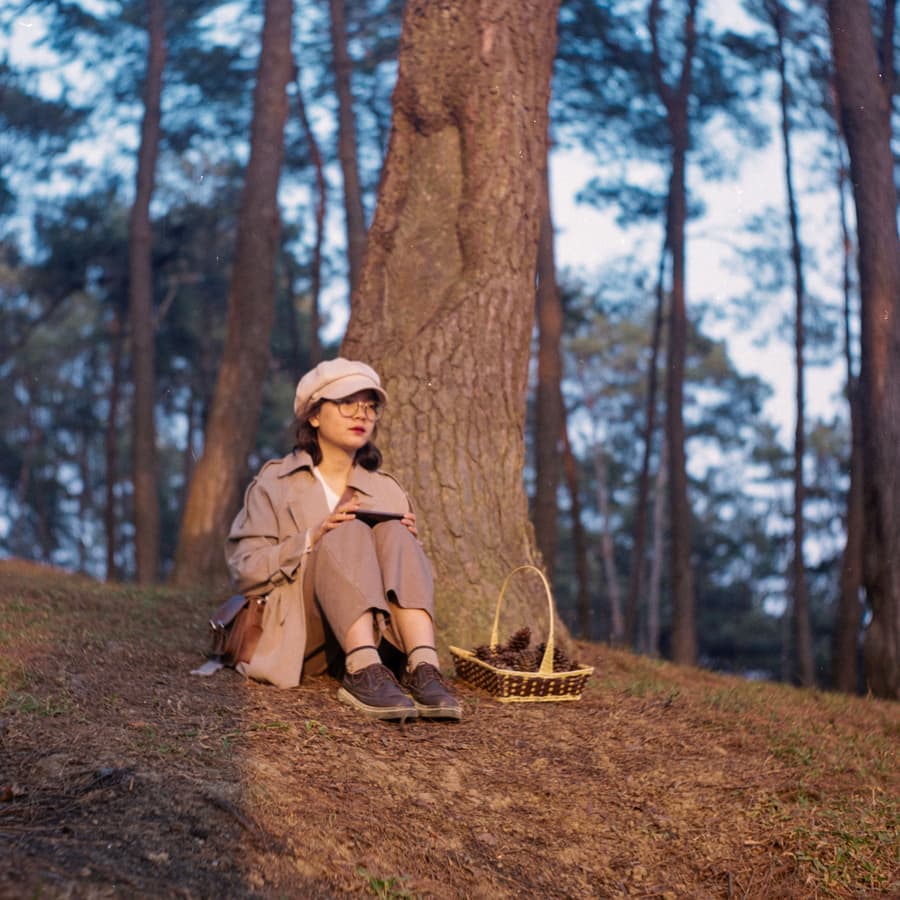
Best turkey chair for a first season
ALPS OutdoorZ Vanish
Turkey seat7.0/10Seat 8 in high at the front and 5 in at the back, per ALPS: low enough to keep your back on the trunk. Arms, a 21 in backrest, 300 lb capacity, 7 lb, lifetime defect warranty.
Check price on Amazon#ad · Price set by Amazon · Disclosure for the link to ALPS OutdoorZ Vanish
- Illustrative photo
Best packable hen decoy for a first season
Avian-X LCD Lookout Hen
Hen decoy7.8/10A hen alone is the lowest-risk decoy to set where others may hunt. Collapsible, with a carbon stake, carry bag and compression strap included; Avian-X publishes no weight.
Check price on Amazon#ad · Price set by Amazon · Disclosure for the link to Avian-X LCD Lookout Hen
- Illustrative photo
Best kickstand vest for sitting where there's no good tree
ALPS OutdoorZ Grand Slam Turkey Vest
Vest with seat7.1/10A kickstand frame with a fold-away memory foam seat gives you a backrest where the right tree isn't. 7 lb 2 oz with the frame (Standard), 4 lb 10 oz without, per ALPS.
Check price on Amazon#ad · Price set by Amazon · Disclosure for the link to ALPS OutdoorZ Grand Slam Turkey Vest
Safety at the setup
Setup mistakes to avoid
- A skinny tree. It hides neither your outline from a turkey nor your back from other hunters.
- The middle of a big field. The NWTF's tip is to look for smaller openings instead.
- Raising the gun late. Get it on your knee before you call, not when he steps out.
- Bumping the roost on the way in. Arrive early and quietly; the NWTF warns that spooking birds “can disrupt patterns for weeks.”
- Setting a jake or strutter decoy where other hunters roam. Use a hen alone on shared ground.
More of these, and how to fix each, are in common turkey hunting mistakes. For the season as a whole, from license to walk-out, see how to turkey hunt for beginners.
How we picked this
Gear we claim to have field-tested: none
Plenty of turkey sites say they ran every call on the list all spring. We don't say that, and we say so on every page. What we do instead: read each maker's published specs, materials and instructions; note the sounds a maker says a call makes and how it says the call handles rain; check a choke's load ratings and thread chart; compare published weights, pockets and seat heights; and score all of it on a published rubric built around a first-season hunter. Every spec links to where it came from.
Scores are computed from that documented research with fixed bands, not field trials. Commissions never set a score or decide a pick. The rubric and its bands are published.
Questions
Frequently asked
What is the best turkey hunting setup for a beginner?
A wide tree at your back, a low seat, the gun already resting on your knee, and one hen decoy in the open inside your patterned range, all in place before first light between the bird and where he wants to go.
How far from a roosted turkey should you set up?
NWTF writers differ. One describes a hunter who stays 200 to 300 yards back early in the season and 75 to 100 yards in dense late-season cover; another says closer is usually better if you are in place a half-hour before light. Never so close that you flush him walking in.
Which way should you face when turkey hunting?
Face the direction you expect the gobbler to come from, with the tree or stump directly behind you. That way the gun is already pointed where he will appear, and your back is covered.
How far should a turkey decoy be from you?
Close and inside your patterned range. The NWTF advises keeping it close so a tom has to expose himself while looking it over. Which decoy to use is covered in jake vs hen decoy.
Do you need a chair for turkey hunting?
You don't need one, but a seat makes it much easier to sit still for a long time. A low chair such as the ALPS Vanish (8 in at the front, per ALPS) keeps your back on the trunk; a foam cushion weighs far less but gives no back support.
Should you set up against a tree or in a blind?
Either works. The NWTF's beginner guide says to find a substantial tree to lean against if you are not using a ground blind. Blinds hide more movement but cost weight and setup time; see the best turkey hunting blinds.
Keep reading
Related on Strut & Slate
- How to set up turkey decoysDistances and spreads for one, two or three decoys.
- Best turkey hunting chairsLow chairs, cushions and a big-guy pick.
- How often to call turkeysWhat to do once you're sitting.
- Where to aim on a turkeyThe last step of the setup.
- Best turkey vests with seatsCarry the seat on your back.
- How to turkey hunt for beginnersWhere the setup fits in the whole season.
Receipts
Sources
- National Wild Turkey Federation — Turkey Hunting 101 (NWTF Editorial Staff, 2021-11-19) (read 2026-09-22)
- National Wild Turkey Federation — Ten Tips to Get Them Close (2022-03-29) (read 2026-09-22)
- National Wild Turkey Federation — Plan to Roost (Laurie Lee Dovey, 2025-09-08) (read 2026-09-22)
- National Wild Turkey Federation — Great Roost Hunts (Brian Lovett, 2021-08-25) (read 2026-09-22)
- National Wild Turkey Federation — The All-Day Turkey Hunting Game Plan (Josh Honeycutt, 2024-03-26) (read 2026-09-22)
- National Wild Turkey Federation — 10 Commandments Of Public Land Turkey Hunting (Josh Honeycutt, 2024-01-22) (read 2026-09-22)
- Vermont Fish & Wildlife Department — Turkey Hunting Safety Tips from VTF&W (2026-04-29) (read 2026-09-22)
- Pennsylvania Game Commission — Gobblers Take Center Stage in Penn's Woods (2026-04-20) (read 2026-09-22)
- New York State DEC — Turkey Hunting Regulations (read 2026-09-22)
- Virginia DWR — Turkey Hunting Regulations and Seasons (read 2026-09-22)
- ALPS OutdoorZ — Vanish chair product page (read 2026-09-22)
- Barronett Blinds — Ground Gobbler Chair product page (read 2026-09-22)
- ALPS OutdoorZ — Terrain Seat 3" product page (read 2026-09-22)
- Barronett Blinds — Aluminum XL Blind Chair product page (read 2026-09-22)
- ALPS OutdoorZ — Warranty and return policy (read 2026-09-22)
- Avian-X — LCD Lookout Hen product page (read 2026-09-22)
- ALPS OutdoorZ — Grand Slam Turkey Vest product page (read 2026-09-22)
- H.S. Strut — Push Button Yelper product page, SKU HS-STR-07056 (read 2026-09-22)
We don't claim to have field-tested, owned or hunted with the products on this page. Specs come from the maker's own product pages and manuals (or a named dealer's copy when the maker's site blocked us), sound and performance claims are attributed to the maker, and any third-party observation is attributed to whoever made it. Amazon prices change often, so we don't print them. Where a figure isn't published, we say so and it earns the lowest band. Read the full method.