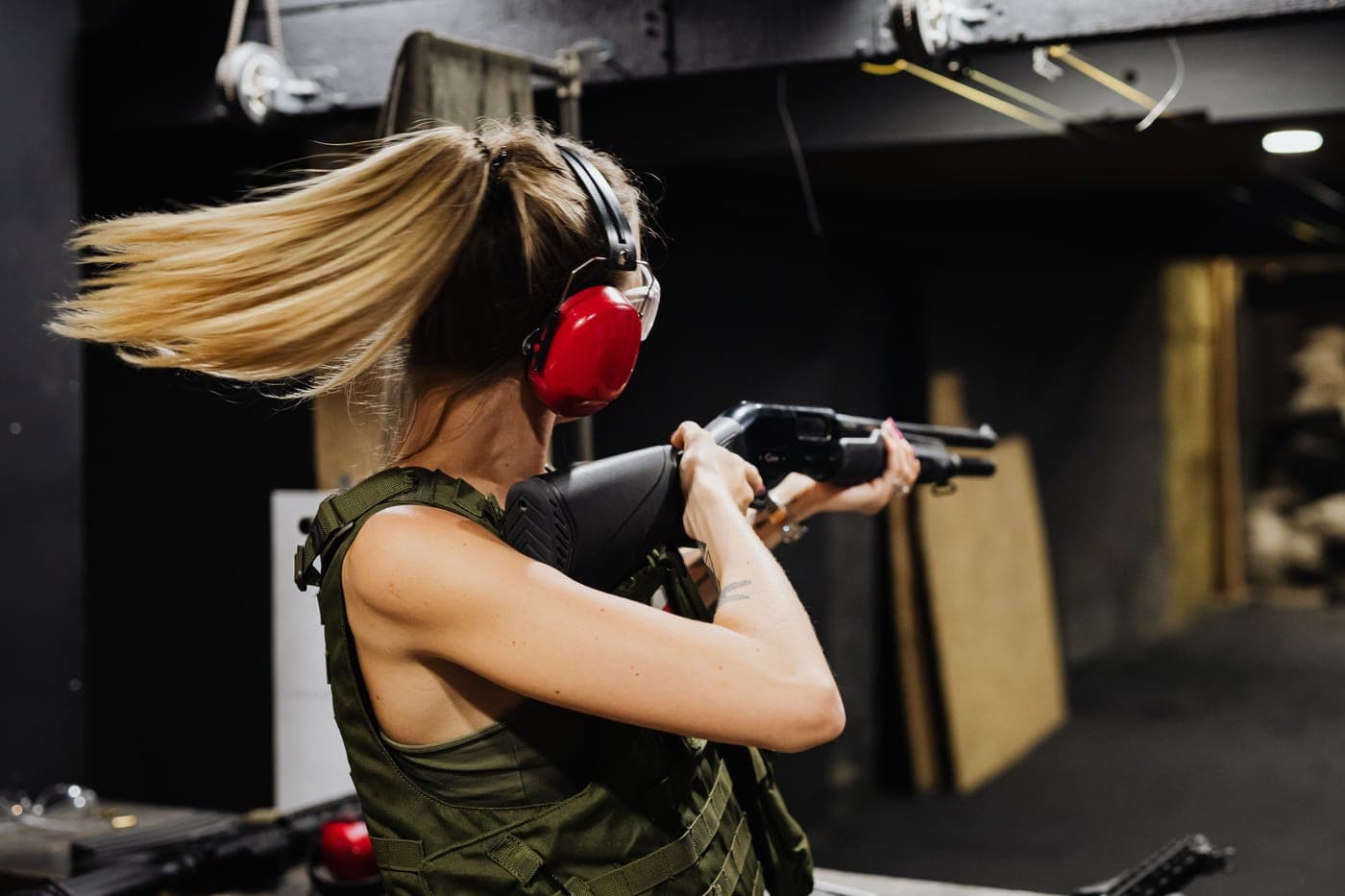
This is the page the rest of our guns, chokes and loads section keeps pointing back to, because patterning is the only honest way to answer “how far can I shoot?” We have not fired these patterns ourselves. Every distance, circle size and pellet count below is quoted from the source that published it: Mississippi State University Extension, the National Wild Turkey Federation (NWTF), state wildlife agencies, and the choke and ammunition makers' own instructions, each one named and linked.
Why a turkey gun has to be patterned
A turkey is not shot like a deer. Hunter education courses teach a head-and-neck shot with a shotgun: the Pennsylvania hunter safety course explains that “because of the thick feathers and heavy wing bones protecting the vital organs, shot may not be able to penetrate to the vital organs.” Texas Parks & Wildlife teaches the same aiming point.
That is a small target. Writing for the NWTF, Federal Ammunition's JJ Reich puts it at about “4 square inches” for a turkey's head and the spinal column in its neck. You are trying to put enough pellets into a space roughly the size of a playing card, at a distance you have to judge in the dark under the trees. A pattern that is thin, or centered six inches off where you aimed, misses or wounds. Neither one shows up on the box the shells came in.
Patterning also finds the near edge. Brian Lovett, writing for the NWTF about missed birds, notes that “with today's ultra-tight chokes, shooting a turkey closer than 20 steps can be tough.”
What you need to pattern a turkey gun
- The gun, choke and load you will actually hunt with. Change any one of them and the pattern changes. If you have not picked a tube yet, start with what choke for turkey hunting.
- Big paper targets. MSU Extension recommends “a roll of brown wrapping paper” cut into “several 3-by-3-foot pieces.” Trulock suggests “a very large target, 3 or 4 foot square,” and Indian Creek's process starts with a 4 ft x 4 ft target. Printed turkey targets go on top of that paper so you have an aiming point.
- A solid rest. MSU Extension: “the most stable method is to shoot off of a table while seated using shooting bags or a range sled.” J. Wayne Fears, writing for the NWTF, says to “eliminate human error during your patterning session by using a solid rest.”
- A measured 40 yards, plus 20 and 30 yards marked as well. Pace it off once with a tape so you know what your own stride is worth.
- A marker pen to draw the circle and mark holes, a staple gun or tape, and something to hold a 3 ft target.
- Hearing and eye protection, and a place you are allowed to shoot a shotgun at paper with a safe backstop.
How to pattern a turkey gun, step by step
- Set the target at 40 yards. MSU Extension: “a standard distance among turkey hunters to test turkey loads is 40 yards.” Apex Ammunition calls a 10-inch circle at 40 yards “the industry standard for a turkey pattern.” Carlson's says 40 yards “is a good start.”
- Sit down and get solid. Shoot seated off a table with bags or a sled, the way you would sight in a rifle. This is about the gun, not your steadiness.
- Aim at the head and neck of the printed bird, or at a small mark you make on plain paper. Aim at the same spot every shot.
- Fire one shot per target. One shot, one sheet, one label written on it: choke, shell, shot size, distance.
- Take the target down and lay it flat. MSU Extension: “lay the target down and draw a 10-inch circle around the heaviest part of the pattern.” Indian Creek says the same thing more bluntly: trace the circle around the “center of shot pattern, not aiming point.”
- Count the holes inside the circle. MSU Extension's method is to “take a pen and begin circling the pellet holes, mentally counting the number within the circle.” Marking each hole as you count is what keeps you from counting one twice.
- Repeat, because one target is not an answer. Carlson's: “shoot multiple targets to eliminate deviation. A 3-5 target average will give you a better idea of how the choke and load will perform together.”
- Do it again at 20 and 30 yards. Fears' NWTF routine is to “use those targets to shoot at 20, 30 and 40 yards.” Apex encourages patterning “in 10 yard increments from 10 – 60 yards.”
- Write the numbers down and keep them. The sheet of paper with “40 yd, 117 in the circle” on it is the only yardage chart that applies to your gun.
How to count pellets in the circle
Two rules decide whether the count means anything. First, the circle goes around the densest part of the pattern, not around your aiming point. A gun that throws its pattern high and left still gets counted where the pellets landed; the gap between the two is a separate problem you fix with sights, covered below.
Second, the circle is 10 inches for the count. A 30-inch ring does a different job: Fears' NWTF method is to “start using a large target with a 30-inch outer ring to check the pattern's center,” then “switch to using a smaller head and neck gobbler target that shows the spine and brain.” Carlson's instructions also describe a target area “that would hold a 30 inch circle.” Big ring to find the center, 10-inch circle to count what is in it.
What counts as a good turkey pattern
Here is what each published source names as the target number. They agree closely, which is unusual and useful.
| Source | Distance | Circle | What it says to look for |
|---|---|---|---|
| MSU Extension, P3234 | 40 yards | 10 inches | “A standard ‘acceptable’ pellet count in a 10-inch circle at 40 yards is 100 holes.” |
| NWTF (JJ Reich, Federal Ammunition) | 40 yards | 10 inches | “At least 100 pellets within a 10-inch circle, with at least 10 pellets in the turkey's vital area.” |
| Apex Ammunition | 40 yards | 10 inches | “The general rule of thumb is to get 100 pellets in a 10" circle in order to consistently kill a turkey.” |
| Carlson's Choke Tubes | 40 yards “is a good start” | Target that holds a 30-inch circle | Average 3 to 5 targets per choke-and-load combination. |
| Indian Creek | 40 yards | 10 inches, traced around the pattern's center | Count the hits, then repeat for every choke and shell combination. |
| Trulock | 40 yards | 10 inches | “On average we see 50-60% of the total payload in a 10" circle at 40yds using TSS.” |
Check where the gun is hitting, not just how thick
A dense pattern centered eight inches from your aiming point is a miss waiting to happen. Apex's reasoning for patterning at 40 yards is exactly this: “at 40 yards you will be able to effectively measure your point of aim versus point of impact.” Fears' NWTF list ends with the fix: “adjust your sights if the center of the pattern's mass is off.”
Two things commonly move point of impact. One is a new choke — Indian Creek warns on its own tips page that “it is very likely possible that your new choke tube will change your point of impact.” The other is adding a sight: a bead sits on the barrel and a red dot sits above it, so a gun that shot where you looked with the bead will not with a dot until you zero it. The ones we score are in our red dot picks for turkey hunting, and the rule is simple: mount it first, then pattern.
How to compare loads and chokes fairly
Change one thing at a time. Same rest, same distance, same aiming point, same number of shots, and only the choke or only the shell different between stacks of targets. Label every sheet before you set it down, because four targets in, they all look alike.
Federal's own load selection page recommends the same approach: “the best way to pin down what meets your needs is to shoot a variety of turkey loads from 10 to 50 yards and compare the number of hits within a 10-inch circle.” Missouri's Department of Conservation gives beginners the plainest version: “pattern your gun with several sizes and select the load and shot size that pattern best.”
A tube rated for the shells you are feeding it matters more than a tighter number on the box. Kick's says its Gobblin' Thunder tubes “can be safely used with lead, TSS, or other non-toxic loads,” while Carlson's prints on every turkey choke page, “never shoot steel shot larger than #4 through any turkey choke.” The whole field is ranked in our best turkey chokes.
How to decide your own maximum range
This is the payoff. Once you have counted targets at 20, 30 and 40 yards, your maximum range is the longest distance where your average count still clears the bar.
- Average the counts at each distance (3 to 5 targets, per Carlson's).
- Find the farthest distance where the average is still at or above 100 in the 10-inch circle.
- Check that the center of the pattern is landing where you aimed at that distance.
- Take the shorter of that number and the limit your state agency or your own comfort sets.
Missouri's Department of Conservation is blunt: “shooting at a turkey at more than 40 yards is not recommended, regardless of which gauge shotgun is used,” and its hunter ethics page says “30 to 40 yards is about the average limit for a clean kill.” Lovett's NWTF advice is to “ideally, try to shoot turkeys at 20 to 40 yards, where you're sure to have a good, thick pattern.” Makers publish longer numbers for their own products, and we take that argument apart in how far can you shoot a turkey.
What to look for in targets and a choke
You need surprisingly little. For targets, look for a printed head-and-neck aiming point, paper big enough to catch the fringe at 40 yards, and enough sheets to average three to five shots per combination. Plain brown wrapping paper does the counting job, and the printed turkey goes on top of it.
For the choke, look for three things the maker actually publishes: which loads the tube is rated for, which thread system your gun uses, and an exit diameter in writing. A smaller number is not automatically better; Carlson's own chart says it “is to be used as a starting point; there are exceptions for every shotgun and load.” That is what patterning settles.
Targets and a choke to pattern with
Our picks for this
Two turkey targets and a tube rated for either load
Both targets in our registry are printed turkey targets, and we score them on what their makers publish. The choke is the one tube here that its maker rates for lead and TSS, so a first patterning session can compare both without buying two tubes.
- Illustrative photo
Best pattern target for a first gun
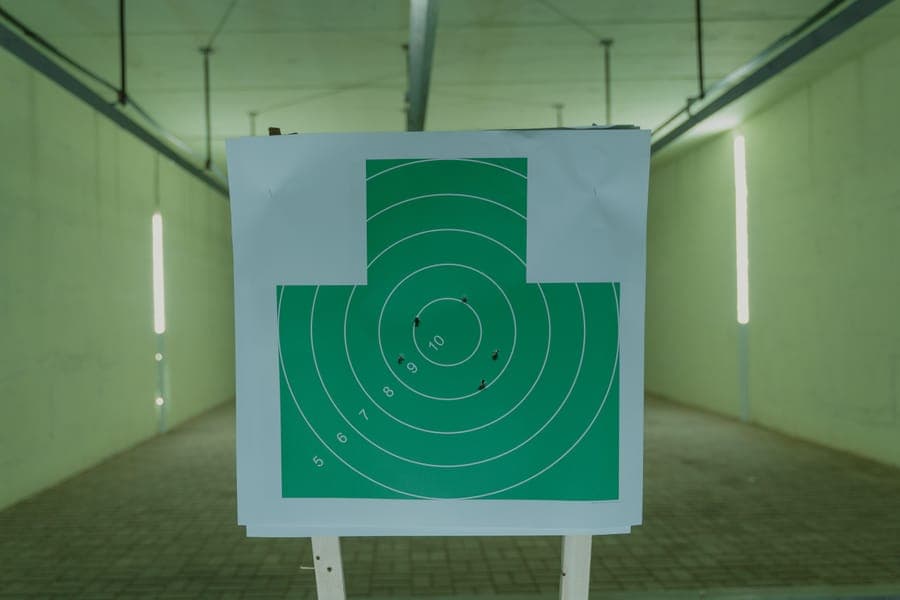
Allen Company EZ Aim Four Color Turkey Patterning Paper Target, 12 in Square, 6-Pack
Shooting accessory7.8/10Six 12 in square targets per pack, which Allen says are designed "to test how your turkey shotgun patterns." Staple them over a wider sheet of paper so the fringe is caught.
Check price on Amazon#ad · Price set by Amazon · Disclosure for the link to Allen Company EZ Aim Four Color Turkey Patterning Paper Target, 12 in Square, 6-Pack
- Illustrative photo
Best full-color turkey target
Birchwood Casey PREGAME 12 x 18 Inch Turkey Target
Shooting accessory6.3/10A 12 in x 18 in full-color bird with colored reactive zones and splatter hits. Birchwood Casey's own page says 8 targets in the title and 3 per pack in the features, so confirm the count on the listing.
Check price on Amazon#ad · Price set by Amazon · Disclosure for the link to Birchwood Casey PREGAME 12 x 18 Inch Turkey Target
- Illustrative photo
Best turkey choke for lead or TSS
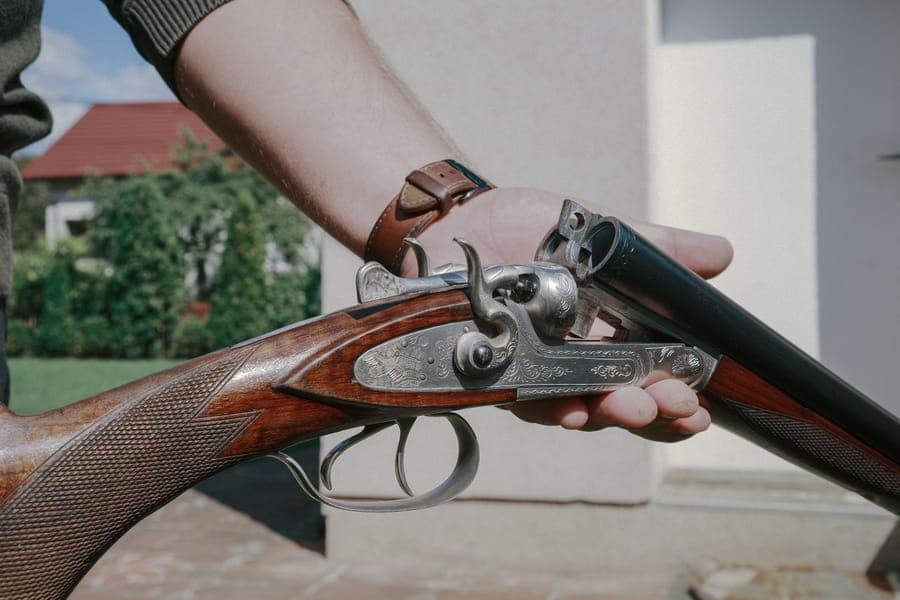
Kick's Gobblin' Thunder Turkey Choke Tube, 12 Gauge
Turkey choke9.3/10Kick's rates it for "lead, TSS, or other non-toxic loads" and publishes up to six exit diameters in one thread. Check your thread system before ordering; some Kick's pages are marked non-returnable.
Check price on Amazon#ad · Price set by Amazon · Disclosure for the link to Kick's Gobblin' Thunder Turkey Choke Tube, 12 Gauge
| Evidence | Allen Company EZ Aim Four Color Turkey Patterning Paper Target, 12 in Square, 6-Pack | Birchwood Casey PREGAME 12 x 18 Inch Turkey Target |
|---|---|---|
| Type | Paper turkey patterning target (SKU 15322) | PREGAME full-color paper game target, turkey (SKU BC-35403) |
| Dimensions | 12 in x 12 in | 12 in x 18 in |
| Included | 6-pack | Listed as 8 targets in the product title; the same page's key features say "3 targets per pack" (see Notes for writers) |
| Weight | 0.15 lb (2.4 oz) for the pack | Not published |
| Warranty | Allen Company one-year limited warranty against defects in materials or workmanship | Not published |
| Score | 7.8/10 | 6.3/10 |
Neither target prints a counting grid. That is fine: the circle you count in is one you draw yourself, after the shot, around the middle of the pattern.
Safety at the range and after it
When to pattern again
Fears' NWTF list is the clearest rule published anywhere: “every time you change your choke tube, shotshell brand, go from led shot to extra dense, or change pellet size or sighting system, the pattern will most certainly change.” In plain terms, re-pattern when you change the tube, the brand of shell, the shot size, the shot material, or the sight. Re-pattern once before every season too: for most turkey hunters it is the only shooting practice they get all year.
Common patterning mistakes
- Patterning at 25 yards and calling it done. The published standard is 40 yards, and the whole point is to learn where the pattern stops being dense enough.
- Shooting offhand. Without a rest you are measuring your own wobble. MSU Extension and the NWTF both start with a solid rest for that reason.
- Drawing the circle around the aiming point. Indian Creek's instruction is to trace it around the center of the shot pattern instead, then fix the offset with your sights.
- Firing one shot and trusting it. Patterns vary shot to shot, which is why Carlson's recommends averaging 3 to 5 targets.
- Never checking the close range. Trulock notes that a pattern “can be so small it becomes easy to miss at close range,” which is why 20 yards belongs in the session.
How we picked this
Gear we claim to have field-tested: none
Plenty of turkey sites say they ran every call on the list all spring. We don't say that, and we say so on every page. What we do instead: read each maker's published specs, materials and instructions; note the sounds a maker says a call makes and how it says the call handles rain; check a choke's load ratings and thread chart; compare published weights, pockets and seat heights; and score all of it on a published rubric built around a first-season hunter. Every spec links to where it came from.
Scores are computed from that documented research with fixed bands, not field trials. Commissions never set a score or decide a pick. The rubric and its bands are published.
Questions
Frequently asked
How do you pattern a turkey gun?
Shoot one shot at a large paper target 40 yards away from a seated, solid rest, aiming at the head and neck. Lay the target down, draw a 10-inch circle around the densest part of the pattern, and count the holes inside it. Repeat for 3 to 5 targets and average them.
How far should you pattern a turkey gun?
40 yards is the standard distance, per MSU Extension and Apex Ammunition. Also pattern at 20 and 30 yards, as the NWTF's J. Wayne Fears recommends, so you know what the pattern does at the ranges most birds are actually shot.
How many pellets should be in a turkey pattern?
MSU Extension gives 100 holes in a 10-inch circle at 40 yards as the standard acceptable count. Writing for the NWTF, Federal's JJ Reich states the same rule with a second half: at least 10 of those pellets should land in the roughly 4 square inches of head and neck.
How many shots does it take to pattern a turkey gun?
One shot per target, and Carlson's recommends averaging 3 to 5 targets for each choke-and-load combination. Across three distances with one combination, that is roughly 9 to 15 shells.
What size circle do you use to pattern a turkey gun?
A 10-inch circle for counting pellets, drawn around the center of the pattern rather than your aiming point. A 30-inch ring is used first, per the NWTF, just to see where the pattern's center is landing.
Do you have to re-pattern after installing a new choke or red dot?
Yes. Indian Creek warns that a new choke tube will very likely change your point of impact, and the NWTF's patterning advice lists a change of sighting system alongside a change of choke or shell as a reason the pattern will change.
Keep reading
Related on Strut & Slate
- Best turkey loads for 12 gaugeCandidate shells to take to the patterning session.
- Best turkey shotgun scopesA new sight means patterning again from scratch.
- How far can you shoot a turkeyWhat your counted pattern means for your real limit.
- What choke for turkey huntingConstrictions by gauge and load, from the makers' charts.
- Best turkey chokesThe tubes we score, lead-rated and TSS-rated.
- Best red dots for turkey huntingMount it before you pattern, then zero it.
- What size shot for turkeyShot sizes by gauge and load type, with pellet counts.
- Where to aim on a turkeyThe head-and-neck shot your pattern has to cover.
Receipts
Sources
- Mississippi State University Extension — How to Pattern a Shotgun for Turkey Hunting (P3234) (read 2026-09-22)
- NWTF — Is the Age-Old Pattern Rule Still Viable? (read 2026-09-22)
- NWTF — 5 Ways to Evaluate your Turkey Pattern (read 2026-09-22)
- Apex Ammunition — Why We Pattern at 40 Yards in 10" & 30" Targets (read 2026-09-22)
- NWTF — Anatomy of a Miss: Why Turkey Hunters Whiff and How to Avoid It (read 2026-09-22)
- Hunter-ed.com (Pennsylvania Hunter Safety Course) — Where to Aim When Turkey Hunting (read 2026-09-22)
- Texas Parks & Wildlife — Shots to the Vital Areas (hunter education course) (read 2026-09-22)
- Missouri Department of Conservation — Turkey Hunting Equipment (read 2026-09-22)
- Missouri Department of Conservation — Turkey Hunter Safety and Ethics (read 2026-09-22)
- Missouri Department of Conservation — Turkey: Regulations (read 2026-09-22)
- New York State DEC — Turkey Hunting (read 2026-09-22)
- Federal Premium — How To Select The Best Turkey Loads (read 2026-09-22)
- NWTF — Turkey Hunting 101 (read 2026-09-22)
- Vermont Fish & Wildlife — Turkey Hunting Safety Tips from VTF&W (read 2026-09-22)
- Maryland DNR — Turkey Hunting Safety Tips (read 2026-09-22)
- Carlson's Choke Tubes — Choke Tube Information page: 17-4 PH stainless, patterning information, turkey choke chart by load size (read 2026-09-22)
- Indian Creek Shooting Systems — Tips And Tactics: patterning process at 40 yards, TSS guidance (read 2026-09-22)
- Trulock Chokes — Turkey Hunting page: TSS and Longbeard XR choke recommendations, patterning advice (read 2026-09-22)
- Kick's Industries — Gobblin' Thunder Turkey Choke Tubes page (17-4 PH, ported, lead/TSS statement, choke selector) (read 2026-09-22)
- Kick's Industries — store product data (products.json), Gobblin' Thunder listings by thread system and gauge (read 2026-09-22)
- Kick's Industries — Invector Plus Gobblin' Thunder 12G product page (read 2026-09-22)
- Kick's Industries — Our Guarantee page (no warranty terms shown) (read 2026-09-22)
- Allen Company — EZ Aim Four Color Turkey Patterning Paper Target, 12 in square, 6-pack, SKU 15322 (read 2026-09-22)
- Allen Company — Warranty page, one-year limited warranty (read 2026-09-22)
- Birchwood Casey — PREGAME 12 x 18 Inch Turkey target product page, SKU BC-35403 (birchwoodcasey.com blocks direct fetches; read 2026-09-22 from the Wayback Machine capture of 2025-08-09)
We don't claim to have field-tested, owned or hunted with the products on this page. Specs come from the maker's own product pages and manuals (or a named dealer's copy when the maker's site blocked us), sound and performance claims are attributed to the maker, and any third-party observation is attributed to whoever made it. Amazon prices change often, so we don't print them. Where a figure isn't published, we say so and it earns the lowest band. Read the full method.