Turkey choke vs full choke, in plain words
A choke squeezes the shot column on its way out of the barrel. The more it squeezes, the longer the pellets hold together downrange. Duck and clay shooters want a spread; a turkey hunter is aiming at a head and neck, so they want the opposite: as many pellets as possible inside a circle the size of a saucer, because that is roughly the size of the target (where to aim on a turkey covers the rest of that). It is why the guns and loads hub treats the choke as the first upgrade worth making to a shotgun you already own.
Carlson's publishes the scale everyone argues about, and it settles the question cleanly. These are constrictions, meaning how much tighter than your barrel's bore the tube is, not the number stamped on the side of most turkey tubes.
| Choke | Constriction (tighter than bore) | What it is for |
|---|---|---|
| Cylinder | 0.000 in (bore) | No constriction at all |
| Improved Cylinder | 0.010 in | Close, fast birds |
| Modified | 0.020 in | The general-purpose tube in most gun cases |
| Improved Modified | 0.025 in | A step tighter |
| Full | 0.030 in | The tightest tube most factory guns ship with |
| Extra Full | 0.040 in | Tighter again; what many turkey guns came with |
| Turkey (TKY) | 0.045 in or more | A dedicated turkey tube |
So: a full choke is not useless on a turkey inside close range, it is simply a looser tube than the job wants. Missouri's Department of Conservation puts the practical version on its turkey hunting equipment page: “The most popular is an extra-full choke, which gives the tightest pattern. A tight pattern is important in order to strike the vital head-and-neck area.”
Constriction by gauge, as the makers publish it
Here is the confusing part, and it trips up almost everyone: the number printed on a turkey tube, 0.660 in or 0.555 in, is usually the exit diameter, the width of the hole at the muzzle. It is not the constriction. To turn one into the other you have to know your barrel's bore. Kick's publishes standard bores of 0.730 in for a Remington 12 ga, 0.743 in for a Browning Invector Plus and 0.775 in for a Mossberg Ultimag, which is why a Mossberg 835 turkey tube looks so much “bigger” than a Remington one and is not looser at all.
| Gauge | Published exit diameters | Who publishes what |
|---|---|---|
| 12 ga (standard bore) | 0.640 to 0.685 in | Carlson's TSS 0.640 to 0.675 in; Carlson's Extended Turkey 0.640 to 0.680 in; Kick's 0.655 to 0.685 in; Indian Creek 0.660 to 0.670 in; Patternmaster 0.665 in; Primos 0.650 to 0.670 in |
| 12 ga Mossberg 835/935 | 0.670 to 0.690 in | Carlson's TSS 0.675 in, Long Beard 0.683 in, Extended 0.690 in; Indian Creek 0.675 or 0.690 in; Primos 0.670 or 0.690 in; Kick's 0.670 to 0.685 in |
| 20 ga | 0.555 to 0.570 in | Carlson's 0.555, 0.565 and 0.568 in; Indian Creek 0.555, 0.562 and 0.570 in; Kick's 0.560 or 0.570 in; Primos 0.570 in |
| .410 | 0.380 to 0.390 in | Carlson's 0.380 and 0.385 in; Indian Creek 0.385 and 0.390 in; Primos 0.390 in; Patternmaster 0.381 in |
Two things follow from that table. First, a smaller number is not automatically better. Second, the useful spread inside one gauge is tiny, a few thousandths of an inch, which is why the load you shoot through the tube matters more than shaving another 0.005 in off the exit.
Carlson's is the one maker in this group that publishes a chart matching exit diameter to shot size. On its choke tube information page it pairs a Winchester/Invector 12 ga barrel with 0.670 in for No. 4 shot, 0.660 in for No. 5 and No. 6, and 0.640 in for card and block shooters, then adds the caveat that matters most: “This chart is to be used as a starting point; there are exceptions for every shotgun and load.” Which shot size to start from in the first place is the subject of what size shot for turkey.
Thread systems: which tube your gun can actually take
Choke tubes are threaded for a barrel, not for a brand name. Get this wrong and the tube will not seat, or worse, it will go in badly. Indian Creek's installation note is worth reading twice: “make sure threads screw-in smoothly and that the choke is completely seated in the barrel. If these steps are not followed damage may be caused to barrel and/or choke.” Never force one.
| Your gun | Thread system | How to recognize the flush factory tube |
|---|---|---|
| Mossberg 500, 510, 535, 590, 930, 940, 1000, 5500, 9200, Maverick 88 | Winchester / Browning Invector / Mossberg 500 | Browning Invector flush tube is about 1.5 in with threads at the bottom |
| Mossberg 835, 935, 535 Turkey Thug | Mossberg 835/935 (a different, larger thread) | Kick's: “Mossberg has multiple thread systems that are not interchangeable” |
| Remington 870, 887, 11-87, 1100, V3 | Rem Choke | Flush tube about 2 in long, threads at the bottom |
| Remington 870 Bone Collector, Versa Max, 105CTi, Premier O/U | Remington Pro Bore | Flush tube about 2 in long, threads at the top |
| Winchester SX2, SX3, SX4, SXP; Browning Maxus, Citori 12 and 20, Gold Hunter | Browning Invector Plus | Flush tube about 2.4 in long |
| Browning A5 (new), 725 Citori | Browning Invector DS | Flush tube about 3.1 in long |
| Benelli SBE 2 and 3, M2, Vinci, Ethos, Montefeltro after 2007 | Benelli Crio / Crio Plus | Flush tube about 2.75 in, threads about 3/4 in from the top |
| Benelli SBE I, Nova, Super Nova, M1, M3, M4, Montefeltro before 2007 | Benelli Mobil | Flush tube about 2 in, threads at the top |
| Beretta A300 Ultima, A300 Outlander, 390 series, 686 Silver Pigeon | Beretta Mobil | Carlson's files Beretta Mobil separately from Benelli Mobil |
| Beretta A400 Xplor, 1301, 690, new 686 Silver Pigeon | Beretta Optima HP | Sold as its own product line by every maker here |
| .410 Mossberg 500, Browning BPS and Citori, CVA Scout, Henry | Carlson's Long Invector (Invector Plus pattern) | Carlson's 1.9 in flush .410 tube |
| .410 Stevens 301 | Short Invector (Winchester pattern) | Carlson's 1.5 in flush .410 tube |
Three traps are worth saying out loud. A Mossberg 500 and a Mossberg 835 are not the same thread. An 870 may be Rem Choke or Pro Bore, and Carlson's puts the 870 Bone Collector in the Pro Bore group. And Carlson's prints this in capitals on its Winchester/Invector pages: “DOES NOT FIT WINCHESTER SX-2, SX-3, SX-4 or SXP” — those pumps and autos take Invector Plus. When in doubt, open the maker's interchange guide and find your exact model. We have already done that for the two most common first turkey guns in the Mossberg 500 choke picks and the Remington 870 choke picks. Carlson's also notes that it does not make a .410 Remington 870 Pro Bore tube at all.
What to look for in a turkey choke
Five things decide whether a tube is right for you, and all five are printed on the maker's own page. If a maker will not tell you one of them, treat the silence as information.
- The loads it is rated for. Lead, copper-plated lead, HEVI-Shot and TSS are not interchangeable in a maker's eyes. Kick's names “lead, TSS, or other non-toxic loads.” Carlson's TSS Turkey names Federal Premium Heavyweight TSS and shot sizes 7 to 9. Indian Creek names “all lead and hybrid heavy loads” and refers TSS questions to the shell makers. Patternmaster and JEBS publish no load rating.
- Your thread, from the maker's own chart. Not a retailer listing title, which is where most wrong-tube stories start.
- How many exit diameters it comes in for that thread. Kick's offers up to six in the Invector Plus 12 ga thread, and Indian Creek offers two or three in most models. Carlson's, Primos and Patternmaster each offer one, which is simpler and leaves you nowhere to go if the pattern disappoints.
- What it is made of, and whether it is ported. Carlson's, Kick's and Patternmaster all publish 17-4 PH stainless steel. Primos publishes chrome alloy steel for the Tight Wad and no material for its TSS tube. Indian Creek publishes no material but does publish 30 parallel ports and tool-free installation.
- Whether the maker helps you use it. Carlson's publishes patterning instructions and a load chart, Indian Creek publishes a nine-step patterning process, and Kick's publishes a choke selector tool. Others publish installation steps only.
Three tubes that meet the bar
Our picks for this
A 12-gauge tube, a 20-gauge tube and a dedicated TSS tube
These are the tubes whose makers publish the most of what the list above asks for. Two are the same line in different gauges, which is the honest answer: Kick's is the only line here rated for both lead and TSS in 12 and 20.
- Illustrative photo
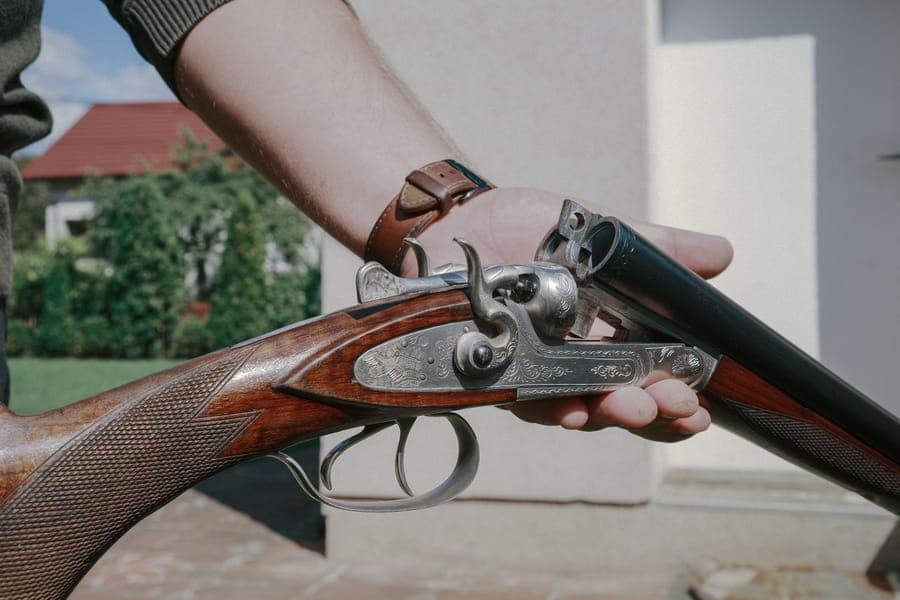
Best turkey choke for lead or TSS
Kick's Gobblin' Thunder Turkey Choke Tube, 12 Gauge
Turkey choke9.3/10Rated by Kick's for lead, TSS and other non-toxic loads, in 19 separate 12 ga thread versions and up to six exit diameters (0.655 to 0.685 in) inside the Invector Plus thread. Kick's publishes no warranty terms.
Check price on Amazon#ad · Price set by Amazon · Disclosure for the link to Kick's Gobblin' Thunder Turkey Choke Tube, 12 Gauge
- Illustrative photo
Best 20-gauge turkey choke
Kick's Gobblin' Thunder Turkey Choke Tube, 20 Gauge
Turkey choke8.7/10The same 17-4 stainless, ported design in 20 ga at 0.560 or 0.570 in, across 12 thread versions. Kick's names threads rather than guns, so Mossberg 500 owners should check Carlson's or Indian Creek instead.
Check price on Amazon#ad · Price set by Amazon · Disclosure for the link to Kick's Gobblin' Thunder Turkey Choke Tube, 20 Gauge
- Illustrative photo
Best dedicated TSS choke for 12 gauge
Carlson's TSS Turkey Choke Tube, 12 Gauge
Turkey choke7.4/10The dedicated tungsten option: Carlson's built it around Federal Premium Heavyweight TSS and shot sizes 7 to 9, in 8 thread systems from 0.640 to 0.675 in, with a lifetime warranty.
Check price on Amazon#ad · Price set by Amazon · Disclosure for the link to Carlson's TSS Turkey Choke Tube, 12 Gauge
Those three are a starting point, not the whole field. The full 12-gauge ranking, including the budget tube and the lead-load specialists, is in our best turkey chokes list; the 20 ga field is in our 20-gauge choke picks; and every tube whose maker names tungsten is in our TSS choke picks.
Why every chart on this page is only a starting point
Two barrels with the same factory choke marking can have different bores, and the same tube will print differently in each. Trulock, which makes chokes and publishes more patterning guidance than most, states it flatly: a choke of a given exit diameter “is usually going to give a different pattern when used in guns of different bore diameters. Take a Beretta at .723 a Remington at .727 a Browning I.P. at .740 and using a .660 in all three guns normally gives three different patterns.”
Which is why the number that matters is not on any of these tables. It is the count of pellet holes in a 10 in circle on a paper target you shot yourself. Mississippi State University Extension's guide to patterning a shotgun for turkey hunting gives the method: 40 yards, a 3 by 3 ft sheet of brown wrapping paper, the gun rested on bags, then “lay the target down and draw a 10-inch circle around the heaviest part of the pattern” and count the holes. It calls 100 holes the standard acceptable count. Our step-by-step version is in how to pattern a turkey gun.
Four ways beginners get this wrong
- Buying by brand instead of by thread. Every maker here sells the same model in six to nineteen different threads. The model name tells you nothing about whether it fits.
- Chasing the smallest number. A tighter exit can shrink the pattern until you miss a close bird. The NWTF's account of why turkey hunters whiff says it directly: “With today's ultra-tight chokes, shooting a turkey closer than 20 steps can be tough,” and at 11 steps the writer's pattern was “the size of a quarter.” Its advice is to keep shots between 20 and 40 yards and to pattern at each distance, because the pattern size changes a great deal between them.
- Running steel shot through a turkey tube. Carlson's: “Do Not Use Any Steel Shot Larger Than #4, Slugs, Sabots, Rifled Slugs, or 00/000 Buckshot.” Primos and Patternmaster ban steel outright in theirs. If the same gun goes duck hunting, check the barrel before every season.
- Installing it and never shooting it. A choke is a change to the gun. Until you have patterned it, you do not know where it hits or how far it is good for.
How we picked this
Gear we claim to have field-tested: none
Plenty of turkey sites say they ran every call on the list all spring. We don't say that, and we say so on every page. What we do instead: read each maker's published specs, materials and instructions; note the sounds a maker says a call makes and how it says the call handles rain; check a choke's load ratings and thread chart; compare published weights, pockets and seat heights; and score all of it on a published rubric built around a first-season hunter. Every spec links to where it came from.
Scores are computed from that documented research with fixed bands, not field trials. Commissions never set a score or decide a pick. The rubric and its bands are published.
Questions
Frequently asked
What choke do I use for turkey hunting with a 12 gauge?
A dedicated turkey tube. In 12 ga the makers in our registry publish exit diameters from 0.640 to 0.685 in for a standard bore, and 0.670 to 0.690 in for the larger-bored Mossberg 835 and 935. Which one patterns best in your gun depends on your barrel and your load, so start with the maker's recommendation and shoot it.
What choke for turkey hunting with a 20 gauge?
A 20 ga turkey tube, published between 0.555 and 0.570 in: Carlson's at 0.555, 0.565 or 0.568 in, Indian Creek at 0.555, 0.562 or 0.570 in, Kick's at 0.560 or 0.570 in and Primos at 0.570 in. The gauge does not change the job; it just leaves you fewer pellets to work with.
Turkey choke vs full choke: what is the difference?
Tightness. On Carlson's published constriction scale a Full choke is 0.030 in tighter than the bore, Extra Full is 0.040 in, and a turkey tube is 0.045 in or more. A full choke can kill a turkey at close range, but it spreads more pellets outside the head-and-neck area than a turkey tube does.
Is the number on a choke tube the constriction?
Usually not. On turkey tubes it is the exit diameter at the muzzle. The constriction is the difference between that number and your barrel's bore, and bores differ: Kick's publishes 0.730 in for a Remington 12 ga, 0.743 in for a Browning Invector Plus and 0.775 in for a Mossberg Ultimag.
How do I know which choke thread my shotgun takes?
Unscrew the factory tube, read what is stamped on it, and check the model against the maker's interchange guide. Carlson's identifies each system by the flush tube's length and where the threads sit: Rem Choke is about 2 in with threads at the bottom, Remington Pro Bore is about 2 in with threads at the top.
Do I need a different choke for TSS?
You need one whose maker rates it for tungsten. Kick's and Primos name TSS on their pages, Carlson's TSS Turkey is built around Federal Premium Heavyweight TSS, and Indian Creek tells TSS shooters to check the shell maker's recommendations. Patternmaster and JEBS publish no load rating at all.
Can I leave a turkey choke in the gun all year?
Not if that gun also shoots steel. Every maker here bans steel shot in a turkey tube, and Carlson's adds no slugs, sabots or buckshot. Swap back to your general-purpose tube when turkey season ends, and check what is in the barrel before the first duck or clay outing.
Keep reading
Related on Strut & Slate
- Best turkey chokesSeven 12-gauge tubes ranked, with the budget and lifetime-warranty picks.
- Best 20-gauge turkey chokesFive 20 ga tubes, and which ones name the Mossberg 500 by gun.
- Best turkey chokes for TSSThe tubes rated for tungsten in 12 gauge, 20 gauge and .410.
- How to pattern a turkey gunThe 40-yard routine that tells you if your choke choice worked.
- What size shot for turkey?Shot sizes by gauge and load type, with the pellet counts cited.
Receipts
Sources
- Carlson's Choke Tubes — Choke Tube Information page: 17-4 PH stainless, patterning information, turkey choke chart by load size (read 2026-09-22)
- Carlson's Choke Tubes — Choke Tube Interchange Guide, incl. .410 entries (read 2026-09-22)
- Carlson's Choke Tubes — Interchange guide: Mossberg 500, 510 Bantam/Super Bantam, 535, 590, 930, 940, 1000, 5500, 9200 & Maverick 88 (read 2026-09-22)
- Carlson's Choke Tubes — Interchange guide: Mossberg 535 Turkey Thug, 835, 935 (read 2026-09-22)
- Carlson's Choke Tubes — Interchange guide: Remington Choke (Rem Choke) shotguns (read 2026-09-22)
- Carlson's Choke Tubes — Interchange guide: Remington Pro Bore shotguns (read 2026-09-22)
- Carlson's Choke Tubes — Winchester / Browning Inv / Moss 500 Carlson's TSS Turkey Choke Tubes, 12 ga, item 38005 (read 2026-09-22)
- Carlson's Choke Tubes — Winchester / Browning Inv / Moss 500 Carlson's TSS Turkey Choke Tubes 20ga, item 38008 (read 2026-09-22)
- Carlson's Choke Tubes — Carlson's Long Invector 1.9-inch Flush Carlson's TSS Turkey Choke Tubes (.410 only), item 38032 (read 2026-09-22)
- Carlson's Choke Tubes — Winchester / Browning Inv / Moss 500 Long Beard Turkey Choke Tubes, 12 ga, item 70100 (read 2026-09-22)
- Carlson's Choke Tubes — Winchester / Browning Inv / Moss 500 Extended Turkey Choke Tubes, 12 ga, items 19892-19897 (read 2026-09-22)
- Kick's Industries — Gobblin' Thunder Turkey Choke Tubes page (17-4 PH, ported, lead/TSS statement, choke selector) (read 2026-09-22)
- Kick's Industries — Invector Plus Gobblin' Thunder 12G product page (read 2026-09-22)
- Kick's Industries — Remington Gobblin' Thunder 20G product page (read 2026-09-22)
- Kick's Industries — store product data (products.json), Gobblin' Thunder listings by thread system and gauge (read 2026-09-22)
- Indian Creek Shooting Systems — 12 Gauge Turkey Choke Tubes (Black Diamond Strike) product page and fitment guide (read 2026-09-22)
- Indian Creek Shooting Systems — 20 Gauge Turkey Choke Tubes (Black Diamond Strike) product page and fitment guide (read 2026-09-22)
- Indian Creek Shooting Systems — .410 Turkey Choke Tubes (Black Diamond Strike) product page and fitment guide (read 2026-09-22)
- Indian Creek Shooting Systems — About page (30 parallel ports, hand-tightened, CNC machined) (read 2026-09-22)
- Primos — TSS Turkey Choke Tubes product page (JellyHead TSS), SKUs 69415 / 69422, incl. constriction/fit features list (read 2026-09-22)
- Primos — Tight Wad Turkey Choke Tubes, Remington 12 ga .660, SKU PS6771, incl. fit features list (read 2026-09-22)
- Patternmaster — store product data (products.json), Code Black Turkey listings by thread system and gauge (read 2026-09-22)
- Patternmaster — 12ga Mossberg 500/535/930 Code Black Turkey 0.665 Choke Tube (5397) product page (read 2026-09-22)
- JEBS Choke Tubes — JEBS Turkey Choke 12 Gauge Head Hunter product page (read 2026-09-22)
- Trulock Chokes — Turkey Hunting page: TSS and Longbeard XR choke recommendations, patterning advice (read 2026-09-22)
- Mississippi State University Extension — How to Pattern a Shotgun for Turkey Hunting (P3234) (read 2026-09-22)
- NWTF — 5 Ways to Evaluate your Turkey Pattern (read 2026-09-22)
- NWTF — Anatomy of a Miss: Why Turkey Hunters Whiff and How to Avoid It (read 2026-09-22)
- Missouri Department of Conservation — Turkey Hunting Equipment (read 2026-09-22)
- Missouri Department of Conservation — Turkey: Regulations (read 2026-09-22)
We don't claim to have field-tested, owned or hunted with the products on this page. Specs come from the maker's own product pages and manuals (or a named dealer's copy when the maker's site blocked us), sound and performance claims are attributed to the maker, and any third-party observation is attributed to whoever made it. Amazon prices change often, so we don't print them. Where a figure isn't published, we say so and it earns the lowest band. Read the full method.