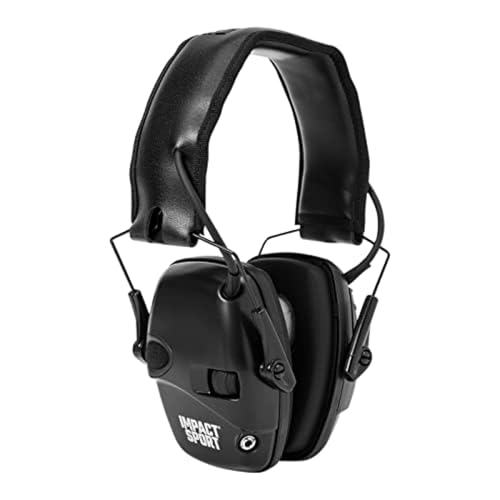
Howard Leight Impact Sport Electronic Earmuff
Honeywell publishes the NRR, the amplification ceiling, the decibel level where amplification stops, the runtime and the weight. Nothing else here comes close on evidence - it is just a muff, with everything that implies under a face mask.
#ad · Price as of November 19, 2026 · Disclosure for the link to Howard Leight Impact Sport Electronic Earmuff
Quick picks
The rankings at a glance
| # | Product | Best for | Score | Price |
|---|---|---|---|---|
| 1 | Howard Leight Impact Sport Electronic Earmuff Honeywell publishes the NRR, the amplification ceiling, the decibel level where amplification stops, the runtime and the weight. Nothing else here comes close on evidence - it is just a muff, with everything that implies under a face mask. | Best-documented hearing protectionShooting accessory | 9.3out of 10 | $40.20Howard Leight Impact Sport |
| 2 | 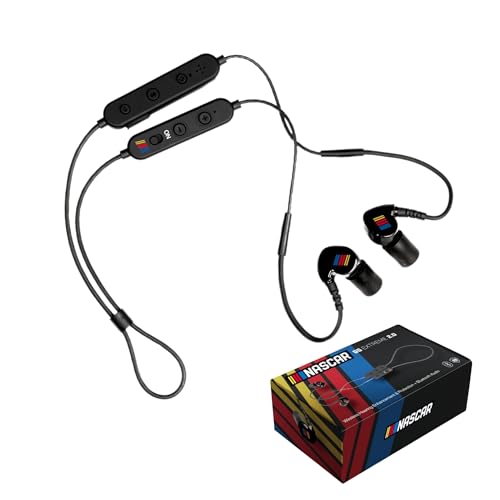 AXIL GS Extreme 2.0 Shooting Earbuds In-ear, so a mask, a hat and a gun mount all behave normally, with 25 hours of amplification and foam tips that take the rating to the top of its range. Protection depends entirely on seating the tips. | What we would actually wear turkey huntingShooting accessory | 9.1out of 10 | $69.99AXIL GS Extreme 2.0 Shooting |
| 3 | 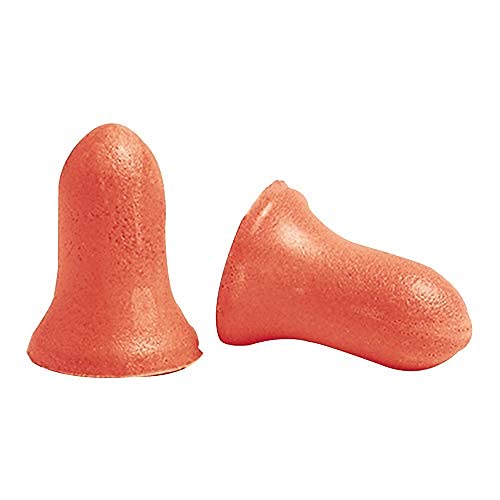 Howard Leight MAX-1 Uncorded Foam Earplugs, NRR 33 NRR 33, the highest published figure in this comparison, for pennies a pair. The trade is total: no amplification at all, so you lose the woods along with the muzzle blast. | Best budget pick - and the highest rating hereShooting accessory | 8.9out of 10 | $46.00Howard Leight MAX-1 Uncorded Foam |
| 4 | 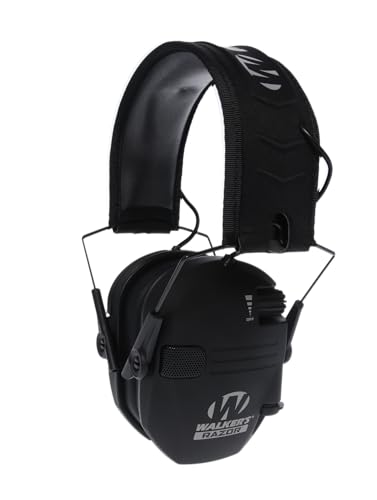 Walker's Razor Slim Electronic Ear Muff NRR 23 is the best electronic figure here and the 0.02-second reaction time is published. Walker's prints no battery life, no weight and no warranty term, and the rubric scores all three silences. | Best electronic ratingShooting accessory | 8.9out of 10 | $31.47Walker's Razor Slim Electronic Ear |
#ad · Prices come live from Amazon, last checked November 19, 2026. Scores are ours, built from published specs and maker claims against the rubric on our methodology page, and published on our 8.4-9.8 recommendation scale. Photos come from each product's Amazon listing. Tap a row for the full write-up.
How we picked, and what we scored
Four protectors, all currently sold, all from makers that publish a Noise Reduction Rating. They score on the accessory rubric published with our First-Season Score: documented function 30%, ease of use 25%, build 20%, carry and weight 15%, warranty 10%. Every figure here came off the maker's own product page or datasheet on 2026-11-16.
This is the one category on this site where the headline number is standardized. An NRR is measured to a published test standard, so 22 dB from Honeywell and 23 dB from Walker's are genuinely comparable in a way that two makers' “realism” claims about decoys never are. That makes documented function the metric that separates these four, and it is why the ranking looks the way it does: the maker that publishes the NRR, the amplification ceiling, the decibel level where amplification stops, the runtime and the weight finishes first, and the maker that publishes a rating and a reaction time and nothing else finishes last.
We have not measured attenuation ourselves and we are not going to pretend to. What we can do is read four spec sheets properly, say where the silences are, and be straight about which of these four we would wear in a turkey woods — which, as it turns out, is not the one at the top of the table.
Why turkey hunting is the odd case
Hearing protection for most shooting is a simple problem: noise is bad, block it. Turkey hunting breaks that in three ways at once, and understanding them is most of the buying decision.
Hearing is your primary tool, not a nice-to-have. You find turkeys with your ears. A gobble at first light, a hen yelping two ridges over, the drumming of a strutting tom you cannot see yet, wingbeats at flydown — the whole early part of a hunt is listening, and our pages on how to find turkeys and how to roost a turkey are essentially instructions for using your hearing well. Protection that only subtracts makes you a worse hunter.
You fire once or twice a season, and it is loud and close. A turkey gun is a short-barreled shotgun with a tight turkey choke and a heavy magnum load, fired from a sitting position with your cheek on the stock, often from inside a ground blind that reflects the blast straight back at you. The exposure is rare, which is exactly why hunters skip protection for it, and it is also the single most damaging sound most hunters will ever stand next to.
You are wearing a face mask, a hat and a gun. Nothing about the turkey setup is friendly to a pair of muffs. A mask covers your ears or the straps of it do; a hat brim sits where a headband wants to be; and the stock of a shotgun comes up into the same space as the right earcup. The NWTF's own beginner gear guidance is built around keeping hands and head free to work calls and mount a gun, and a muff fights that.
Put those three together and the requirement is unusual: something that makes quiet sounds easier to hear, caps the loud one, and effectively disappears when you move. That is a specification, and it narrows the field fast.
The four, side by side
Every value links to the page it came from. A dash means the maker does not publish that figure, and the score counts the gap against the product rather than assuming the best case.
| Evidence | Howard Leight MAX-1 Uncorded Foam Earplugs, NRR 33 | Walker's Razor Slim Electronic Ear Muff |
|---|---|---|
| Rating | NRR 33, SNR 37 - the highest published figure here; attenuation tested to ANSI S3.19-1974 | NRR 23 dB - the highest NRR of the electronic options here |
| Amplification | None: these are passive plugs, so you lose the woods as well as the muzzle blast | Sound-activated compression with a published 0.02-second reaction time; two omnidirectional microphones and built-in speakers |
| Type | Single-use foam earplugs, one size, corded and uncorded versions | Over-ear electronic muff with slim cups |
| Battery | None | Not published on the product page |
| Weight | Negligible; sold in 100- and 200-pair boxes | Not published |
| Warranty | Not applicable - a disposable product | Not published on the product page |
| Score | 8.9/10 | 8.9/10 |
What wins the rubric vs what to wear
The Howard Leight Impact Sport wins this page because Honeywell publishes more about it than anyone else publishes about anything in this category. The NRR is 22 dB. The microphones amplify ambient sound to 82 dB. For sounds between 82 and 104 dB the amplification is compressed, and above 104 dB it stops entirely, leaving you with the passive 22 dB rating. Two AAA batteries run it for up to 350 hours and it shuts itself off after four. It weighs 270 g and it folds. Every one of those numbers is a thing you can plan around, and the second-place muff on this page publishes almost none of them.
And we would still wear the AXIL buds turkey hunting, for the three reasons in the section above. The muff is the better-documented product; the buds are the better turkey product. That is not a contradiction, it is what happens when a rubric measures evidence and a hunt measures practicality — and we would rather print both than quietly rig the scoring to make them agree.
The honest caveat on the buds, in their own maker's words: AXIL publishes a rating range of 13 to 23 dB NRR depending on which ear tip you use, and warns that incorrect use gives “zero to minimal hearing protection”. Foam tips at the top of that range are in the box. Use them, seat them properly, and the gap to the muff closes to about a decibel. Push them in badly in the dark and you are wearing jewelry.
Reading an NRR without fooling yourself
Two things are worth knowing before you compare the numbers in the table.
First, a higher NRR is not automatically better for this sport. The foam plugs here are rated NRR 33, eleven decibels better than the best electronic option, and they are the wrong choice for most of a turkey morning because they cut a distant gobble exactly as hard as they cut the shot. Electronics are what let you have both: amplification while the woods are quiet, compression or shutdown when something loud happens. That is the whole argument for spending more than the price of a box of plugs.
Second, the rating is a laboratory figure achieved with a correct fit. Honeywell publishes that its MAX plugs were tested to ANSI S3.19-1974, and AXIL notes that its SNR is a median from testing. Both statements point at the same practical truth: fit decides what you actually get. A foam plug that is not rolled down and seated, or a bud resting in the outer ear rather than sealing the canal, delivers a fraction of the printed number.
If you want the deeper read on what makes the noise in the first place, our pages on what choke for turkey hunting and TSS vs lead turkey loads cover the choke and load side — tighter and heavier is the direction turkey hunting pushes everything, and the muzzle blast comes along for the ride.
Muffs, buds or plugs under a face mask
This is the decision, and it is worth taking in that order.
Muffs give you the most documented protection and the easiest on-off. They are also the worst fit for the way a turkey hunter sits: an earcup and a shotgun comb want the same inch of space, and a 3/4 net face mask of the kind we rank in best turkey hunting face masks and gloves has to go over or under them. Slim cups, like the Walker's Razor Slim's, exist precisely to reduce that conflict, and they reduce rather than remove it. Buy a muff if you mostly hunt from a blind where you can set the gun down.
Electronic buds are the turkey answer. Nothing sits outside your ear, so your mask, your hat and your cheek weld are unaffected, and you get the amplification that makes a faint gobble easier to place. They cost more than a muff with the same rating and they live or die on tip fit. Wear the foam tips.
Foam plugs are the backup you should own regardless. They cost nothing per pair, they never run out of battery, they survive a season in a vest pocket, and they have the highest rating here. Keep a pair for the shot itself, for the patterning bench, and for the morning the buds are flat.
The session where you really need it
Here is the part that changes the math on this whole page. You fire a turkey gun once or twice a season in the woods. You fire it fifteen or twenty times in an afternoon when you pattern it, which is the single most useful thing a first-season hunter can do with a shotgun — how to pattern a turkey gun walks through it, and extension guidance such as Mississippi State's patterning advice is built on shooting enough rounds to see a real pattern.
That afternoon on the bench is where hunters do most of their hearing damage, with a short barrel, a tight choke and heavy loads, usually under a roof that reflects everything back. It is also the one time none of the objections above apply: no face mask, no bird to spook, no reason not to wear the best protection you own. If the only protector you buy off this page is the muff, and you wear it to pattern the gun and to shoot clays in the off-season, that purchase has already earned its money.
The habit worth building for the woods is simpler than people expect: put protection in before you sit, not when the bird is coming. With plugs, roll one down at the truck and hunt with them in your pocket if you must. With buds, they are in anyway. With a muff, hang it on a branch at your shoulder where you can get it without moving.
Why we do not print a decibel figure for a turkey load
You will see numbers quoted for how loud a 12-gauge is. We have not measured one and no maker on this page publishes a figure for a turkey load, so we are not going to print one. What we can report is where the designers put the line: Honeywell publishes that the Impact Sport's amplification is compressed between 82 and 104 dB and stops above 104 dB, and AXIL publishes that its buds compress everything over 85 dB. Two independent makers treat the mid-80s as the point where sound becomes something to control rather than amplify.
That is enough to buy with. The electronics in both products are built on the assumption that shooting noise is well above the level they will pass through to you, and the passive rating is what is actually protecting your ears at the moment of the shot — 22 dB on the Impact Sport, up to 23 dB on the buds with foam tips, 33 dB on the plugs.
What to skip
Three things.
Anything sold as a “hearing amplifier” with no NRR. If a product does not publish a Noise Reduction Rating, it is a listening device and not protection, however much it looks like a hunting product. The rating exists, it is cheap to test for, and a maker that skips it has told you something.
Cotton, a cigarette filter, or a finger in the ear. All three are camp traditions. None of them has a rating, and the last one requires the hand you need on the gun.
The muff you leave in the truck. The best-rated protector in the world does nothing from a glovebox, and this is the honest reason the buds and the plugs beat the muff in practice for turkey hunting. Buy the thing you will actually have in your ears when a gobbler steps into range at 25 yards.
In detail
The picks, in full
Rank 1
Best-documented hearing protection
Howard Leight Impact Sport Electronic Earmuff
Honeywell publishes the NRR, the amplification ceiling, the decibel level where amplification stops, the runtime and the weight. Nothing else here comes close on evidence - it is just a muff, with everything that implies under a face mask.
Spec sheetEvery row sourced to the maker
The rubric behind the 9.3
- Documented function (30%)
- 10
- Ease of use (25%)
- 9
- Build (20%)
- 6
- Carry & weight (15%)
- 6
- Warranty (10%)
- 4
Rubric points: 7.8 of 10, weighted as shown. Published as 9.3 on our recommendation scale, where 8.4 is the floor for a pick we would put in front of a first-season hunter. How the scale works.
What the specs support
- Honeywell publishes exactly what the electronics do at which decibel level, which almost nobody else in this category does
- 350 hours on two AAAs: a spare pair in a vest pocket covers a whole spring
- Slim earcups are the muff design least likely to get bumped by a shotgun stock
- A published 270 g and a folding hinge, so it packs flat in a vest
Where it falls short
- It is still a muff: it sits where a face mask, a hat and a gun stock all want to be
- No published warranty term and no water or weather rating
- Amplification stops above 104 dB, so a gobble right on top of you is heard through a 22 dB passive muff
- Honeywell's regional datasheets quote different figures for the same product
Skip this if…
…you hunt in a face mask you never lift; a muff and a mask fight each other all morning, and in-ear protection does not.
#ad · Price as of November 19, 2026 · Disclosure for the link to Howard Leight Impact Sport Electronic Earmuff
Rank 2
What we would actually wear turkey hunting
AXIL GS Extreme 2.0 Shooting Earbuds
In-ear, so a mask, a hat and a gun mount all behave normally, with 25 hours of amplification and foam tips that take the rating to the top of its range. Protection depends entirely on seating the tips.
Spec sheetEvery row sourced to the maker
The rubric behind the 9.1
- Documented function (30%)
- 8
- Ease of use (25%)
- 7
- Build (20%)
- 6
- Carry & weight (15%)
- 10
- Warranty (10%)
- 4
Rubric points: 7.3 of 10, weighted as shown. Published as 9.1 on our recommendation scale, where 8.4 is the floor for a pick we would put in front of a first-season hunter. How the scale works.
What the specs support
- Nothing clamped over your ears, so a face mask, a hat and a gun stock all behave normally
- Twenty-five hours of hearing enhancement is several mornings between charges
- Published runtime broken down by what you are doing, which is a rare piece of honesty
- Foam tips move the rating to the top of its range, and they come in the box
Where it falls short
- The NRR is a range, not a number: 13 dB with the wrong tip against 23 dB with foam
- AXIL itself warns that incorrect use gives "zero to minimal hearing protection"
- Rechargeable only, with no battery you can swap at 4 a.m.
- No published weight, water rating or warranty term
Skip this if…
…you will not take the time to seat foam tips properly every morning; AXIL's own guidance is that a bad fit gives you close to nothing.
#ad · Price as of November 19, 2026 · Disclosure for the link to AXIL GS Extreme 2.0 Shooting Earbuds
Rank 3
Best budget pick - and the highest rating here
Howard Leight MAX-1 Uncorded Foam Earplugs, NRR 33
NRR 33, the highest published figure in this comparison, for pennies a pair. The trade is total: no amplification at all, so you lose the woods along with the muzzle blast.
Spec sheetEvery row sourced to the maker
The rubric behind the 8.9
- Documented function (30%)
- 8
- Ease of use (25%)
- 6
- Build (20%)
- 5
- Carry & weight (15%)
- 10
- Warranty (10%)
- 2
Rubric points: 6.6 of 10, weighted as shown. Published as 8.9 on our recommendation scale, where 8.4 is the floor for a pick we would put in front of a first-season hunter. How the scale works.
What the specs support
- NRR 33 is the highest published rating in this comparison, by a clear margin
- Nothing to charge, nothing to switch on, nothing that quits in the rain
- A pair weighs nothing and a box lasts years, so there is one in every vest pocket and truck door
- The cheapest way to stop hunting with no protection at all, which is what most people actually do
Where it falls short
- No amplification: a gobble at 300 yards is harder to hear and to place
- They must be rolled down and seated correctly to reach the published rating
- Single use, so the ones you leave in the vest for a week are rubbish
- Nothing to adjust: it is all-the-protection or no protection
Skip this if…
…hearing a distant gobble matters to you more than the last few decibels of protection; passive plugs cut the woods and the shot equally.
#ad · Price as of November 19, 2026 · Disclosure for the link to Howard Leight MAX-1 Uncorded Foam Earplugs, NRR 33
Rank 4
Best electronic rating
Walker's Razor Slim Electronic Ear Muff
NRR 23 is the best electronic figure here and the 0.02-second reaction time is published. Walker's prints no battery life, no weight and no warranty term, and the rubric scores all three silences.
Spec sheetEvery row sourced to the maker
The rubric behind the 8.9
- Documented function (30%)
- 7
- Ease of use (25%)
- 8
- Build (20%)
- 6
- Carry & weight (15%)
- 5
- Warranty (10%)
- 4
Rubric points: 6.5 of 10, weighted as shown. Published as 8.9 on our recommendation scale, where 8.4 is the floor for a pick we would put in front of a first-season hunter. How the scale works.
What the specs support
- NRR 23 is the best electronic rating in this comparison
- A published reaction time of 0.02 seconds, which is the figure that matters on a shot you did not plan
- Slim cups are the muff shape that interferes least with a shotgun stock
- Two omnidirectional microphones rather than one, which helps place a sound
Where it falls short
- Walker's publishes no battery life, no weight and no warranty term for it
- No water or weather rating published, on gear used in spring rain
- Like every muff, it competes with a face mask and a hat for the same space
- Amplification gain is described rather than specified
Skip this if…
…you want to know how long the batteries last before you buy; Walker's does not publish a runtime for this muff, and Honeywell publishes 350 hours for its rival.
#ad · Price as of November 19, 2026 · Disclosure for the link to Walker's Razor Slim Electronic Ear Muff
What to actually buy
If you want our turkey hunting answer: the AXIL GS Extreme 2.0 buds with the foam tips fitted. In-ear, so your mask and gun mount are untouched, amplification for the listening half of the hunt, 25 hours of runtime, and a rating that reaches 23 dB NRR when the tips are seated. Accept the condition AXIL itself prints: fit them properly or you have close to nothing.
If you want the best-documented protection, and a muff suits your hunting: the Howard Leight Impact Sport. NRR 22, amplification to 82 dB, nothing amplified above 104 dB, up to 350 hours on two AAAs, 270 g, folds flat. If you hunt mostly from a blind, or you want one protector for patterning, clays and the deer stand as well, this is the one to own.
If you want to spend almost nothing and still be protected: a box of Howard Leight MAX-1 foam plugs at NRR 33, the highest rating on this page. A box is a box-sized purchase and then it is pennies a morning for years. You lose amplification entirely, which is a real cost on a hunt built around listening, so use them for the shot, the bench and the backup pair in the vest.
If you want the best electronic rating in a muff: the Walker's Razor Slim at NRR 23 with a published 0.02-second reaction time and slim cups made for a gun mount. It finishes last here on documentation rather than on performance: Walker's publishes no battery life, no weight and no warranty term, and we score the silences.
The bottom line
Our recommendation
Howard Leight Impact Sport Electronic Earmuff
Best-documented hearing protection
Honeywell publishes the NRR, the amplification ceiling, the decibel level where amplification stops, the runtime and the weight. Nothing else here comes close on evidence - it is just a muff, with everything that implies under a face mask.
#ad · Price as of November 19, 2026 · Disclosure for the link to Howard Leight Impact Sport Electronic Earmuff
AXIL GS Extreme 2.0 Shooting Earbuds
What we would actually wear turkey hunting
In-ear, so a mask, a hat and a gun mount all behave normally, with 25 hours of amplification and foam tips that take the rating to the top of its range. Protection depends entirely on seating the tips.
#ad · Price as of November 19, 2026 · Disclosure for the link to AXIL GS Extreme 2.0 Shooting Earbuds
How we picked this
Scored on the specs that decide your season
Every pick is read off the maker's own specs, materials and instructions, then scored on a public rubric built around a first-season hunter: the sounds a call is made to produce and how it holds up in rain, a choke's load ratings and thread chart, the weights, pockets and seat heights you carry all morning. Each figure links straight to the page it came from, so you can check any pick in one click.
Scores come from that documented research with fixed bands, and prices come live from Amazon with the date they were checked. Commissions never set a score or decide a pick. The rubric and its bands are published.
Corrections & updates
- First published. Four protectors ranked on the accessory rubric, every figure read off the maker's own page or datasheet on 2026-11-16: Impact Sport 7.8 rubric points, AXIL GS Extreme 2.0 7.3, Howard Leight MAX-1 plugs 6.6, Walker's Razor Slim 6.5. The MAX plugs and the Razor Slim print the same published 8.9 and are separated by 0.1 rubric point. The page keeps an explicit split between the rubric winner (a muff, because Honeywell documents it best) and the recommendation for turkey hunting (in-ear buds, because a muff fights a face mask and a gun mount), and deliberately prints no decibel figure for a turkey load because we have not measured one and no maker publishes one.
Questions
Frequently asked
Do you need ear protection for turkey hunting?
You fire one or two shots a season in the woods, which is exactly why most hunters skip it — and a short-barreled shotgun with a tight turkey choke and a magnum load, fired from a sitting position or inside a blind, is one of the loudest things in hunting. Electronic protection is the version that costs you nothing in the woods, because it amplifies the quiet sounds you are hunting by and caps the loud one.
What is the best ear protection for turkey hunting?
Electronic in-ear buds, for a reason that has little to do with decibels: they leave a face mask, a hat and a shotgun mount alone, which a muff does not. We would wear the AXIL GS Extreme 2.0 with its foam tips. The best-documented protector in our comparison is the Howard Leight Impact Sport muff, and it is the better buy if you hunt from a blind or want one protector for the patterning bench as well.
Can you hear turkeys gobble with ear protection in?
With electronic protection, better than without it. Both electronic products here amplify ambient sound and then compress or cut it when something loud happens — Honeywell amplifies to 82 dB and stops above 104 dB; AXIL compresses everything over 85 dB. Passive foam plugs are the opposite: NRR 33 protection that takes the distant gobble down with the muzzle blast.
Are ear plugs or ear muffs better for turkey hunting?
Plugs or in-ear buds, in most turkey setups. A muff competes with your face mask, your hat and the comb of your shotgun for the same space, and the gun usually wins. Muffs are better documented, easier to put on and off, and the right answer at the patterning bench or in a blind where the gun is on a rest.
What NRR do I need for a shotgun?
Higher is better protection, but for turkey hunting the useful question is what you keep. The spread on this page runs from 22 dB on an electronic muff to 33 dB on foam plugs, and every one of those figures assumes a correct fit. An honest answer is: wear the highest-rated thing you will genuinely wear, and treat fit as more important than the last few decibels on the box.
Will electronic hearing protection spook a turkey?
Nothing in this category makes noise of its own. The real risk is movement: fitting a muff or fumbling for plugs when a bird is already working is exactly the motion that gets you caught. Put protection in at the truck or before you sit, and leave your hands for the call and the gun.
Is one shot a year really enough to damage hearing?
We are not going to state a decibel figure we have not measured, and we are not a medical source. What we can point to is how the products themselves are designed: two different makers treat sounds in the mid-80s of decibels as the point to stop amplifying, and the passive rating is all that stands between you and the shot at the moment you fire. Protection that costs pennies a morning against an exposure that cannot be undone is an easy trade.
Keep reading
Related on Strut & Slate
- How to pattern a turkey gunThe afternoon where you fire twenty rounds and need protection most.
- Best turkey chokesThe tight tube that makes a turkey gun loud as well as accurate.
- Best headlamps for turkey huntingThe other piece of gear that has to work around a face mask in the dark.
- How to find turkeysWhy your hearing is the tool this whole purchase is meant to protect.
Receipts
Sources
- Honeywell / Howard Leight — Impact Sport electronic earmuff product page and datasheet: NRR 22 dB, microphones amplify ambient sound to 82 dB, amplification compressed between 82 and 104 dB and cut above 104 dB, up to 350 hours on two AAA batteries with automatic shut-off after 4 hours, 270 g, 3.5 mm AUX input, folding design (read 2026-11-16)
- Honeywell support — "How the Impact Sport works": amplification compressed to 82 dB for sounds between 82 and 104 dB, and no amplification above 104 dB, leaving the 22 dB passive rating (read 2026-11-16)
- AXIL — GS Extreme 2.0 shooting earbuds product page and user guide: 19-29 dB SNR / 13-23 dB NRR depending on ear tip (29 dB SNR with foam tips), electronic compression of sounds over 85 dB, up to 25 hours of hearing enhancement, 9 hours audio only, 8 hours both, Bluetooth, and the maker's own warning that incorrect use gives "zero to minimal hearing protection" (read 2026-11-16)
- Honeywell / Howard Leight — MAX single-use earplug product page and datasheet: NRR 33 (the highest published here), SNR 37, polyurethane closed-cell foam in a bell shape with a soil-resistant skin, attenuation tested to ANSI S3.19-1974, one size, corded and uncorded (read 2026-11-16)
- Walker's Game Ear — Razor Slim Electronic Ear Muff product page: NRR 23 dB, sound-activated compression with a 0.02-second reaction time, two omnidirectional microphones and built-in speakers (read 2026-11-16)
- NWTF — The ABCs of Hunting Wild Turkeys (read 2026-09-22)
- Mississippi State University Extension — How to Pattern a Shotgun for Turkey Hunting (P3234) (read 2026-09-22)
Every spec on this page comes from the maker's own product pages and manuals (or a named dealer's copy where the maker's site blocked us), with sound and performance claims attributed to the maker and any third-party observation attributed to whoever made it. Prices come live from Amazon with the date they were checked. Where a maker leaves a figure unpublished, the page says so and that spec earns the lowest band. Read the full method.
Brands: want your product tested? For Brands.