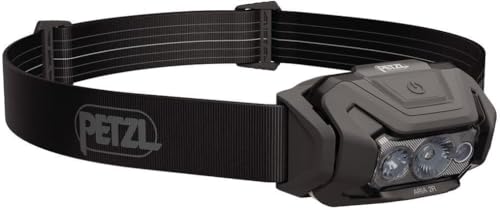
Petzl ARIA 2R RGB Headlamp
The only lamp here whose maker publishes everything we score: per-mode burn times on both battery types, IP67 and IK07, a 2 m fall rating, 50 hours of continuous colored light, and a five-year guarantee.
#ad · Price as of November 19, 2026 · Disclosure for the link to Petzl ARIA 2R RGB Headlamp
Quick picks
The rankings at a glance
| # | Product | Best for | Score | Price |
|---|---|---|---|---|
| 1 | Petzl ARIA 2R RGB Headlamp The only lamp here whose maker publishes everything we score: per-mode burn times on both battery types, IP67 and IK07, a 2 m fall rating, 50 hours of continuous colored light, and a five-year guarantee. | Best headlamp for turkey huntingAccessory | 9.7out of 10 | $86.99Petzl ARIA 2R RGB Headlamp |
| 2 | 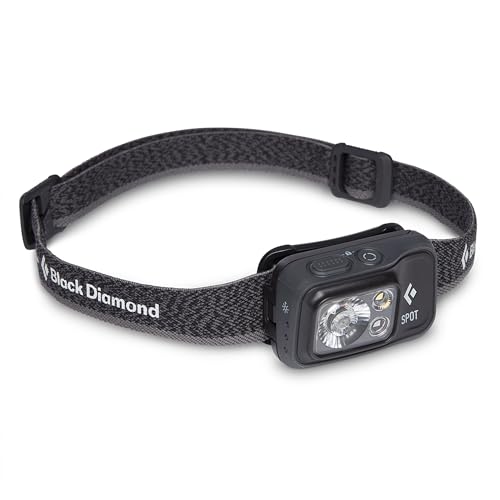 Black Diamond Spot 400 Headlamp Red without cycling through white, a stated 1.1 m submersion test, and it runs on either a rechargeable cell or three AAAs from a gas station. No published warranty term. | Best dual-fuel lamp, and the best value hereAccessory | 9.4out of 10 | $44.88Black Diamond Spot 400 Headlamp |
| 3 | 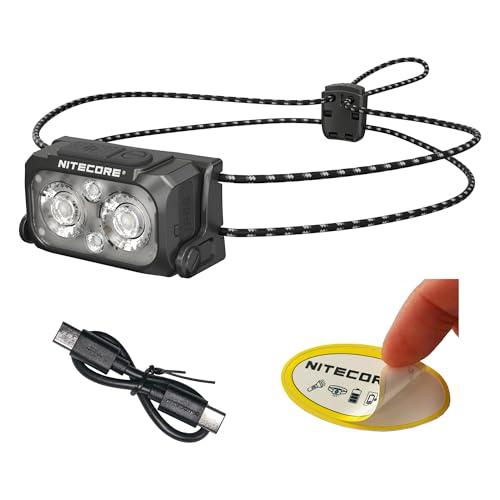 NITECORE NU25 MCT UL Headlamp The lamp you forget you are wearing under a face mask, with 400 lumens and a two-level red. The sealed battery is the trade: a flat lamp stays flat. | Best ultralight: 47 g with the headbandAccessory | 9.2out of 10 | $36.95NITECORE NU25 MCT UL Headlamp |
| 4 | 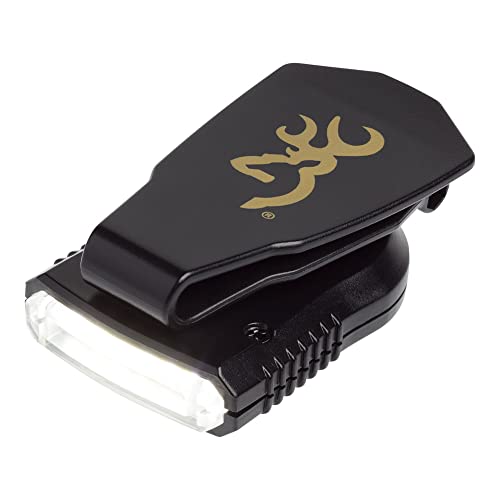 Browning Night Seeker Pro Cap Light Seventy-six lumens of white or green off one AAA, clipped to a hat brim. It is a trail-finding light and nothing more, and for many hunters that is the whole job. | Best budget pick - a green cap light for the walk inAccessory | 9.0out of 10 | See price on the Browning Night Seeker Pro Cap |
#ad · Prices come live from Amazon, last checked November 19, 2026. Scores are ours, built from published specs and maker claims against the rubric on our methodology page, and published on our 8.4-9.8 recommendation scale. Photos come from each product's Amazon listing. Tap a row for the full write-up.
How we picked, and what we scored
Four lamps, all currently sold, all from makers that publish specifications we can link to. They score on the accessory rubric published with our First-Season Score: documented function 30%, ease of use 25%, build 20%, carry and weight 15%, warranty 10%. Every figure on this page came off the maker's own product page on 2026-11-16, and where a maker publishes nothing we write “not published” rather than borrowing a number from a retailer listing.
That rubric explains the entire spread on this page, and it is worth saying plainly before you read the ranking. The winner is not the brightest lamp by a huge margin and it is not the lightest. It wins because Petzl publishes per-mode burn times on both battery types, two separate durability ratings, a drop rating, a charge time and a warranty term, and because every one of those numbers is a thing you need to know in the dark. The lamp at the bottom of this page publishes lumens and runtime and then stops talking.
We have not tested beam patterns, and we do not pretend otherwise. What we can do is read four maker pages carefully, line the numbers up where they are comparable, and tell you where the silence is.
Why the light is the first thing you use
Every piece of gear on this site gets used after daylight except this one. A spring turkey hunt starts in the dark: you park, you walk, you find the tree you picked yesterday, you set a decoy by feel, and you sit down before the woods wake up. All of that happens on a headlamp, and the single most common first-season mistake around a light is not the light at all — it is leaving the house with the one that has been in a glovebox since deer season on a dying battery.
The NWTF's own beginner gear guidance makes the shape of the purchase clear: a flashlight “provides illumination for a safe walk in” and a headlamp-type light gives you hands-free operation. Hands-free is the entire argument. You are carrying a shotgun, a vest, a seat and often a decoy bag, and you need both hands at various points on the walk in. A handheld flashlight gets put in your teeth or left in the truck.
The second thing a light does is get you out. Finding a downed bird in laurel at midday does not need a light, but walking a mile out of a creek bottom after an evening roosting session does, and so does the morning you misjudge the sit and leave at last light. Burn time matters more than peak lumens for exactly that reason, and it is the figure makers are least consistent about publishing.
The four, side by side
Every value links to the page it came from. A dash means the maker does not publish that figure, and the score counts the gap against the product rather than assuming the best case. Burn times are not directly comparable across these four — each maker ties them to its own named mode — so they sit on the product cards below and in the section on how much light you actually need.
| Evidence | NITECORE NU25 MCT UL Headlamp | Browning Night Seeker Pro Cap Light |
|---|---|---|
| Output | 400 lumens max; four white brightness levels plus three special modes | 76 lumens high, 12 lumens low |
| Max distance | 132 m max beam distance, 4,351 cd peak beam intensity | 59 yd effective distance |
| Colored light | Auxiliary red light with two brightness options | — |
| Battery | Built-in 700 mAh Li-ion battery, USB-C rechargeable; not user-replaceable in the field | One AAA battery |
| Weight | 47 g (1.66 oz), including the bracket and headband | Not published |
| Weather | Not published on the product page | — |
| Warranty | Not published on the product page | Not published on the product page |
| Score | 9.2/10 | 9.0/10 |
Red, green or white: the honest answer
This is the question people actually search for, so here is where we stand. Petzl sells red, green and blue lighting on the ARIA 2R RGB for night vision and stealth, Black Diamond builds a red night-vision mode into the Spot 400 that activates without cycling through white, NITECORE fits a two-level auxiliary red light, and Browning's cap light offers white or green. Four makers, four colored modes, and every one of them framed in broadly the same language.
What we could not find is a published study behind the claim you will hear in every camp: that a wild turkey cannot see red light. We are not going to assert it. Turkeys are daytime birds with famously good eyesight and color vision, and nothing on any of these maker pages claims a turkey cannot see their red or green beam either — the claims are all about the person wearing the lamp.
That is the honest case for colored light, and it is a real one. A dim red or green beam preserves your own dark adaptation, so you can still see shapes when you switch it off and sit down. It throws far less light around a hillside than 400 lumens of white, which matters when the bird you are setting up on is roosted 150 yards away. And on public ground it makes you far less likely to blind, or be mistaken for, another hunter walking the same logging road. Those three things are enough to buy a lamp with a colored mode. “The turkey cannot see it” is not, because nobody has shown us it is true.
The practical setup, whichever lamp you buy: walk in on the lowest colored level you can follow a trail with, keep white for the truck, the tailgate and a blood trail, and never point any of it at a roost tree. The quietest walk in is the one where your light touches the ground three feet in front of your boots and nothing else.
How much light you actually need
Less than the box tells you, and the numbers on this page make the point better than any argument. The output range here runs from 76 lumens on the Browning cap light to 625 on the Petzl, better than an eight-fold spread, and all four of them will get you down a logging road.
The figure that matters on a dark walk in is the lowest usable level and how long it runs. Petzl publishes about 100 hours on its lowest white level and 50 on continuous color. NITECORE publishes a 45-hour maximum and ties it honestly to its 6-lumen ultralow level rather than to high. Black Diamond's low is 6 lumens with 12 m of throw. Browning gives you about 7 hours on 12 lumens off one AAA. Every one of those low modes is enough light to walk by, and every one of them is what you should actually use.
High output earns its keep in three places: finding a bird in thick cover, setting up a ground blind in the dark, and the walk out when you are tired and the terrain is bad. The Petzl's 625 lumens and the Spot 400's 400 both cover that; two hours is the whole run at the Petzl's MAX POWER, which tells you high is a tool rather than a setting.
Rechargeable or AAA, and why it matters at 4 a.m.
This is the split that should decide your purchase, and all four lamps sit in different places on it.
The Petzl ships with a 1250 mAh rechargeable CORE battery and takes three AAAs, so a flat battery is an inconvenience rather than a dark morning — though MAX POWER drops from 625 to 450 lumens on AAAs. Black Diamond calls the same idea Dual-Fuel: the BD 1500 cell or three AAAs. NITECORE's battery is built in and USB-C only, which is why that lamp weighs 47 g and also why a flat one stays flat. Browning runs on a single AAA, which is the cheapest insurance policy in this whole category: a spare in a vest pocket weighs nothing.
For a first season, the honest recommendation is a lamp that can take a AAA, and the habit of charging on Saturday rather than at 4 a.m. on Sunday. Spring turkey hunting is a lot of early mornings in a row, often from a truck rather than a house, and a charging cable you left at home is a problem a battery is not.
Headlamp or cap light
A cap light clips to the brim of your hat; a headlamp straps around your head. For turkey hunting specifically the cap light has one real advantage: you are already wearing a face mask and often a hat over it, and a headband is one more thing to drag the mask around when you move. A brim clip comes off in one motion and goes in a vest pocket.
What you give up is output and runtime, and the Browning shows exactly how much: 76 lumens against 400 or 625, and about two hours on high. If your walk in is 200 yards along a field edge, that is a fine trade and the cheapest lamp here is all the lamp you need. If you hunt big public ground in the dark, buy the headlamp.
The safety case for carrying a light
There is a reason this page exists on a site for first-season hunters rather than a lighting blog. Spring turkey hunting is the one season where hunters sit still in full camouflage making the sound of the animal everyone else is hunting, in the dark, often on shared ground. A light on the walk in is the cheapest way to be unmistakably a person.
State agencies make the same point from the clothing side: Missouri's Department of Conservation advises hunter orange when walking to and from your hunting spot, and Pennsylvania recommends it while moving even though spring turkey season does not require it. Pair that with a light you actually switch on and you have removed most of the risk of the walk in. Our wider read on hunting shared ground is in public land turkey hunting, and the decoy-carrying rule that goes with it is in best turkey decoy bags.
One more habit worth building: switch the light off before you sit, not after. Hunters give themselves away in the last 40 yards of the walk, sweeping a beam across a hillside looking for the right tree. Pick the tree in daylight the day before — the first-season setup guide covers how — and the light goes off at the edge of the field.
What to skip
Three things, and the first is the one that gets bought most.
The three-pack of no-name headlamps. They publish a lumen number and nothing else: no runtime at a stated level, no water rating, no warranty, frequently no brand that exists next year. Our rubric would score them at the bottom for exactly the reason you should not buy one — there is no published figure to hold them to. A single documented lamp at this page's budget end costs about the same.
Anything sold on a strobe mode. Strobe is a signaling feature. It is not a turkey hunting feature, and on the walk in it is the opposite of what you want.
A lamp with no low mode. A single-level 1,000-lumen light is a worse turkey lamp than a 76-lumen cap light, because the only setting it has is the one that lights up the whole ridge. Low and long beats bright and short every morning of the spring.
In detail
The picks, in full
Rank 1
Best headlamp for turkey hunting
Petzl ARIA 2R RGB Headlamp
The only lamp here whose maker publishes everything we score: per-mode burn times on both battery types, IP67 and IK07, a 2 m fall rating, 50 hours of continuous colored light, and a five-year guarantee.
Spec sheetEvery row sourced to the maker
The rubric behind the 9.7
- Documented function (30%)
- 10
- Ease of use (25%)
- 9
- Build (20%)
- 10
- Carry & weight (15%)
- 7
- Warranty (10%)
- 10
Rubric points: 9.3 of 10, weighted as shown. Published as 9.7 on our recommendation scale, where 8.4 is the floor for a pick we would put in front of a first-season hunter. How the scale works.
What the specs support
- Three colors, not one: green and blue as well as red, so you can pick the beam you walk in on
- Fifty hours of continuous colored light, which is the mode a dark walk in actually uses
- IP67 plus IK07 plus a 2 m fall rating - the most thoroughly rated lamp in this category
- Rechargeable and AAA-capable: a flat CORE battery does not end your morning
Where it falls short
- The heaviest lamp here at 95 g, which you notice under a face mask
- MAX POWER falls from 625 to 450 lumens on AAA batteries, and two hours is the whole run at that level
- The battery guarantee is two years or 300 cycles, where the lamp gets five
- Petzl's non-R ARIA 2 RGB is a different, dimmer lamp at 450 lumens and 106 g - check which one a listing sells
Skip this if…
…you want the lightest thing on your head; at 95 g this is double the weight of the ultralight rechargeable here, and much of that sits above your brow.
#ad · Price as of November 19, 2026 · Disclosure for the link to Petzl ARIA 2R RGB Headlamp
Rank 2
Best dual-fuel lamp, and the best value here
Black Diamond Spot 400 Headlamp
Red without cycling through white, a stated 1.1 m submersion test, and it runs on either a rechargeable cell or three AAAs from a gas station. No published warranty term.
Spec sheetEvery row sourced to the maker
The rubric behind the 9.4
- Documented function (30%)
- 9
- Ease of use (25%)
- 9
- Build (20%)
- 8
- Carry & weight (15%)
- 8
- Warranty (10%)
- 4
Rubric points: 8.2 of 10, weighted as shown. Published as 9.4 on our recommendation scale, where 8.4 is the floor for a pick we would put in front of a first-season hunter. How the scale works.
What the specs support
- Red light on its own button path: you get red without blasting white light across a roosting area first
- The only lamp here whose maker states a submersion test rather than a splash rating
- Dual-Fuel: if the rechargeable battery dies on the drive, three AAAs from a gas station run it
- Publishes output and throw for all three white levels, so you can judge what 400 lumens actually reaches
Where it falls short
- Black Diamond's own regional pages disagree: IPX8 and 86 g on the US page, IP67 and 90 g on the EU page
- Red only - no green mode, which is the color several hunting-specific lights offer
- No warranty term printed on the product page
- Heavier on your head than the rechargeable ultralights, at 86 g with AAAs
Skip this if…
…you want a green beam for the walk in; the Spot 400's colored mode is red only, and Petzl's RGB lamp is the one that gives you a choice.
#ad · Price as of November 19, 2026 · Disclosure for the link to Black Diamond Spot 400 Headlamp
Rank 3
Best ultralight: 47 g with the headband
NITECORE NU25 MCT UL Headlamp
The lamp you forget you are wearing under a face mask, with 400 lumens and a two-level red. The sealed battery is the trade: a flat lamp stays flat.
Spec sheetEvery row sourced to the maker
The rubric behind the 9.2
- Documented function (30%)
- 9
- Ease of use (25%)
- 7
- Build (20%)
- 5
- Carry & weight (15%)
- 10
- Warranty (10%)
- 4
Rubric points: 7.4 of 10, weighted as shown. Published as 9.2 on our recommendation scale, where 8.4 is the floor for a pick we would put in front of a first-season hunter. How the scale works.
What the specs support
- 47 g with the headband: the one lamp here you forget you are wearing under a face mask
- Publishes output, throw, candela, runtime and battery capacity, which most makers in this class do not
- A two-level red light, so the low red is genuinely low rather than one bright red
- USB-C charging off the same cable as your phone
Where it falls short
- No water rating published anywhere on the product page
- Sealed battery: a flat lamp at 4 a.m. stays flat, where an AAA lamp does not
- NITECORE publishes no warranty term on this page
- The NU25 line has two generations with different beam distance and weight figures, so check which one a listing is selling
Skip this if…
…you would rather carry spare batteries than a charge; this one's cell is built in, and a dead battery means a dark walk out.
#ad · Price as of November 19, 2026 · Disclosure for the link to NITECORE NU25 MCT UL Headlamp
Rank 4
Best budget pick - a green cap light for the walk in
Browning Night Seeker Pro Cap Light
Seventy-six lumens of white or green off one AAA, clipped to a hat brim. It is a trail-finding light and nothing more, and for many hunters that is the whole job.
Spec sheetEvery row sourced to the maker
| Category | Accessory |
|---|---|
| Mount | Cap light: clips to a hat brim rather than strapping to your head |
| Weight | Not published |
| Warranty | Not published on the product page |
| Output | 76 lumens high, 12 lumens low |
| Modes | High white, plus high or low green - no red mode |
| Max distance | 59 yd effective distance |
| Runtime | About 2 hours on high, about 7 hours on low |
| Battery | One AAA battery |
The rubric behind the 9.0
- Documented function (30%)
- 7
- Ease of use (25%)
- 8
- Build (20%)
- 5
- Carry & weight (15%)
- 8
- Warranty (10%)
- 4
Rubric points: 6.7 of 10, weighted as shown. Published as 9.0 on our recommendation scale, where 8.4 is the floor for a pick we would put in front of a first-season hunter. How the scale works.
What the specs support
- Runs on one AAA, so a spare battery weighs nothing and lives in a vest pocket all season
- Green on its own: no cycling past white to reach the color you wanted
- A cap light clips on and off a brim, so nothing is strapped around a face mask
- Published runtime and effective distance, which many cheap lights never state
Where it falls short
- 76 lumens is a fraction of the output of every other lamp here
- Browning publishes no weight and no water rating for it
- About 2 hours on high is one dark morning, not a week of them
- No warranty term on the product page
Skip this if…
…you need light to set up a blind, find a downed bird in thick cover or walk a long way out; 76 lumens is a trail-finding light, not a work light.
#ad · Price as of November 19, 2026 · Disclosure for the link to Browning Night Seeker Pro Cap Light
What to actually buy
If you want the lamp that answers every question: the Petzl ARIA 2R RGB. Red, green and blue with a published 50-hour continuous runtime, 625 lumens when you need it, about 100 hours on the lowest white level, IP67 and IK07 ratings plus a 2 m fall rating, rechargeable with an AAA fallback, and a five-year lamp guarantee. It is the heaviest lamp here at 95 g and it costs the most. It is also the only one with no unanswered question on its spec sheet.
If you want the best value: the Black Diamond Spot 400. You get 400 lumens, 100 m of throw, a red mode you reach without blasting white light first, a stated 1.1 m submersion test and Dual-Fuel batteries for a fraction of the Petzl. The gaps are a missing warranty term and regional pages that disagree with each other about the water rating, both of which we have scored against it.
If weight on your head is the thing you notice: the NITECORE NU25 MCT UL at 47 g with the headband, which is half the Petzl. Four white levels, a two-level red, 400 lumens, USB-C. Accept that the battery is sealed, that NITECORE publishes no water rating, and that there are two generations of this lamp with different numbers — check what a listing is actually selling.
If you want to spend the least and walk in on green: the Browning Night Seeker Pro cap light. One AAA, 76 lumens of white or a high/low green, about 7 hours on low, clipped to a hat brim so nothing fights your face mask. It will not help you set up a blind in the dark, and for a short walk in it does not need to.
The bottom line
Our recommendation
Petzl ARIA 2R RGB Headlamp
Best headlamp for turkey hunting
The only lamp here whose maker publishes everything we score: per-mode burn times on both battery types, IP67 and IK07, a 2 m fall rating, 50 hours of continuous colored light, and a five-year guarantee.
#ad · Price as of November 19, 2026 · Disclosure for the link to Petzl ARIA 2R RGB Headlamp
Black Diamond Spot 400 Headlamp
Best dual-fuel lamp, and the best value here
Red without cycling through white, a stated 1.1 m submersion test, and it runs on either a rechargeable cell or three AAAs from a gas station. No published warranty term.
#ad · Price as of November 19, 2026 · Disclosure for the link to Black Diamond Spot 400 Headlamp
How we picked this
Scored on the specs that decide your season
Every pick is read off the maker's own specs, materials and instructions, then scored on a public rubric built around a first-season hunter: the sounds a call is made to produce and how it holds up in rain, a choke's load ratings and thread chart, the weights, pockets and seat heights you carry all morning. Each figure links straight to the page it came from, so you can check any pick in one click.
Scores come from that documented research with fixed bands, and prices come live from Amazon with the date they were checked. Commissions never set a score or decide a pick. The rubric and its bands are published.
Corrections & updates
- First published. Four lamps ranked on the accessory rubric with no ties, every figure read off the maker's own product page on 2026-11-16. The Petzl TACTIKKA +RGB was scoped first and dropped on availability - Amazon's US catalog carries Petzl's ARIA line rather than that lamp - so the ARIA 2R RGB, from Petzl's own hunting and fishing range, is the pick. The page states that we found no published study behind the common claim that wild turkeys cannot see red light, and makes the night-vision case for colored modes instead.
Questions
Frequently asked
What color headlamp is best for turkey hunting?
A dim colored mode — red or green — for the walk in, with white kept for the truck and for work in camp. The reason is not the one you usually hear: we found no published study showing that a wild turkey cannot see a red beam, and no maker claims it either. What a colored low mode genuinely does is preserve your own dark adaptation, throw far less light across a hillside near a roost, and make you visible as a person without blinding anyone.
Can turkeys see red light?
Nothing we can cite says they cannot. Wild turkeys are daytime birds with excellent eyesight and color vision, and none of the four makers on this page claims their red or green mode is invisible to game — their claims are about preserving the user's night vision. Treat red light as quieter, not as magic: keep it low, keep it on the ground in front of you, and switch it off before you sit.
How many lumens do I need for turkey hunting?
Far fewer than the marketing suggests. The low modes on these lamps run from 6 to 12 lumens and all of them are enough to walk a trail by. What you want is a lamp whose peak is high enough for the occasional job — setting up a blind, finding a bird in cover, a long walk out — and whose low mode runs for tens of hours. Anything from 76 to 625 lumens of peak output covers turkey hunting.
Is a cap light or a headlamp better for turkey hunting?
A cap light is less to fight with when you are wearing a face mask, and it comes off into a pocket in one motion. A headlamp gives you more output, longer runtime and better water ratings. For a short walk in along a field edge the cap light wins on simplicity; for dark public-land walks or any work in the dark, take the headlamp.
Should a turkey headlamp be rechargeable?
Rechargeable is better until the morning you forget, which is why the two lamps we rank highest both also take AAA batteries. Petzl ships a CORE battery and accepts three AAAs at reduced peak output; Black Diamond calls the same arrangement Dual-Fuel. If you buy a sealed-battery lamp like the NITECORE, charge it the night before every hunt and carry a backup light.
Do I need a waterproof headlamp for turkey hunting?
Spring is the wettest hunting season most people hunt, so yes, look for a published rating. Petzl prints IP67 for the ARIA 2R RGB, dustproof and waterproof to 1 m for 30 minutes, and Black Diamond prints a 1.1 m thirty-minute submersion test on its US page. NITECORE and Browning publish no rating for the two lamps here, which is a real gap rather than a guess that they will fail. Turkey hunting in the rain covers the rest of a wet morning.
What is the first thing to look for in a hunting headlamp?
A published burn time at a stated level, not a lumen number. Peak lumens tell you what a lamp can do for a few minutes; a runtime figure tied to a named mode tells you whether it will still be working on the walk out. The makers that print both tend to print the water rating and warranty too, and that pattern is most of what our rubric rewards.
Keep reading
Related on Strut & Slate
- Turkey hunting gear listWhere a light sits in the order you should buy a first season's gear.
- Turkey hunting setupPicking the tree in daylight so the light goes off at the field edge.
- Best turkey vestsThe pocket your lamp and spare battery live in all season.
- Public land turkey huntingWhy being unmistakably a person on the walk in matters most on shared ground.
Receipts
Sources
- Petzl — ARIA 2R RGB headlamp product page (Hunting & Fishing headlamps): 625 lumens ANSI/PLATO FL 1, 95 g, IP67 (dustproof, waterproof to 1 m for 30 minutes), IK07 impact resistance, fall resistant to 2 m, 1250 mAh CORE rechargeable battery included plus 3 AAA/LR03 compatibility, 3.5 h charge, burn times of about 100 h on the lowest white level, 7 h STANDARD and 2 h MAX POWER, 50 h on continuous red/green/blue, and a 5-year lamp guarantee with 2 years or 300 cycles on the battery (read 2026-11-16)
- Black Diamond Equipment — Spot 400 Headlamp product page: 400/200/6 lumens, 100/60/12 m, 86 g with AAA and 72 g with the BD 1500, waterproof rating, and the direct-access red night-vision mode (read 2026-11-16)
- Black Diamond Equipment (EU store) — Spot 400 Headlamp product page, which prints IP67 and a 90 g weight where the US page prints an IPX8 submersion test and 86 g (read 2026-11-16)
- NITECORE — NU25 MCT UL Ultra Lightweight headlamp product page and spec sheet: 400 lumens max, 132 m max beam distance, 4,351 cd, 45 h max runtime, built-in 700 mAh Li-ion, 47 g (1.66 oz), four white levels plus a two-level auxiliary red light (read 2026-11-16)
- Browning — Night Seeker Pro Cap Light product page: 76 lumens high and 12 lumens low, white plus high/low green LEDs, one AAA battery, about 2 hours on high and 7 hours on low, 59 yd effective distance (read 2026-11-16)
- NWTF — The ABCs of Hunting Wild Turkeys (read 2026-09-22)
- Missouri Department of Conservation — Turkey Hunter Safety and Ethics (read 2026-09-22)
- Pennsylvania Game Commission — Safe Hunting Tips (read 2026-09-22)
Every spec on this page comes from the maker's own product pages and manuals (or a named dealer's copy where the maker's site blocked us), with sound and performance claims attributed to the maker and any third-party observation attributed to whoever made it. Prices come live from Amazon with the date they were checked. Where a maker leaves a figure unpublished, the page says so and that spec earns the lowest band. Read the full method.
Brands: want your product tested? For Brands.