Learn the ground first
A first season goes badly when you drive to a big block of woods on opening morning and start walking. Turkeys are easy to bump and hard to catch up with, and the hunter who knows one ridge well beats the hunter who half-knows five. Two turkey hunters quoted by the NWTF say the same thing in almost the same words: “Knowing the woods is foremost,” and “You must know the land.” Their advice is to “plan your approach before heading out.” If you are still working out the order of a spring hunt, start with the first-season path and come back here.
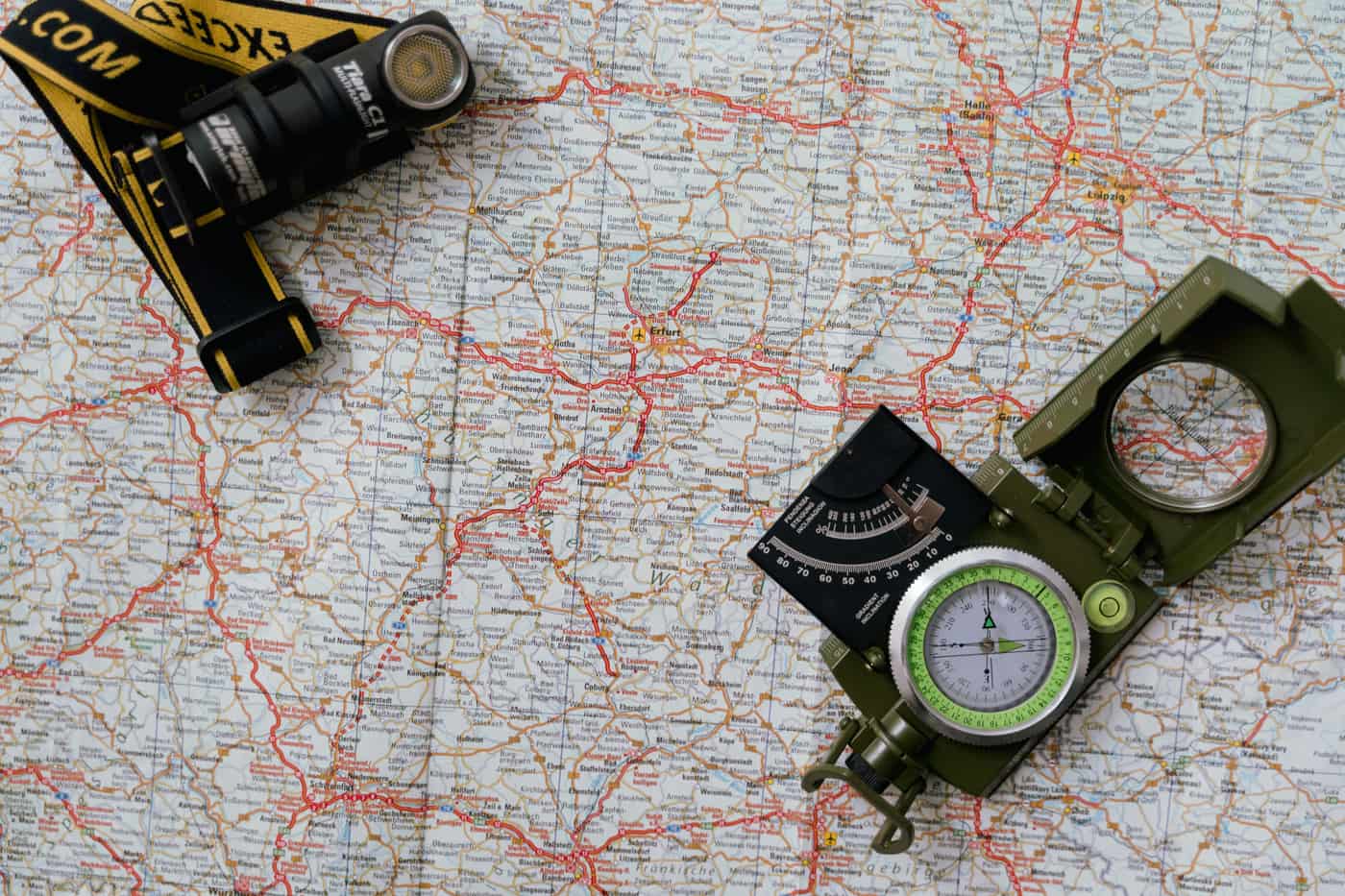
Practically, that means picking a piece of ground small enough to learn. Walk it before the season with a map, and mark the things you will need in the dark: where you can park, which logging roads and trails let you move quietly, where the ridges and open fields are, and where the property lines run. The NWTF's public-land rule is blunt about that last one: “Abide by property lines, regardless of whether it's private or public.”
Mark a second and a third spot while you are at it. On shared ground you will need them, because the NWTF's advice when someone is already there is simply to go elsewhere: “If you see a truck parked where you wanted to hunt, drive to the next spot.” More of that in public land turkey hunting.
You find turkeys with your ears
In spring, a gobbler advertises. Missouri's conservation department puts it plainly: “In spring, male turkeys (toms) begin gobbling to announce themselves to males and to attract females.” Pennsylvania's wildlife agency adds when: “Toms gobble loudly in early morning and sometimes in late evening.” Those two sentences are the whole scouting plan for a beginner. Be somewhere you can hear a long way, at dawn or at dusk, and keep quiet.
A locator call is the tool that makes a quiet bird answer. The NWTF's locator calls: how to make turkeys gobble describes them as “nothing more than a loud sound that forces a tom to shock gobble,” and its writer's routine is an owl call “first thing in the morning or as the sun is setting,” with crow calls “in the middle of the afternoon.” Coyote, duck and goose calls are on his list too. The point of a locator is that it makes a gobbler give up his position without teaching him that a hen is standing on that ridge.
Do not scout with hen calls. The same NWTF article draws the line clearly: “I only like to use a hen turkey call when I think a tom is close and I am in position to shoot if he is in range.” Yelping at a bird you have no intention of hunting today teaches him something, and on public land it can pull a person toward you instead. Our ranked owl and crow calls are in the best locator calls, and how much calling is too much is in how often to call turkeys.
Roosting a bird the evening before
Turkeys sleep in trees. The NWTF puts it simply: “Wild turkeys fly into trees or tall bushes at night to evade predators,” and Maine's wildlife agency describes them as active by day and roosting in trees at night. Because a roosted bird is still in that tree at daylight, a gobbler you locate at dusk is a gobbler you can be sitting under in the morning. That is the single highest-value thing a new hunter can do the evening before a hunt.
The roosting routine in the NWTF's great roost hunts, step by step:
- Get in early and settle. “Move in several hours before dusk, set up and chill.”
- Pick a listening spot and wait. “Find a good listening spot, and wait until the sun is low before trying to elicit gobbles.”
- Do not rush it. “Many hunters err by trying to roost turkeys that haven't flown up yet.”
- Then hoot. “When you're sure birds have roosted, start with owl hoots to provoke a shock gobble.”
- If the owl gets nothing, try a cackle. “If that nets nothing, wait a minute, and then make some fly-up cackles on a friction call.”
- Pin him down. “Get as close as possible so you can nail down his exact location,” then back out the way you came.
One caution that saves a hunt: knowing where he sleeps is not the same as sitting in his bedroom. The NWTF's roosting article says to “avoid hunting the bird's exact location” and to have a plan B, “to observe activity in the roost area later” if the morning falls apart. Where you actually put your back against a tree is covered in turkey hunting setup.
Listening at dawn
The morning after you roost a bird is about timing and quiet. The NWTF lists arriving late as one of the mistakes new hunters make: “Arriving late to your hunting spot gives turkeys a distinct advantage, as they can see and hear you approaching,” and the fix is to “arrive well before dawn to give yourself enough time to set up.” For a roosted bird the NWTF is more specific still: “Do it well before dawn. Be under the bird a half-hour or more before light.”
Getting in without blowing him out of the tree:
- No flashlights. The NWTF's instruction is to “use darkness to slip into the area. No flashlights.”
- Walk the easy ground. “Traverse logging roads or deer trails if possible” — birds are “accustomed to hearing deer and other critters underneath them at night.”
- Then use your eyes and ears. “As light begins to break, scan treetops for dark forms, and listen for drumming.”
- Read the first gobble. “At the first gobble, determine where the longbeard is and where he might pitch down.”
What to look for in scouting gear
Scouting gear is short. You are walking, listening, and occasionally confirming what you are looking at from a long way off.
- A locator you can actually run. An owl call covers the two windows that matter, dusk and first light. Look for one that is small enough to live in a pocket and that the maker says is easy to blow — a locator you are shy about using is a locator you will not use.
- Glass, for the bird you can see but cannot identify. An 8x42 binocular is the easy first pair: enough magnification to pick out a beard across a field, steady enough to hold against a tree. It matters more than beginners expect, because a beard is not proof of a gobbler — the NWTF says “do not assume a bird is a male if it has a beard – about 10 percent of hens also can have beards.” Telling them apart is in jake vs tom vs hen.
- Boots you can cover ground in. Scouting is miles, often before daylight and through wet grass. A lighter, waterproof boot beats a heavy one unless you hunt snake country, in which case the trade goes the other way.
We have not hunted with any of the gear below. Every detail here is what the maker publishes, and each one is linked in the sources at the end.
Our picks for this
A three-piece scouting kit
One call to make a gobbler answer, one binocular to confirm what answered, and a boot light enough to keep walking in.
- Illustrative photo
Best simple owl hooter with pitch control
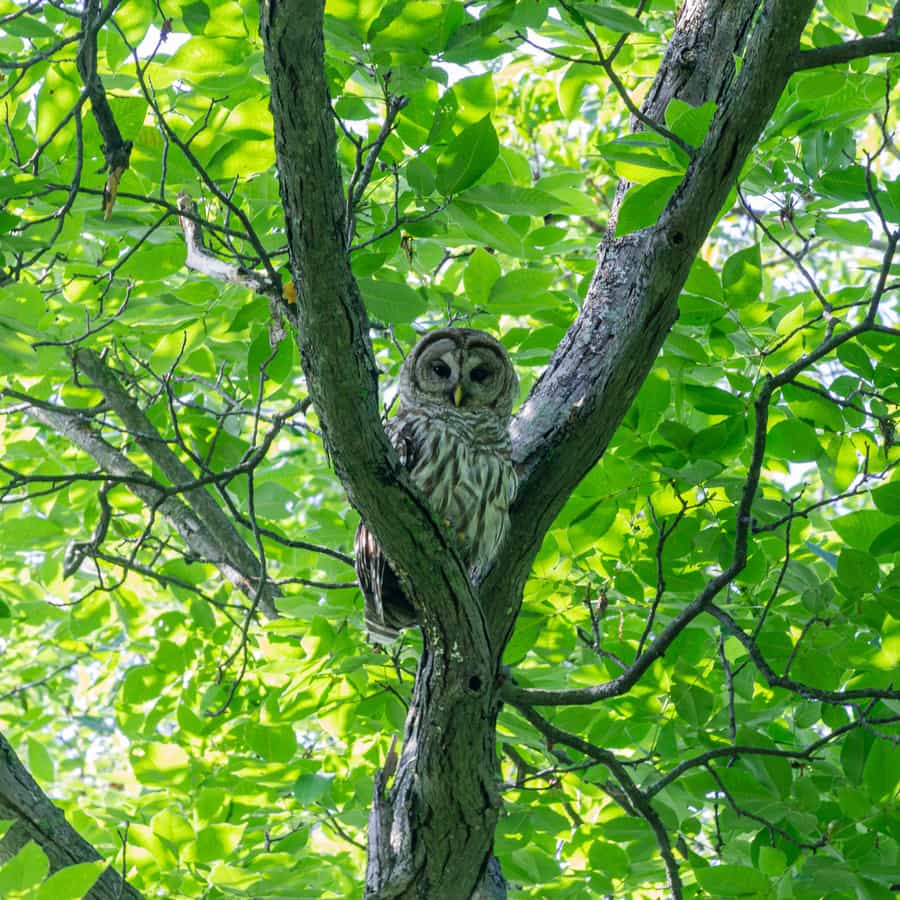
Quaker Boy Owl Hooter
Locator call6.5/10Quaker Boy calls it the “classic, easy to use, can owl call” with a “two-tone pitch for greater response,” and describes it as lightweight and pocket-sized. Quaker Boy publishes no weight, material or warranty for it.
Check price on Amazon#ad · Price set by Amazon · Disclosure for the link to Quaker Boy Owl Hooter
- Illustrative photo

Best binocular for a first season
Vortex Crossfire HD 8x42 Binocular
Binoculars8.9/108x42 with a 6.0 ft close focus and a GlassPak chest harness in the box, waterproof and fogproof per Vortex, on the unlimited VIP warranty. At 23.8 oz it is the heaviest binocular in our registry.
Check price on Amazon#ad · Price set by Amazon · Disclosure for the link to Vortex Crossfire HD 8x42 Binocular
- Illustrative photo
Best lightweight turkey boot
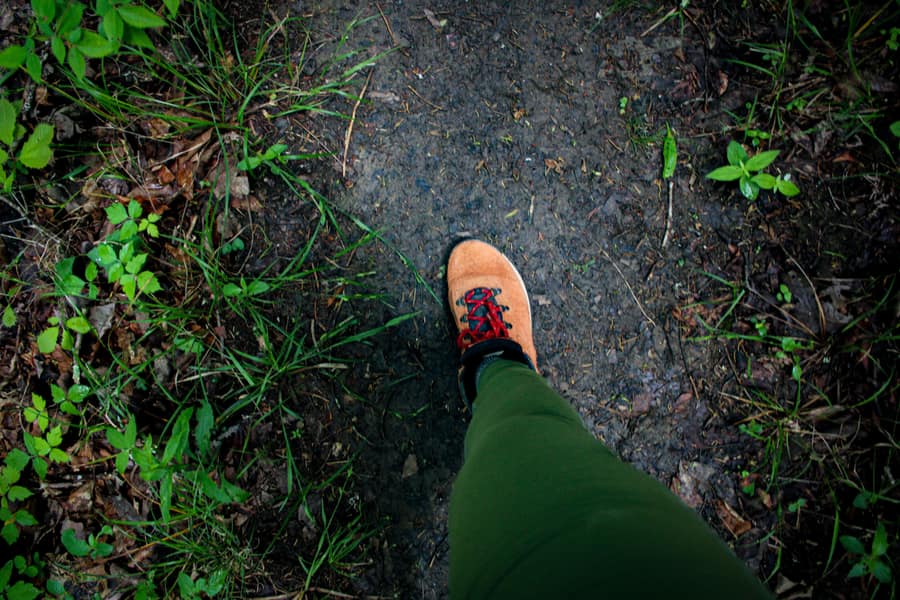
Danner Recurve 7" Hunting Boot
Boots7.4/10A 7 in, non-insulated boot with a Danner Dry liner and a Vibram Recurve outsole at a published 45 oz per pair, the lightest boot in our registry. Danner lists no snake protection.
Check price on Amazon#ad · Price set by Amazon · Disclosure for the link to Danner Recurve 7" Hunting Boot
More owl and crow calls sit in the turkey calls hub, the full binocular field is in best turkey hunting binoculars, and snake boots and knee boots are compared in best turkey hunting boots.
Covering ground after fly-down
If the roosted bird walks off with hens, the morning is not over. The NWTF's all-day plan describes where birds go as the day runs: early, “this is when birds are flying down from the roost and milling around their land zones”; later, “turkeys tend to shift toward feeding areas that are further from their roost sites”; at midday, “it's time to think temperature. On hot days, focus on cooler areas.” A second NWTF writer says afternoon birds “will likely loaf or mill about in shady areas until grabbing a bite to eat during late afternoon or early evening.”
So the mid-morning move is not random walking. It is walking from the roost area toward feed, then toward shade, stopping to listen. One NWTF hunter gives a clock for it: “Unless I hear a gobbler, I usually stay put until about 9:30 a.m., at which time I start moving.” He also rates a midday bird highly: “There's not as much gobbling then, but if you find one that will talk to you, you have a much better chance of doing something with him.”
Evening can work too, where the law allows it: one NWTF writer notes that “sometimes, it's easy to sit by a hot roost site and clobber a gobbler as he prepares to fly up.” Which end of the day suits a beginner is weighed in morning vs evening turkey hunting.
When you find nothing
Silent mornings happen to everyone, and they are not proof that the woods are empty. Some of it is weather. A study the NWTF reported found that “gobbling activity was highest when winds were about 3 mph” and that “almost no gobbles were recorded when winds exceeded 12 mph.” The same research found birds vocalized most “when the average daily temperature was between 60 and 69 degrees,” and that “lower pressure, often associated with rain, meant less gobbling.” A windy, wet, cold morning is a bad listening morning, not a bad spot.
Some of it is the calendar. Research using recording units, again reported by the NWTF, found that gobbling “follows a more complicated pattern with multiple peaks” rather than the two peaks hunters once assumed, and on the non-hunted properties studied, “25%, 60% and 15% of gobbling activity occurred before, during and after the time when the state's spring turkey hunting season is open.” Quiet days are inside the normal range.
What to do about it, in order:
- Stay until mid-morning before you move, and listen more than you call.
- Move toward feed, then toward shade, stopping on every high spot to listen.
- Use a crow call through the middle of the day rather than an owl, per the NWTF's locator routine.
- Go to the second spot you marked. Ground you have not disturbed today is worth more than ground you have.
- Come back at dusk and roost a bird for tomorrow, which is where this page started.
About turkey sign
You will read a lot about tracks, scratching in the leaves, dust bowls, droppings and dropped feathers. Sign is real and experienced hunters use it, but we are not going to print a field guide to it that we cannot source, and none of the wildlife agency or NWTF pages we used for this guide describes how to read it.
The honest summary of a first season is that your ears will find more turkeys than your eyes will. Learn one piece of ground, be on it before light, keep the hen calls in your vest until you are sitting down, and let a gobbler tell you where he lives.
How we picked this
Gear we claim to have field-tested: none
Plenty of turkey sites say they ran every call on the list all spring. We don't say that, and we say so on every page. What we do instead: read each maker's published specs, materials and instructions; note the sounds a maker says a call makes and how it says the call handles rain; check a choke's load ratings and thread chart; compare published weights, pockets and seat heights; and score all of it on a published rubric built around a first-season hunter. Every spec links to where it came from.
Scores are computed from that documented research with fixed bands, not field trials. Commissions never set a score or decide a pick. The rubric and its bands are published.
Questions
Frequently asked
How do you find turkeys on public land?
The same way as anywhere, with backups. Learn one area on a map, listen from a high spot at dusk and at first light, and mark a second and third spot, because the NWTF's rule for shared ground is that if a truck is already parked where you meant to hunt, you drive to the next spot.
How do you roost a turkey?
Move in several hours before dusk, find a listening spot, and wait until the sun is low. Once you are sure birds have flown up, the NWTF says to start with owl hoots to provoke a shock gobble, and if that gets nothing, to try fly-up cackles on a friction call a minute later.
What time should you get to the woods for turkey hunting?
Early enough that the bird never hears you arrive. The NWTF says to be under a roosted gobbler “a half-hour or more before light,” to slip in using darkness with no flashlights, and to walk logging roads or deer trails where you can.
Should you set up right under a roosted turkey?
No. The NWTF's roosting guidance is to get close enough at dusk to nail down his exact location, then to “avoid hunting the bird's exact location” in the morning. Set up where you can hear him fly down and where he can walk to you.
Why are the turkeys not gobbling?
Often the weather. One study reported by the NWTF found gobbling was highest around 3 mph winds, that almost no gobbles were recorded above 12 mph, and that low pressure and rain meant less gobbling. Gobbling also runs in multiple peaks across the spring, so quiet days are normal.
Do you need binoculars for turkey hunting?
Not to shoot a bird, but they help you avoid shooting the wrong one. The NWTF warns that about 10 percent of hens can have beards, so a beard alone is not identification. An 8x42 is the easy first pair, and it doubles as the glass you use to check a distant bird before you ever set up on him.
Should you use a hen call while scouting?
No. The NWTF's locator-call article says to use a hen call only when you think a tom is close and you are in position to shoot if he is in range. For finding birds, use an owl or a crow call instead.
Keep reading
Related on Strut & Slate
- Best locator callsOwl and crow calls for making a quiet gobbler answer.
- Public land turkey huntingFinding birds and staying safe on shared ground.
- Morning vs evening turkey huntingWhich end of the day is worth your first sit.
- Best turkey hunting binocularsCompact 8x42s for confirming a beard across a field.
- Best turkey hunting bootsLight walkers, knee boots and snake boots compared.
- Turkey hunting setupWhere to sit once you have found him.
Receipts
Sources
- National Wild Turkey Federation — Great Roost Hunts (Brian Lovett, 2021-08-25) (read 2026-09-22)
- National Wild Turkey Federation — Plan to Roost (Laurie Lee Dovey, 2025-09-08) (read 2026-09-22)
- NWTF — Locator Calls: How To Make Turkeys Gobble (read 2026-09-22)
- NWTF — The All-Day Turkey Hunting Game Plan (read 2026-09-22)
- NWTF — Second-Shift Turkey Hunting Strategies (read 2026-09-22)
- NWTF — Showdown at High Noon: Midday Gobblers (read 2026-09-22)
- NWTF — The Science of Gobbling (read 2026-09-22)
- NWTF — The Gobbling Chronicles (read 2026-09-22)
- NWTF — Top 5 Mistakes Nobody Likes to Admit as a New Turkey Hunter (read 2026-09-22)
- NWTF — The ABCs of Hunting Wild Turkeys (read 2026-09-22)
- NWTF — Wild Turkey Breeding Cycle (read 2026-09-22)
- NWTF — 10 Commandments Of Public Land Turkey Hunting (read 2026-09-22)
- NWTF — Turkey Hunting 101 (read 2026-09-22)
- Vermont Fish & Wildlife — Turkey Hunting Safety Tips from VTF&W (read 2026-09-22)
- Maine Dept. of Inland Fisheries and Wildlife — Wild Turkey species information (read 2026-09-22)
- Pennsylvania Game Commission — Wild turkey (Discover PA Wildlife) (read 2026-09-22)
- Missouri Department of Conservation — Wild Turkey field guide (read 2026-09-22)
- Missouri Department of Conservation — Turkey: Regulations (read 2026-09-22)
- Quaker Boy — Owl Hooter product page, SKU #02601 (read 2026-09-22)
- Vortex Optics — Crossfire HD 8x42 Binocular product page, CF-4311 (read 2026-09-22)
- Danner — Recurve 7" Mossy Oak Original Bottomland product page (read 2026-09-22)
- Danner — Recurve 7" Brown Danner Dry product page (read 2026-09-22)
- SCHEELS — Men's Danner Recurve Boots (dealer page, read 2026-09-22)
We don't claim to have field-tested, owned or hunted with the products on this page. Specs come from the maker's own product pages and manuals (or a named dealer's copy when the maker's site blocked us), sound and performance claims are attributed to the maker, and any third-party observation is attributed to whoever made it. Amazon prices change often, so we don't print them. Where a figure isn't published, we say so and it earns the lowest band. Read the full method.