What the numbers are, and are not
Every figure on this page comes from either the NWTF's 2026 Spring Hunt Guide, which compiles per-state population estimates, harvest totals, season dates and bag limits, or from a state wildlife agency's own release. We have not estimated, modelled or averaged anything. Where a state does not report a figure, this page says so rather than filling the gap.
Three honest caveats before the rankings, because they change how you should read them:
- Harvest is not success rate. A big harvest number partly reflects a big state with a lot of hunters. It tells you birds are there and that people are killing them; it does not tell you your odds on a Tuesday morning in a national forest.
- Reporting methods differ. Alabama publishes two numbers for the same season — 17,059 through mandatory Game Check and 41,417 estimated — and Pennsylvania publishes a confidence range (42,543 ± 8,080). Comparing a mandatory-check state with an estimate state is comparing two different measurements.
- These are last season's numbers. The harvest figures below are 2025 spring seasons as published in the 2026 guide, except Kentucky's 2026 record, which its agency published directly. Turkey populations in parts of the Southeast have been the subject of real concern and active research, and several states have tightened limits or moved season dates in response.
The harvest leaders
Ranked on published spring harvest, highest first. Season dates and limits are the 2026 spring season as published in the NWTF guide.
- Missouri — 51,010 (2025). The highest harvest in the guide, on a population the NWTF puts at 400,000-plus. The 2026 regular season ran April 20 to May 10 with a youth weekend April 11-12, a two-bird season limit (only one in the first week), and a 1 p.m. close on public land. Missouri is also one of the better states for a beginner to read up on, because the Missouri Department of Conservation publishes unusually good hunter guidance alongside its turkey regulations.
- Pennsylvania — 42,543 ± 8,080 (2025). A huge harvest from a northern state with an enormous hunter population. The 2026 regular season ran May 2 to May 30, the limit is one bearded turkey, and there is no Sunday hunting — which matters if you are driving in for a weekend.
- Alabama — 41,417 estimated / 17,059 Game Check (2025). A long southern season: private lands in Zones 1 and 3 ran March 25 to May 8 in 2026, Zone 2 from April 1, with a daily limit of one gobbler and four across the combined fall and spring seasons. Public land (WMAs and National Forest) runs daylight to 1 p.m.
- Kentucky — 36,439 (2026, a state record). Kentucky's own agency announced the record, beating 36,097 set in 2010, with Graves County top at 778 birds. Its turkey-grouse program coordinator, Zak Danks, put it plainly: “a lot of hunters went into the woods, a lot of them had success and there were a lot of 2-year-old birds to be harvested.” Population estimate: 300,000. The 2026 season ran April 18 to May 10, two per season, one per day, one per WMA.
- Tennessee — 29,037 (2025). The longest regular season in this tier: April 11 to May 24 in 2026, one bearded turkey a day, two for the season.
- New York — just under 19,000 (2025 estimate). A 180,000-200,000 population by NWTF's figures, a clean May 1-31 season and two bearded birds, no more than one a day.
- Illinois — 18,189 (2025, a record). Multiple short split seasons by zone rather than one long one, one bearded bird per permit and up to three permits per hunter.
- Minnesota — 16,903 (2025). Split A-B-C seasons from mid-April, one bearded bird. The NWTF lists the population as unknown but thought to be stable or increasing.
- Iowa — 15,350 (2025), on a published 120,000-150,000 population, in four short seasons from April 13, one bearded or male turkey per license.
- Kansas — 13,862 (2025). A long April 15 to May 31 season, one turkey with a visible beard.
Below those, the guide lists Georgia at 12,511 gobblers, Florida at 12,066 reported harvests and Nebraska at 9,864 reported through Telecheck. South Dakota reports licences rather than harvest in the guide — 7,572 prairie licences available and 5,079 Black Hills licences issued — which is a reminder that these are not all the same measurement.
Where the birds are, per the NWTF
Only a handful of states publish a population estimate in the guide, and those are worth separating from harvest, because population is the number that tells you whether a state is a long-term bet rather than a good year.
- Missouri: 400,000+. The largest published estimate here, and consistent with the largest harvest.
- Kentucky: 300,000. Backed up by a 2026 record harvest.
- New York: 180,000-200,000. A big northern population most out-of-state hunters never consider.
- Iowa: 120,000-150,000, in a state where access is the limiting factor rather than birds.
- Minnesota: unknown, thought to be stable or increasing, which is the honest answer a lot of agencies give.
If you are choosing between two states and one publishes a population estimate while the other does not, that is not evidence about the birds. It is evidence about the agency's survey program.
Long seasons and generous limits
For a hunter with limited vacation, season length and bag limit matter more than harvest totals. Three patterns show up in the published dates.
The long southern season. Alabama ran March 25 to May 8 on private land in two of its zones; Florida opens earliest of all, with its south-of-State-Road-70 regular season running March 7 to April 12. If you want to hunt in March, the South is the answer, and Florida is where the spring starts.
The long plains season. Kansas ran April 15 to May 31 and Nebraska to May 31 as well, with Nebraska allowing a bearded bird per permit and up to two permits. South Dakota also runs to May 31 in most units. Six weeks is a different kind of trip-planning problem from a five-day split season.
The short split season. Iowa, Illinois and Minnesota all break the spring into short, permit-specific windows. That is good for crowd control and bad for flexibility: you are hunting the days your permit says, whatever the weather does. If your permit week turns wet, the tactics are in turkey hunting in the rain.
On limits, the generous end is two birds (Missouri, Kentucky, Tennessee, Georgia, New York, Florida) or more in states that count across seasons — Alabama allows four gobblers across its combined fall and spring. The strict end is one bearded bird per permit: Pennsylvania, Minnesota, Iowa, Kansas. A one-bird state is a reason to be patient with a jake, and the identification difference is in jake vs tom vs hen.
Public land and nonresident access
This is where a lot of out-of-state plans fall apart, and it is worth more of your research time than harvest tables.
Afternoon closures.
Several of the best harvest states close public-land hunting at 1 p.m. — Missouri and Alabama both do on public ground, and Illinois runs half an hour before sunrise to 1 p.m. That single rule reshapes a trip: it makes the morning everything, and it rules out the midday strategy that works so well late in the season. The midday argument, where it is legal, is in late season turkey hunting tips.
Per-area limits. Kentucky allows one gobbler per WMA, which quietly turns a two-bird season into two different trips.
Pressure. Any state with a big harvest has a lot of hunters in it. The NWTF's 10 commandments of public land turkey hunting are the right preparation for a first out-of-state hunt on open ground, and our own version is public land turkey hunting.
Licences and hunter education. Nonresident licence costs and draw deadlines vary enormously, and some states require a hunter education certificate before they will sell you a tag. IHEA-USA lists hunter education programs by state; sort that out months before, not the week before.
If you want a second subspecies
Most hunters start with Easterns, because that is the bird in the harvest-leading states above. The reason people travel is usually a different subspecies, and that is a legitimate way to pick a state.
Rio Grande. Texas is the Rio Grande destination, and the one state whose rules you most need to read before buying a tag: TPWD's wild turkey regulations set bag limits by county rather than statewide, and in some counties the limit is a single bird. We have a dedicated page on it — turkey hunting in Texas.
Two more states with their own pages. Turkey hunting in Minnesota explains the six week-long spring periods behind the 16,903 birds above, and why the period you buy matters more than anything you carry. Turkey hunting in California is the state nobody on this list expects: the earliest general opener of the big turkey states, three birds a spring, a hard 5 p.m. shooting cutoff and nonlead ammunition required statewide.
Merriam's. The Black Hills of South Dakota is the classic access-friendly Merriam's hunt, with a published April 25 to May 31 Black Hills season and 5,079 licences issued in 2025. Nebraska and Kansas also hold birds with Merriam's influence in their western counties.
Osceola. Florida only, and it is the subspecies with the tightest supply and the earliest season — March 7 in the southern zone. If a slam is the goal, this is the leg to plan first and the one most likely to need a guide or leased ground.
Do not make a subspecies your first out-of-state trip. Learn to call and set up on the birds nearest you, then travel — the path is in how to turkey hunt for beginners.
How to pick a state for a first trip
Work through these in order. It takes an evening and it saves a wasted week.
- Start with drive time, not harvest. A state you can reach in a day lets you scout a weekend in advance, which is worth more than any harvest statistic. The nearest state in the top ten is almost always the right answer for trip one.
- Check the season dates against your actual vacation. A state with a six-week season and a mediocre harvest beats a state with a record harvest whose permit week you cannot take off work.
- Read the public-land rules before the harvest table. Afternoon closures, per-WMA limits and draw-only units decide whether you get to hunt the way you planned.
- Confirm the licence and hunter-education requirements and any application deadline. Some are in December for the following spring.
- Then, and only then, compare harvest and population. Use it to break a tie between two states you can actually hunt.
One more piece of practical advice for a first travelling hunt: pick ground you can scout in daylight the day before, and roost a bird that evening. That single hour is worth more than any amount of map study in an unfamiliar state — the method is in how to roost a turkey.
What changes when you travel to hunt
Your gear list barely changes between states. Three things do, and they are the three below. Each is scored on the rubric published with our First-Season Score — the vest on the vest rubric, the boot on the boot rubric, the binocular on the binocular rubric — so the numbers are not interchangeable.
Our picks for this
A vest that carries everything, a snake boot for the South, and glass for open country
Travelling means you cannot go back to the truck for the call you left at home, you may be hunting snake country for the first time, and western ground is glassed rather than listened to.
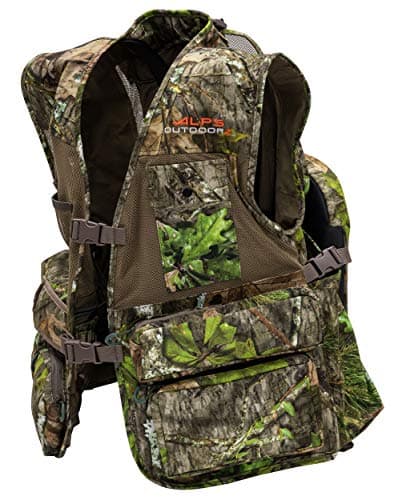
Best all-around turkey vest for a first season
ALPS OutdoorZ Super Elite 4.0 Turkey Vest
Vest with seat7.8/10Our top-ranked vest at 7.8: 22 pockets with named homes for box, pot, striker and diaphragm calls. On a trip, carrying everything you own in one organized vest is worth more than it is at home.
$139.99Amazon#ad · Price as of November 3, 2026 · Disclosure for the link to ALPS OutdoorZ Super Elite 4.0 Turkey Vest
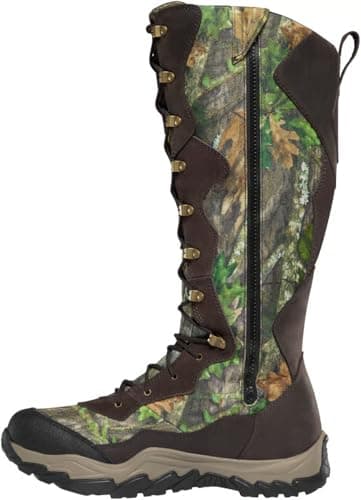
Best snake boot for the turkey woods
LaCrosse Venom II 18" NWTF Snake Boot
Boots7.6/10An 18 in snake boot in the NWTF pattern. Southern and plains states put you in rattlesnake, cottonmouth and copperhead country in April, which is a different risk from the one you hunt at home.
$279.95Amazon#ad · Price as of November 3, 2026 · Disclosure for the link to LaCrosse Venom II 18" NWTF Snake Boot
- LeupoldNo image
Best binocular guarantee
Leupold BX-1 McKenzie HD 8x42mm Binocular
Binoculars8.4/108x42 glass for the Plains and the Black Hills, where you locate birds by seeing them across a half mile of open country rather than by hearing a gobble in timber.
Check price on Amazon#ad · Price as of November 3, 2026 · Disclosure for the link to Leupold BX-1 McKenzie HD 8x42mm Binocular
If snake country is new to you, CDC NIOSH's guidance for outdoor workers in snake country is the same advice that applies to a turkey hunter: boots and long pants, stay out of tall grass and leaf piles where you can, and never handle a snake. Four boots are ranked in best snake boots for turkey hunting.
Check the agency, every year
And before you plan around a state's reputation, remember what the harvest numbers above do and do not tell you. They say there are birds and hunters. The hunt itself still comes down to finding a gobbler, setting up where he will walk, and not moving — which is the same work in every state on the list. Start at the first-season hub if that part is still new.
How we picked this
Scored on the specs that decide your season
Every pick is read off the maker's own specs, materials and instructions, then scored on a public rubric built around a first-season hunter: the sounds a call is made to produce and how it holds up in rain, a choke's load ratings and thread chart, the weights, pockets and seat heights you carry all morning. Each figure links straight to the page it came from, so you can check any pick in one click.
Scores come from that documented research with fixed bands, and prices come live from Amazon with the date they were checked. Commissions never set a score or decide a pick. The rubric and its bands are published.
Corrections & updates
- First published. Harvest, population, season and bag-limit figures from the 2026 NWTF Spring Hunt Guide and Kentucky Fish & Wildlife's own 2026 record announcement, read 2026-10-19.
Questions
Frequently asked
What is the best state for turkey hunting?
On published figures, Missouri: the NWTF's 2026 Spring Hunt Guide lists a 400,000-plus population and a 2025 spring harvest of 51,010, the highest in the guide, with a two-bird season limit. Pennsylvania, Alabama, Kentucky and Tennessee round out the top tier. For a first trip, though, drive time and season dates matter more than any of those numbers.
Which state has the most wild turkeys?
Of the states that publish an estimate in the NWTF guide, Missouri is highest at 400,000-plus, followed by Kentucky at 300,000, New York at 180,000-200,000 and Iowa at 120,000-150,000. Many states publish no estimate at all, so this is a list of agencies with survey programs as much as a list of turkey populations.
Which state has the longest turkey season?
Among the states in the guide, Kansas (April 15 to May 31), Nebraska (to May 31) and South Dakota (to May 31 in most units) run the longest springs, with Tennessee's April 11 to May 24 the longest in the southeastern top tier. Florida opens earliest: March 7 in its southern zone.
Where should a beginner turkey hunt?
The closest state in the top tier that has a season you can actually take time off for. Scouting a weekend beforehand and roosting a bird the night before beats any harvest statistic, and you can only do that near home. Travel for a subspecies once you can call and set up confidently.
What state is best for a grand slam?
No single state offers all four: the slam means Eastern, Osceola, Rio Grande and Merriam's. Florida is the only Osceola state, Texas is the standard Rio Grande destination, the Black Hills of South Dakota is an access-friendly Merriam's hunt, and Easterns are available across the harvest-leading states above. Plan the Osceola leg first; it has the tightest supply.
Is public land turkey hunting worth it in these states?
Yes, with two caveats you must read first: several top states close public-land hunting at 1 p.m., and some cap you at one bird per wildlife management area. Both are published in the state's regulations, and both change how you plan a day.
How recent are these harvest numbers?
They are the 2025 spring seasons as published in the 2026 NWTF Spring Hunt Guide, except Kentucky's 36,439, which its own agency announced as a 2026 state record. All figures were read on 2026-10-19. Check the state agency for the current season before you plan around any of them.
Keep reading
Related on Strut & Slate
- Turkey hunting in TexasThe Rio Grande state, where bag limits are set county by county.
- Public land turkey huntingHow to hunt the pressured ground these harvest numbers come from.
- How to roost a turkeyThe one hour that makes an unfamiliar state huntable.
- How to turkey hunt for beginnersThe whole path, before you start planning trips.
Receipts
Sources
- NWTF — 2026 NWTF Spring Hunt Guide: per-state population estimates, 2025 spring harvest figures, season dates, bag limits and public-land hours (read 2026-10-19)
- Kentucky Department of Fish & Wildlife Resources — "Kentucky spring 2026 turkey harvest sets record": 36,439 birds against the previous record of 36,097 in 2010, with the top counties listed (read 2026-10-19)
- Texas Parks & Wildlife — Outdoor Annual, wild turkey regulations (read 2026-10-19)
- Missouri Department of Conservation — Turkey: Regulations (read 2026-09-22)
- NWTF — 10 Commandments Of Public Land Turkey Hunting (read 2026-09-22)
- IHEA-USA — Hunter Education Programs By State (read 2026-09-22)
- CDC NIOSH — Venomous Snakes at Work (read 2026-09-22)
- ALPS OutdoorZ — Super Elite 4.0 product page (read 2026-09-22)
- LaCrosse Footwear — Venom II 18" NWTF Mossy Oak Obsession product page (read 2026-09-22)
- Leupold — BX-1 McKenzie HD 8x42mm binocular product page (read 2026-09-22)
Every spec on this page comes from the maker's own product pages and manuals (or a named dealer's copy where the maker's site blocked us), with sound and performance claims attributed to the maker and any third-party observation attributed to whoever made it. Prices come live from Amazon with the date they were checked. Where a maker leaves a figure unpublished, the page says so and that spec earns the lowest band. Read the full method.