The six spring periods
The spring season opens on the Wednesday nearest April 15 and is cut into consecutive periods. For spring 2027 the DNR publishes:
- Season A: April 14 – 20, 2027
- Season B: April 21 – 27, 2027
- Season C: April 28 – May 4, 2027
- Season D: May 5 – 11, 2027
- Season E: May 12 – 18, 2027
- Season F: May 19 – 31, 2027 — the long one, thirteen days
- Youth and archery: April 14 – May 31, 2027, the whole spring
The fall season is separate and much simpler: October 3 – November 1, 2026, one turkey of either sex. Fall is a different hunt with different tactics, and the difference is set out in fall vs spring turkey hunting.
One note on reading other sources about Minnesota: the NWTF's 2026 Spring Hunt Guide summarizes the state as A-B-C seasons, which is how the structure is often described in print. The DNR's own 2027 season table publishes six periods, A through F. When two sources disagree about a season, the state agency is the one that writes the citation.
Which period to buy
This is the real Minnesota question, and it has nothing to do with gear. A week in mid-April and a week in mid-May are two different hunts.
A and B (mid-to-late April). Peak gobbling and birds still in winter flocks in much of the state. Loud, exciting mornings — and gobblers that already have all the hens they want, which is precisely the situation where a hen call does the least work. Cold is real: an April 14 morning in Minnesota can be below freezing, and the ground is often wet or snow-patched.
C and D (late April into early May). The window most Minnesota hunters would pick if they could only have one. Hens are starting to go to nest, which leaves gobblers alone and willing to come to a call, and the weather is tolerable. If you are buying your first Minnesota license and you have a free week, buy C or D.
E and F (mid-to-late May). Fewer hunters, lonelier gobblers, green leaves and bugs. Gobbling is down from the April peak but a bird that answers is usually a bird that is coming. F is also thirteen days rather than seven, which is the single best value in the Minnesota system if your schedule is unpredictable.
Over the counter, and the F-season rule
Minnesota used to run a spring turkey lottery and no longer does. The DNR states it plainly: “Spring turkey licenses for all seasons (A-F) may be purchased over the counter beginning March 1.” For the overwhelming majority of hunters there is no application, no deadline and no preference points.
Two useful wrinkles sit on top of that:
- The F-season fallback. An unsuccessful firearms hunter who held a license for periods A through E may hunt the final F season without buying another license. Miss your week and the season is not over.
- Archery and youth run the whole spring. Archery-license holders and youth hunters are not confined to a period at all — they can hunt any time period from the April opener to May 31.
The one lottery that remains is narrow: firearms hunters aged 18 and older who want to hunt the Carlos Avery or Whitewater wildlife management areas must apply, and must apply for an A-season license. The DNR publishes that deadline alongside the season table — February 12, 2027 for the 2027 seasons. Youth and archery-only hunters do not need to be drawn for those areas.
There is also no minimum age for youth hunters in Minnesota, and licenses are reduced for hunters 17 and under and free under 13. If you are taking a child, the gear question matters more than the regulation one — start with the best turkey calls for kids and youth turkey vests.
One bearded bird
The DNR is unambiguous: “The bag limit for the spring hunt is one wild turkey with a visible beard.” One bird. Not one per period, not one per license — one for the spring.
A one-bird state changes how you hunt, and the change is mostly patience. There is no tag to burn on a jake at 9 a.m. on opening morning so you can go back out for a longbeard. Minnesota also writes the limit around a visible beard rather than around sex, which is the standard way northern states keep hens out of the bag while allowing a jake. Being able to tell the three apart before the safety comes off is a skill, not a formality: jake vs tom vs hen is the identification page, and where to aim on a turkey is the shot.
The fall season is the other way round: one turkey of either sex, October 3 – November 1, 2026.
Shot size, bows and crossbows
Minnesota publishes its legal means in detail, and two of the rules will change what you buy.
- Shotguns: 10 gauge or smaller, including muzzle-loading shotguns. That covers everything a turkey hunter is likely to own, and the gauge question is genuinely open — see 20 gauge vs 12 gauge for turkey.
- Shot size No. 4 or smaller. This is a cap on how large the pellet may be, not how small. No. 4, No. 5, No. 6 and the No. 7 and No. 9 TSS pellets are all inside it; buckshot and anything bigger than No. 4 lead is out. What the numbers mean is in what size shot for turkey.
- Archery: a minimum 30-pound pull, with arrowheads that have “at least two metal cutting edges of barbless design at least 7/8 inch in diameter,” or a blunt-head design. The bowhunting approach is in turkey hunting with a bow.
- Red dot scopes and rangefinders are permitted. Worth knowing, because a few states still treat electronic sights as a question. If you are considering one, start with red dot vs bead.
Three things are prohibited outright and catch people out: baiting or hunting over feed, hunting with a dog in spring, and live turkey decoys. Artificial decoys are fine, and how to place them is in how to set up turkey decoys.
Registration and permit areas
Every Minnesota turkey is registered within 24 hours of harvest, at a registration station, online or through the DNR mobile app. One detail is easy to get wrong: “The feathers, head, and feet must remain on the wild turkey until it is registered.” Do not start cleaning the bird in the field.
Permit areas work differently here than in states that tie your license to a unit. Minnesota hunters are not restricted to a specific permit area — you can hunt anywhere the season is open — but you report which permit area you hunted when you register the bird. The number on the map is a reporting unit, not a boundary you have to stay inside.
What the harvest numbers show
Minnesota registered 16,903 birds in spring 2025 by the NWTF's per-state figures, which puts it in the national top ten without ever being thought of as a destination state. The NWTF lists the Minnesota population as unknown but thought to be stable or increasing — the honest answer a lot of agencies give, and a reminder that a published population estimate says more about an agency's survey program than about the birds.
The DNR's own in-season reporting is the more useful number for picking a period. In 2026 it reported that through the C season “hunters harvested 11,695 birds compared to 13,480 at the same point in 2025,” and that “the total for the B season alone was 3,675, the second highest B season harvest of all time.”
Read that carefully, because it is the argument for the early periods and against them at once. B produced one of the largest single-period harvests the state has recorded — and the season-to-date total still ran nearly 1,800 birds behind the previous year, which is weather and hunter effort, not a bird shortage. Minnesota April weather moves these numbers around more than anything you will do differently.
If you are weighing Minnesota against other states for a trip, the published harvest and season comparison is in best turkey hunting states.
What to carry in Minnesota
Three things about a Minnesota spring change the kit list: it can be genuinely cold and wet in April, the ground you sit on is often saturated, and by the E and F periods the mosquitoes have arrived. These three are scored on the rubrics published with our First-Season Score — the call on the call rubric, the boot on the boot rubric, the repeller on the accessory rubric — so their numbers are not interchangeable.
Our picks for this
A call that works wet, a rubber boot and a repeller
An April morning in Minnesota is the weather that kills friction calls, the wet ground that soaks leather boots, and — three weeks later — the bugs that end a sit early.
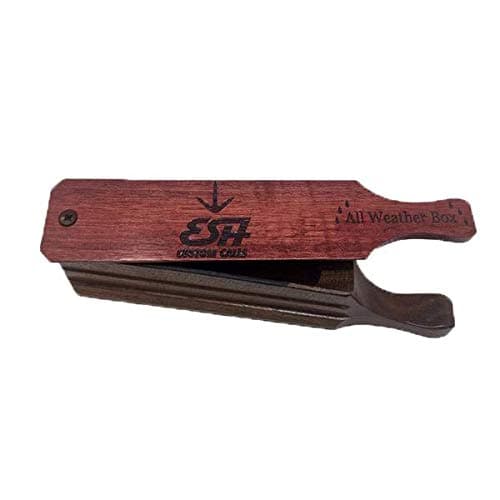
Best all-weather box call
ESH Custom Calls All Weather Turkey Box Call
Box call7.9/10A box call built around a weather claim, which is the thing that matters most in a mid-April Minnesota week. A damp box call is a silent box call.
$89.95Amazon#ad · Price as of November 3, 2026 · Disclosure for the link to ESH Custom Calls All Weather Turkey Box Call
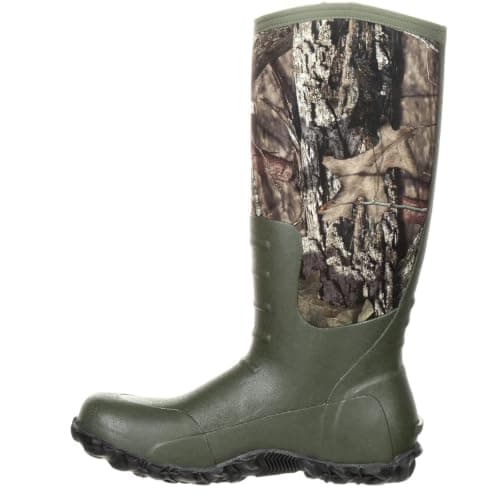
Best budget rubber boot
Rocky Core Rubber Waterproof Outdoor Boot
Boots6.2/10Rubber, not leather. April ground in Minnesota is snowmelt, flooded field edges and cattail sloughs, and a rubber boot is the honest answer to all three.
$88.89Amazon#ad · Price as of November 3, 2026 · Disclosure for the link to Rocky Core Rubber Waterproof Outdoor Boot
- ThermacellNo image
Best Thermacell for a turkey vest
Thermacell Fuel-ZoneGuard Extreme Mosquito Repeller Hunt Pack (MR300F)
Bug repeller7.5/10For the E and F periods. A late-May Minnesota sit is where mosquitoes, not turkeys, decide how long you stay put.
Check price on Amazon#ad · Price as of November 3, 2026 · Disclosure for the link to Thermacell Fuel-ZoneGuard Extreme Mosquito Repeller Hunt Pack (MR300F)
Everything else is the standard kit: a vest that carries your calls and gives you something dry to sit on, a pot call for close work, a face mask and gloves. The full list is in the turkey hunting gear list, and the rain-specific version is in turkey hunting in the rain.
One more by late May: ticks. The CDC's own tick prevention guidance is the reference we use, and the clothing side of it is in best turkey hunting pants.
Access: WMAs, state forest and walk-in
Minnesota is a better public-land turkey state than its reputation suggests, largely because so much of the huntable ground is small and scattered rather than one famous forest.
- Wildlife management areas. Hundreds of them, mostly open to turkey hunting, and mostly small enough that two hunters on the same unit will know about each other. Carlos Avery and Whitewater are the two that require a drawn A-season license for adult firearms hunters.
- State forests and county land. Big acreage in the central and southeastern hardwoods, which is also where the birds are thickest. Less pressure than the metro-adjacent WMAs.
- Walk-in access and private permission. Southeastern Minnesota farm country holds a lot of birds and a lot of landowners who will say yes to a polite ask in March.
Whatever ground you end up on, scout it before the period you bought. A one-week season gives you no time to learn a property while hunting it — the groundwork is in how to find turkeys and how to roost a turkey, and the public-land etiquette and safety rules are in public land turkey hunting.
How we picked this
Scored on the specs that decide your season
Every pick is read off the maker's own specs, materials and instructions, then scored on a public rubric built around a first-season hunter: the sounds a call is made to produce and how it holds up in rain, a choke's load ratings and thread chart, the weights, pockets and seat heights you carry all morning. Each figure links straight to the page it came from, so you can check any pick in one click.
Scores come from that documented research with fixed bands, and prices come live from Amazon with the date they were checked. Commissions never set a score or decide a pick. The rubric and its bands are published.
Corrections & updates
- First published. Season periods, over-the-counter licensing, the F-season rule, bag limit, legal means, shot-size cap, registration rules and permit-area reporting all from the Minnesota DNR's own pages, read 2026-10-26. Harvest figures from the DNR's May 2026 almanac and the NWTF's 2026 Spring Hunt Guide.
Questions
Frequently asked
When is turkey season in Minnesota?
The spring season opens the Wednesday nearest April 15 and runs in periods. For 2027 the DNR publishes A: April 14 – 20, B: April 21 – 27, C: April 28 – May 4, D: May 5 – 11, E: May 12 – 18 and F: May 19 – 31, with youth and archery seasons running April 14 – May 31. The fall season is October 3 – November 1, 2026.
Do you need a lottery to hunt turkeys in Minnesota?
Not for the general season. Spring turkey licenses for all seasons A through F may be purchased over the counter beginning March 1. The only remaining lottery is for firearms hunters 18 and older who want to hunt the Carlos Avery or Whitewater wildlife management areas, who must apply for an A-season license by the published deadline (February 12, 2027 for the 2027 seasons).
What is the turkey bag limit in Minnesota?
One wild turkey with a visible beard for the spring season. In the fall season the limit is one turkey of either sex.
Can you hunt more than one season period in Minnesota?
Yes, in two ways. An unsuccessful firearms hunter who held a license for periods A through E may hunt the final F season without buying another license, and archery and youth hunters are not confined to a period at all — they can hunt any time period across the whole spring.
What shot size is legal for turkeys in Minnesota?
Shot size No. 4 or smaller, from a shotgun of 10 gauge or smaller including muzzle-loading shotguns. That is a cap on pellet size, so No. 4 through the small TSS pellets are inside it and anything larger than No. 4 is not.
Do you have to register a turkey in Minnesota?
Yes, within 24 hours of harvest, at a registration station, online or through the DNR mobile app. The feathers, head and feet must remain on the bird until it is registered, and you report which permit area you hunted.
Which Minnesota turkey season is best for a beginner?
C or D, on the published dates: late April into early May, when hens are going to nest and gobblers are more likely to come to a call, with weather that is survivable. If your schedule is unpredictable, F is thirteen days rather than seven.
Are crossbows legal for turkey hunting in Minnesota?
The DNR states that crossbows may be used in the spring season by any licensed hunter, and that archery-only license holders may use either a crossbow or a vertical bow throughout the spring. Archery equipment must meet the published minimums: a 30-pound pull and arrowheads with at least two barbless metal cutting edges at least 7/8 inch in diameter, or a blunt head.
Keep reading
Related on Strut & Slate
- Best turkey hunting statesHow Minnesota's 16,903 birds compare on published harvest and season data.
- Turkey hunting in TexasThe other extreme: four zones and a bag limit set county by county.
- Late season turkey hunting tipsWhy the C, D and F periods hunt the way they do.
- Public land turkey huntingFor the WMA and state forest route into a one-week season.
Receipts
Sources
- Minnesota DNR — Wild turkey hunting: fall season dates, bag limit, hunting hours, legal firearms and archery equipment, registration and permit areas (read 2026-10-26)
- Minnesota DNR — Turkey hunting questions & answers: over-the-counter A-F licenses, the bearded-bird limit, the F-season rule, youth and archery provisions and the WMA lottery (read 2026-10-26)
- Minnesota DNR — Upland birds season dates: wild turkey spring 2027 periods A-F, youth and archery dates, fall 2026 dates and the WMA lottery deadline (read 2026-10-26)
- Minnesota DNR news release, May 11 2026 — DNR Fish and Wildlife Almanac: 11,695 birds through the C season against 13,480 at the same point in 2025, and a 3,675 B-season total (read 2026-10-26)
- NWTF — 2026 NWTF Spring Hunt Guide: per-state population estimates, 2025 spring harvest figures, season dates, bag limits and public-land hours (read 2026-10-19)
- CDC — Preventing Tick Bites (read 2026-09-22)
- ESH Custom Calls (Outdoor Hunting Lab store) — ALL WEATHER Turkey Box Call product page, SKU AW-BOX-CALL2 (read 2026-09-22)
- Rocky Boots — Rocky Core Rubber Waterproof Outdoor Boot, RKS0350, product page (read 2026-09-22)
- Thermacell — Fuel-ZoneGuard Extreme Mosquito Repeller Hunt Pack product page, MR300F (read 2026-09-22)
Every spec on this page comes from the maker's own product pages and manuals (or a named dealer's copy where the maker's site blocked us), with sound and performance claims attributed to the maker and any third-party observation attributed to whoever made it. Prices come live from Amazon with the date they were checked. Where a maker leaves a figure unpublished, the page says so and that spec earns the lowest band. Read the full method.