What actually changes
Everything you have read on this site about finding birds, picking a tree and calling still applies. What a bow changes is the last fifty yards, and it changes three things at once.
- The range collapses. A patterned shotgun is a 40-yard tool. A bow, for a turkey, is a 10 to 25-yard tool. Darron McDougal, writing for the NWTF on bowhunting basics for spring gobblers, puts his decoys at “10 yards or less” and says plainly why: “I like slam-dunk shots.”
- You have to move. A shotgun needs a few inches of barrel swing. Drawing a bow is a big, slow motion made in front of an animal whose eyesight is its primary defense. Solving that is most of the problem.
- The aim point moves. The shotgun answer is the head and neck. The bow answer, for a body shot, is a small window in the top third of the bird, and it is not where a deer hunter's instinct puts it.
None of that makes a bow a bad first-season choice if you already shoot one well. It does mean the gear order is different: the blind and the decoys matter more than they ever do with a gun, and they come before anything else on the list.
Check your state first
Draw weight, arrows and broadheads
A turkey is not a hard animal to penetrate. It is a hard animal to hit in the right place, which is why nothing in the published guidance pushes you toward a heavier bow.
Brandon Ray, in the NWTF's Shooter's Bench on turkey bowhunting, says he “routinely kill[s] turkeys and deer with bows that pull 55-60 pounds” and adds that “even less will work at short distances.” His own rig is a compound set at 55 pounds at a 28-inch draw, with finished arrows between 450 and 500 grains. McDougal writes for the lighter end of the same range, noting that at 45 pounds and under, shot placement does the work and mechanical heads open more reliably than fixed blades.
Broadheads split into two schools, and the split is worth understanding before you buy a pack.
- Body shots, with a wide-cutting head. McDougal's advice is a mechanical for its “larger cutting diameters,” or, on a light setup, “a shaving-sharp fixed-blade, but don't go smaller than 1 inch on cutting diameter.”
- Head and neck shots, with a decapitating head. Ray prefers “head/neck shots instead of body shots” and shoots “100 grain Magnus Bullhead broadheads on the end of stiff carbon shafts fletched with three, 4-inch feathers.” A guillotine-style head is a wide blade array designed to miss nothing in a narrow band around the neck.
Both are legitimate and they are not interchangeable: one forgives a few inches vertically and the other forgives a few inches horizontally. Pick a school, buy the head for it, and practice that shot specifically. A broadhead is also one of the few turkey purchases where the cheap option is a genuinely bad idea, and the same qualitative rule applies that we use on turkey loads: the cost of the projectile is trivial next to the cost of the season.
Where to aim with a bow
This is the section to read twice. The shotgun aim point on this site is the head and neck, and we say so on where to aim on a turkey. A body shot with an arrow is a different problem, because a turkey's vitals sit higher and further forward than most hunters assume: the feathers make the bird look twice the size of the animal inside them.
McDougal publishes four aim points, by the bird's posture:
- Broadside: “slightly behind the wing joint and just beneath the spine” — in the top third of the body, not the middle.
- Facing away, upright: “dead center on its back, both up and down and right to left.”
- Strutting, facing away: “right at the base of his fan where all of the quills meet.”
- Head-on: “right at the base of the neck,” at the waddles.
Pennsylvania's hunter-safety course, which we cite for the shotgun aim point too, calls the preferred bowhunting shot “broadside, aiming for the heart or lungs”, and Texas Parks & Wildlife's hunter-education material on shots to the vital areas is worth reading alongside it for the same reason: both describe a small target high in a feathered body.
Why the blind stops being optional
We argue on do you need a blind that most gun hunters do not. With a bow, the calculation flips, because the blind is not there to hide you — it is there to hide the draw.
Both NWTF pieces take a blind as given, and both spend their setup advice on the same details. McDougal faces the blind west, north or south for a morning hunt so the sun is not in the windows, and wants a blind that “deploy[s] quietly and has a silent window system.” Ray sets up in shade with the primary shooting window facing north or south, and then does the thing almost nobody writes down: “Clear out leaves and sticks from inside the blind and lay down a blanket to muffle sound.”
Three specs matter more for archery than for anything else, and they are the ones our best ground blinds for bowhunting turkeys ranking is built on: peak height, because you may want to draw standing; shoot-through mesh, because an arrow through mesh is quieter than an open window and the mesh hides your face; and the width hub to hub, because a drawn bow is wide. Note the one trap in the category — shoot-through mesh is usually rated for broadheads only, so if you ever hunt the same blind with a shotgun, that shot goes through an open window.
The decoy spread that buys you a draw
A decoy does two jobs for a bowhunter that it only half-does for a gun hunter: it stops the bird at a known distance, and it takes his eyes off the blind. The published distances are tight and consistent.
McDougal sets decoys “at 10 yards or less,” and if he is hunting without a blind, puts them 10 yards off the field edge while sitting 3 to 5 yards back inside the tree line. Ray sets his “about 8-10 yards from the blind” and names his spread: “a bedded hen with a half strutting jake and an upright hen.”
That spread is the whole argument for a jake in the setup. A gobbler coming to a lone hen can stop at 30 yards and wait for her to come to him, which with a gun is an easy shot and with a bow is no shot at all. A jake standing over a hen is a provocation, and a bird that comes to run the jake off commits all the way in. Our jake vs hen decoy page covers when that works and when it backfires on pressured birds, and how to set up turkey decoys covers the facing and spacing.
One safety point specific to archery. The NWTF's piece on how turkey decoys can affect the shot is written about gun hunters shooting past decoys, and the lesson transfers: know where your decoys sit relative to your shooting window before a bird is in front of you. On public ground, carry decoys in a bag, never on the outside of your vest.
What to buy first
If you already own a bow you shoot well, the archery-specific spend is short: a blind tall and wide enough to draw in, and the two decoys that hold a bird at 10 yards. Broadheads come from an archery shop rather than from us, because the right head depends on which school of shot you have chosen above.
Our picks for this
A blind you can draw in, and the two decoys that stop a bird at 10 yards
Our top-ranked bowhunting blind plus the hen-and-jake pair that matches the spread published bowhunters actually use. Every spec links to the maker's page.
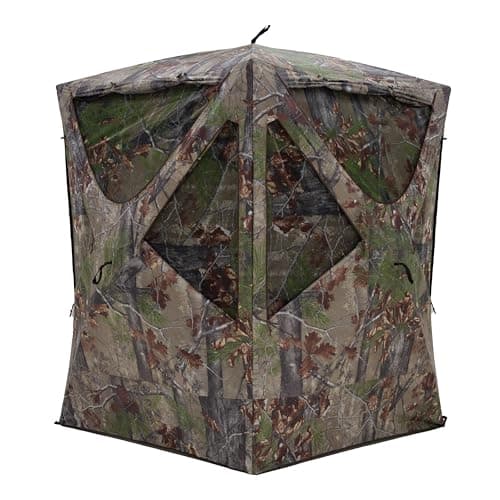
Best ground blind for bowhunting turkeys
Barronett Blinds Prowler 300
Ground blind8.2/10An 80 in peak height so most archers can draw standing, a 70 x 70 in footprint that opens to 90 in hub to hub, replaceable shoot-through mesh rated for broadheads, 14 lb, 1-year limited warranty. Solid walls, not see-through, and Barronett does not call the windows silent.
$134.99Amazon#ad · Price as of November 3, 2026 · Disclosure for the link to Barronett Blinds Prowler 300
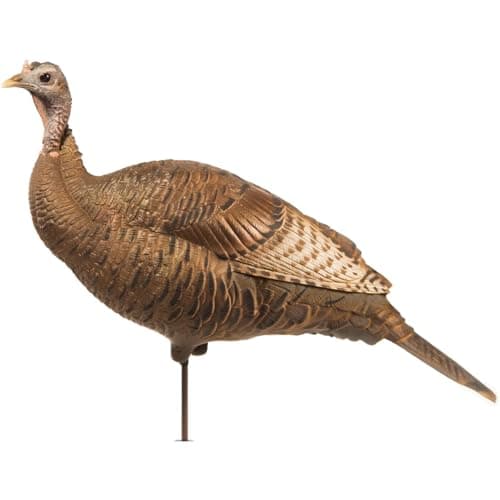
Best premium hen decoy that holds its shape
Dave Smith Decoys Upright Hen
Hen decoy6.8/10The upright hen in the published spread. Hand-painted, one-piece construction with no seams to split, and the posture that reads as calm to an incoming gobbler. The most expensive way to buy one hen, and the most durable.
$154.95Amazon#ad · Price as of November 3, 2026 · Disclosure for the link to Dave Smith Decoys Upright Hen
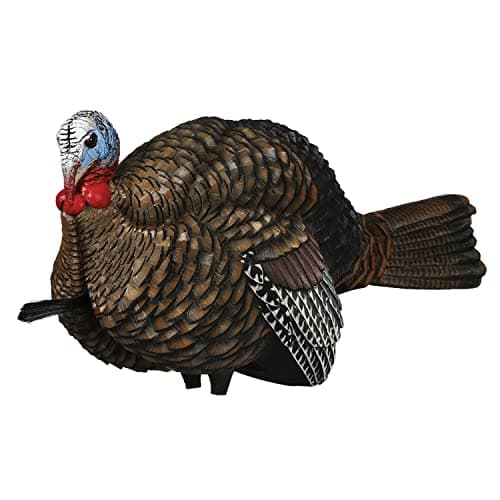
Best collapsible jake decoy
Avian-X LCD Half-Strut Jake
Jake decoy7.3/10The half-strut jake that turns a hang-up at 30 yards into a committed bird at 10. Collapsible PVC dura-rubber with a pre-attached beard, stake, bag and strap included. Sub-dominant posture, which is the point: it provokes without intimidating.
$120.44Amazon#ad · Price as of November 3, 2026 · Disclosure for the link to Avian-X LCD Half-Strut Jake
Practice that matches the shot
Ray sets one pin for 20 yards and practices “for shots from 10-25 yards.” That is the whole range, and it is worth saying out loud because an archer who practices at 40 and 50 is practicing the wrong hunt.
Three things to rehearse before opening day that have nothing to do with the target. Draw while seated in the chair you will actually use, in the blind, with the window where it will be — a surprising number of bows will not clear a knee or a hub. Draw slowly, because speed is what gets caught. And practice drawing while a bird is behind cover: McDougal sets up so the tom “will walk behind a tree or two, allowing me to draw back undetected,” which is a setup decision made before the hunt, not a reaction during it.
The rest of the morning is the same hunt everyone else is having. If this is your first spring, how to turkey hunt for beginners is the start of it, and turkey hunting setup covers choosing the ground you put the blind on.
How we picked this
Scored on the specs that decide your season
Every pick is read off the maker's own specs, materials and instructions, then scored on a public rubric built around a first-season hunter: the sounds a call is made to produce and how it holds up in rain, a choke's load ratings and thread chart, the weights, pockets and seat heights you carry all morning. Each figure links straight to the page it came from, so you can check any pick in one click.
Scores come from that documented research with fixed bands, and prices come live from Amazon with the date they were checked. Commissions never set a score or decide a pick. The rubric and its bands are published.
Corrections & updates
- First published. Draw weights, arrow weights, broadhead choices, aim points, blind placement and decoy distances quoted from two NWTF bowhunting features; aim-point and vital-area context from the Pennsylvania hunter-safety course and Texas Parks & Wildlife; regulations framing from NYSDEC.
Questions
Frequently asked
What draw weight do you need to kill a turkey?
Less than most people assume. Writing for the NWTF, Brandon Ray says he “routinely kill[s] turkeys and deer with bows that pull 55-60 pounds” and that “even less will work at short distances”; his own bow is set at 55 pounds. Darron McDougal writes for setups of 45 pounds and under, where placement and a wide-cutting head matter more than poundage. Some states set a minimum draw weight, so check your own agency's regulations.
Where do you aim on a turkey with a bow?
By posture. Broadside: slightly behind the wing joint and just beneath the spine, in the top third of the body. Facing away and upright: dead center on the back. Strutting and facing away: the base of the fan where the quills meet. Head-on: the base of the neck. Those four are McDougal's published aim points; the one thing they all have in common is that none of them is center-of-mass.
Do you need a blind to bowhunt turkeys?
Not strictly, but it is the single most useful piece of gear, because it hides the draw rather than hiding you. Both NWTF bowhunting pieces assume one and spend their advice on blind placement: face it out of the sun, set up in shade, and clear the sticks and leaves off the floor so you are not making noise inside it. Hunting without one means setting decoys 10 yards off a field edge and sitting 3 to 5 yards back in the tree line, and drawing only when the bird is behind cover.
How far should decoys be for bowhunting?
8 to 10 yards from the blind, which is what both published setups use. The decoy is there to stop the bird at a distance you have already practiced and to put his eyes on something other than your window. A hen alone can leave a gobbler hung up at 30 yards; adding a jake is what makes him commit the last twenty.
Is a crossbow legal for turkey hunting?
It depends entirely on your state, and in some states on the season. Legal implements for turkey are set by each wildlife agency and change from year to year, so read your own agency's current turkey regulations rather than any article. We never state an equipment rule as universal.
What broadhead is best for turkeys?
There are two schools and they are not interchangeable. For body shots, a mechanical for its larger cutting diameter, or a shaving-sharp fixed blade of at least 1 inch cutting diameter on a light bow. For head and neck shots, a guillotine-style head — Ray shoots 100-grain Magnus Bullheads on stiff carbon shafts with three 4-inch feathers. Choose the shot first, then the head, then practice that shot.
Keep reading
Related on Strut & Slate
- Best ground blinds for bowhunting turkeysThe blinds ranked on peak height, shoot-through mesh and hub-to-hub width.
- Best turkey decoys for bowhuntingThe decoys that hold a bird at 10 yards, ranked.
- Where to aim on a turkeyThe shotgun aim point, and why the bow answer is different.
- Jake vs hen decoyWhen adding the jake makes a bird commit, and when it sends him away.
- Turkey hunting setupChoosing the ground you put the blind on in the first place.
- Best gobble callsThe provoke-him-closer argument, and the safety case against it.
Receipts
Sources
- NWTF — Bowhunting Basics for Spring Gobblers, Darron McDougal (read 2026-10-12)
- NWTF — Shooter's Bench: Turkey Bowhunting, Brandon Ray (read 2026-10-12)
- Hunter-ed.com (Pennsylvania Hunter Safety Course) — Where to Aim When Turkey Hunting (read 2026-09-22)
- Texas Parks & Wildlife — Shots to the Vital Areas (hunter education course) (read 2026-09-22)
- NWTF — How Turkey Decoys Can Affect the Shot (read 2026-09-22)
- New York State DEC — Turkey Hunting Regulations (read 2026-09-22)
- Barronett Blinds — Prowler 300 hub blind product page (read 2026-09-22)
- Dave Smith Decoys — Upright Hen product page (read 2026-09-22)
- Avian-X — LCD Half-Strut Jake product page (read 2026-09-22)
Every spec on this page comes from the maker's own product pages and manuals (or a named dealer's copy where the maker's site blocked us), with sound and performance claims attributed to the maker and any third-party observation attributed to whoever made it. Prices come live from Amazon with the date they were checked. Where a maker leaves a figure unpublished, the page says so and that spec earns the lowest band. Read the full method.