The short version
A 12 gauge is the easiest gauge in turkey hunting to load well, because everybody makes shells for it. That means the decision is not “which shell is best” in the abstract. It is a choice between two families:
- Tungsten (TSS and HEAVYWEIGHT TSS). Denser than lead, so a smaller pellet carries the same energy and you get far more pellets in the shell. Published counts run into the hundreds. Expensive.
- Premium lead (copper-plated, buffered). Bigger pellets, fewer of them, at a fraction of the cost. Proven for a century inside 40 yards.
Everything below is published maker data, read on 2026-09-26 and linked. What is not here is a buy button: Amazon does not sell ammunition, so shells on this site are editorial references only. The buy links further down are the chokes and pattern targets that decide what any of these shells does out of your barrel.
Six 12-gauge loads, side by side
| Load | Shot | Shell & payload | Velocity | Pellet count (published) |
|---|---|---|---|---|
| Federal HEAVYWEIGHT TSS | No. 9 TSS (18 g/cc) | 3 in, 1 3/4 oz | 1,200 fps | 634 |
| Federal HEAVYWEIGHT TSS | No. 9 TSS | 3.5 in, 2 1/4 oz | 1,200 fps | Not published for this SKU |
| HEVI-18 TSS Turkey | No. 9 or No. 7 TSS (18 g/cc) | 3 in, 2 oz | 1,250 fps | Not published |
| Apex Turkey TSS | TSS (18.1 g/cc) | 3 in, 2 oz (ST-3) or 2 1/4 oz | Not published on the line page | Not published on the line page |
| Federal 3rd Degree | No. 6 FLITESTOPPER lead, No. 5 copper-plated lead, No. 7 HEAVYWEIGHT TSS | 3 in, 1 3/4 oz | 1,250 fps | 333 |
| Winchester Long Beard XR | No. 4, 5 or 6 copper-plated lead | 3 in, 1 3/4 oz (also 3.5 in, 2 oz) | 1,200 fps | Not published |
| Federal Grand Slam | No. 4, 5 or 6 copper-plated lead | 3 in, 1 3/4 oz (also 3.5 in, 2 oz) | 1,200 fps | Not published |
Federal also lists heavier and lighter 12-gauge HEAVYWEIGHT TSS options: 3.5 in at 2 1/4 oz and 2 1/2 oz (No. 7 and No. 9, and a 7/9 blend), and 3 in at 2 oz. Winchester lists a 2.75 in Long Beard XR at 1 1/4 oz and 1,300 fps, and “Magnum” 1,050 fps versions at 1 7/8 oz and 2 1/8 oz. The full SKU lists are in the sources.
Pellet count is the number that matters
Turkey hunting is a pellet-count game, not a knockdown-power game. You are trying to put a specific number of pellets into the head and neck of a bird at a known distance, and the accepted benchmark the NWTF discusses is counting hits in a vital-sized circle at 40 yards. More pellets in the shell means more chances of enough of them landing.
That is why tungsten exists. Federal publishes HEAVYWEIGHT TSS at 18 g/cc, which it says is “56 percent more than lead,” and states that “With a density of 18 g/cc, HEAVYWEIGHT TSS payloads deliver the highest pellet counts, most energy and best patterns at extreme range.” Apex publishes its TSS at 18.1 g/cc and describes the consequence plainly: more shot in the same traditional payloads.
The comparison that makes it concrete: Federal's 3 in 1 3/4 oz TSS load in No. 9 carries 634 pellets. Its 3 in 1 3/4 oz 3rd Degree load, which is 60% lead by design, carries 333. Same shell length, same payload weight, nearly twice the pellets. Why a No. 9 tungsten pellet is enough is covered in what size shot for turkey and TSS vs lead turkey loads.
The tungsten loads
Three makers here, with published figures that differ in ways worth knowing:
- Federal HEAVYWEIGHT TSS is the most fully documented: a 3 in No. 9 at 1 3/4 oz, 1,200 fps and 634 pellets, up to a 3.5 in 2 1/4 oz at 1,200 fps, plus No. 7 and 7/9 blend options. Federal also names the wad — “FLITECONTROL FLEX wad provides extremely tight, consistent patterns through standard and ported turkey chokes” — which matters because the wad design is part of why a rear-opening wad patterns the way it does.
- HEVI-18 TSS Turkey publishes the highest velocities in this group: 1,250 fps for the 12-gauge 3 in 2 oz and 3.5 in 2 1/4 oz loads, in No. 7 and No. 9. HEVI says the 18 g/cc pellets “stack more pellets in the vital zone” and credits a spherical buffer.
- Apex Turkey TSS lists 12-gauge 3 in payloads at 2 oz (its ST-3) and 2 1/4 oz, plus 3.5 in at 2 1/2 oz, at 18.1 g/cc. Apex publishes pellet counts on individual product pages rather than the line page — its 20-gauge 3 in 1 5/8 oz No. 9, for example, is listed at 590 pellets.
The lead loads, and why they still sell
Because they work, and because a box of them costs a fraction of a box of tungsten. Two premium lead loads here publish the engineering behind them:
Winchester Long Beard XR uses Shot-Lok resin that Winchester says means “Shot launches from barrel near perfectly round for extremely tight long-range patterns,” and claims “twice the number of pellets in a 10" circle out to 60 yards compared to traditional lead turkey loads.” Published 12-gauge options run from 2.75 in 1 1/4 oz at 1,300 fps to 3.5 in 2 1/8 oz at 1,050 fps, in No. 4, 5 and 6.
Federal Grand Slam uses copper-plated pellets Federal says “pattern better and penetrate deeper than other lead shot,” the rear-opening FLITECONTROL FLEX wad, and a buffering material. Published 12-gauge loads: 2.75 in 1 1/2 oz, 3 in 1 3/4 oz and 3.5 in 2 oz, all at 1,200 fps, in No. 4, 5 and 6.
For most first seasons, this is the sane place to start. Lead lets you shoot a full patterning session without flinching at the receipt, which means you actually do the patterning, which matters more than the shell. Then, if you want the extra margin at 40 yards and beyond, buy a box of tungsten and pattern that too.
Blended loads: what 3rd Degree is for
Federal's 3rd Degree is the interesting middle option, and the one that suits a hunter who does not know how far the shot will be. Federal loads it as a three-stage payload: “20 percent No. 6 FLITESTOPPER pellets for forgiving close-range patterns; 40 percent copper-plated No. 5 lead for lethal performance at mid-range; 40 percent HEAVYWEIGHT TSS (18 g/cc) for extra-dense, high-energy patterns at 40-plus yards.” The 12-gauge 3 in is 1 3/4 oz at 1,250 fps with a published 333 pellets.
What that buys you is a pattern that is wide enough not to punish a close shot and dense enough to work at distance — which is a real problem for a beginner, because the hardest shot to make with an extra-full turkey choke is a bird at 12 yards. The counter-argument is that a mixed payload is a compromise at every distance, and that a single-material load is easier to pattern and understand. Both are fair.
3 in or 3.5 in?
More shell length means more payload: Federal lists HEAVYWEIGHT TSS at 1 3/4 oz in 3 in and 2 1/4 oz in 3.5 in, and Grand Slam at 1 3/4 oz and 2 oz respectively. It also means more recoil, more money and, in some guns, no improvement in pattern.
Three practical notes. First, your gun has to be chambered for it — a 3 in gun cannot fire a 3.5 in shell, and most current turkey guns are 3 in. Second, a 3.5 in shell in a light gun is a genuinely unpleasant thing to shoot, which affects how much you practice. Third, more pellets do not automatically mean a better pattern; the only way to know is paper. Plenty of hunters find a 3 in load out-patterns the 3.5 in version in their own barrel.
Velocity, and what it does not buy
Published 12-gauge velocities in this group run from 1,050 fps (Winchester's heaviest Long Beard XR Magnum loads) to 1,300 fps (its lightest 2.75 in). Higher velocity means slightly flatter flight and slightly more energy on impact. It also means more recoil and, at the margins, more pellet deformation.
For turkey ranges, velocity is the least important number on the box. A pellet leaving at 1,050 fps and one leaving at 1,250 fps both arrive at 40 yards in a fraction of a second, at a stationary target you have aimed at deliberately. Pattern density is what kills; the rest is marketing copy. The range question itself is covered honestly in how far can you shoot a turkey.
The choke has to match the load
A shell and a choke are one decision. Tungsten in No. 7 to 9 wants a tube cut for small, hard pellets; copper-plated lead in No. 4 to 6 wants a different exit diameter; and a blended load has to pass all three of its components through the same tube, which is why Federal specifies that the FLITECONTROL FLEX wad “works in all standard and ported turkey chokes.”
Our picks for this
A 12-gauge choke for each kind of load
Chokes and targets are what we can point you at, since Amazon sells no firearms or ammunition. Each is scored on our published rubric from the maker's own specs, and we haven't shot any of them.
- Illustrative photo
Best turkey choke for lead or TSS
Kick's Gobblin' Thunder Turkey Choke Tube, 12 Gauge
Turkey choke9.3/10The do-everything tube: Kick's rates the Gobblin' Thunder for lead, Hevi-Shot and TSS, so one choke covers whichever of the loads above your gun likes.
Check price on Amazon#ad · Price set by Amazon · Disclosure for the link to Kick's Gobblin' Thunder Turkey Choke Tube, 12 Gauge
- Illustrative photo
Best dedicated TSS choke for 12 gauge
Carlson's TSS Turkey Choke Tube, 12 Gauge
Turkey choke7.4/10For a committed TSS shooter: Carlson's cuts this tube for smaller shot sizes 7 to 9 and says it is optimized for Federal Premium HEAVYWEIGHT TSS.
Check price on Amazon#ad · Price set by Amazon · Disclosure for the link to Carlson's TSS Turkey Choke Tube, 12 Gauge
- Illustrative photo
Best choke for Winchester Long Beard XR (lead)
Carlson's Long Beard Turkey Choke Tube, 12 Gauge
Turkey choke7.1/10For premium copper-plated lead: Carlson's Long Beard tube is cut for Winchester's Long Beard XR-style loads in No. 4, 5 and 6.
Check price on Amazon#ad · Price set by Amazon · Disclosure for the link to Carlson's Long Beard Turkey Choke Tube, 12 Gauge
- Illustrative photo
Best pattern target for a first gun
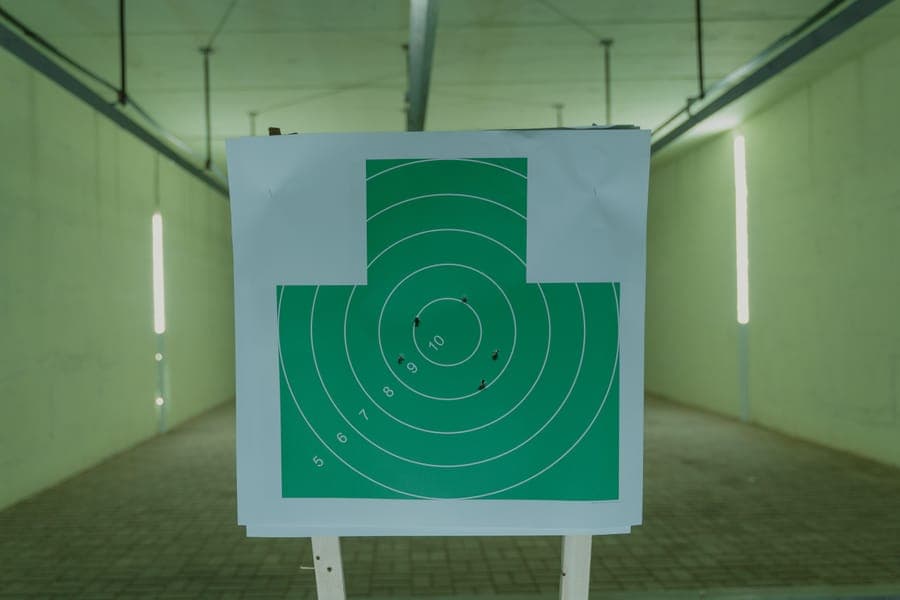
Allen Company EZ Aim Four Color Turkey Patterning Paper Target, 12 in Square, 6-Pack
Shooting accessory7.8/10Six 12 in paper targets Allen says are designed to test how a turkey shotgun patterns. Cheaper than a second box of TSS, and far more useful.
Check price on Amazon#ad · Price set by Amazon · Disclosure for the link to Allen Company EZ Aim Four Color Turkey Patterning Paper Target, 12 in Square, 6-Pack
Then prove it on paper
This is the part that decides whether any of the numbers above matter. Mississippi State University Extension publishes the method in How to Pattern a Shotgun for Turkey Hunting; the NWTF's 5 Ways to Evaluate your Turkey Pattern and Is the Age-Old Pattern Rule Still Viable? cover how to judge what you see; and Apex publishes its own reasoning for patterning at 40 yards in 10 in and 30 in circles.
Buy two or three candidate shells, not a case of one. Shoot each at the distance you expect to shoot a bird, from the position you will shoot from, and count. Our step-by-step is how to pattern a turkey gun. The load that wins on paper in your gun is your load, regardless of what it costs or who makes it.
Buying shells: availability and price
Two honest notes. First, availability moves: when we read Federal's store on 2026-09-26, the 3 in No. 9 HEAVYWEIGHT TSS and several other TSS SKUs were listed as currently unavailable. Turkey shells sell out in late winter, so if tungsten is your plan, buy in the autumn.
Second, we do not print prices anywhere on this site, because they move and a printed price is wrong within a week. What is stable is the ratio: tungsten costs multiples of premium lead per shell. If that ratio is the deciding factor for you, it is a perfectly good reason to shoot lead and spend the difference on shells you will actually fire at paper.
Shot rules vary by state
Shot size and material rules are set by your state, not by the shell maker. Missouri's Department of Conservation publishes its turkey hunting equipment guidance, and New York's DEC its turkey regulations — both examples of how specific a state gets, not a national rule. Some states cap shot size; a few restrict materials. Read yours before you buy a case of anything.
How we picked this
Gear we claim to have field-tested: none
Plenty of turkey sites say they ran every call on the list all spring. We don't say that, and we say so on every page. What we do instead: read each maker's published specs, materials and instructions; note the sounds a maker says a call makes and how it says the call handles rain; check a choke's load ratings and thread chart; compare published weights, pockets and seat heights; and score all of it on a published rubric built around a first-season hunter. Every spec links to where it came from.
Scores are computed from that documented research with fixed bands, not field trials. Commissions never set a score or decide a pick. The rubric and its bands are published.
Corrections & updates
- First published. Maker load data read 2026-09-26; several Federal TSS SKUs were listed as currently unavailable on that date.
Questions
Frequently asked
What is the best turkey load for a 12 gauge?
The one your gun patterns best. On published pellet counts, tungsten leads: Federal lists its 3 in No. 9 HEAVYWEIGHT TSS at 1 3/4 oz and 634 pellets at 1,200 fps. For cost, premium copper-plated lead such as Winchester Long Beard XR or Federal Grand Slam (1 3/4 oz, 1,200 fps in 3 in) is the practical choice inside 40 yards.
How many pellets are in a 12 gauge turkey load?
It depends entirely on shot size and material. Federal publishes 634 pellets for its 3 in 1 3/4 oz No. 9 TSS load and 333 for its 3 in 1 3/4 oz 3rd Degree blend. Most lead loads do not publish a count at all.
Is TSS worth it for a 12 gauge?
For pattern density at 40 yards and beyond, yes on published numbers — roughly twice the pellets of a comparable lead payload. For a first season inside 40 yards, premium lead does the job and leaves money for a patterning session, which matters more.
Do you need 3.5 inch shells for turkey?
No. A 3.5 in shell carries more payload (Federal lists 2 1/4 oz against 1 3/4 oz in 3 in) and more recoil, and it needs a 3.5 in chamber. Plenty of guns pattern a 3 in load better than the 3.5 in version, and only paper will tell you which.
What shot size should a 12 gauge turkey load be?
No. 4, 5 or 6 in lead and No. 7, 8 or 9 in tungsten, because tungsten is denser and a smaller pellet carries the same energy. The full table with sources is what size shot for turkey.
Can you shoot TSS through any turkey choke?
No. Choke makers publish load ratings, and some tubes are cut specifically for TSS. Carlson's sells a TSS-specific 12-gauge tube for shot sizes 7 to 9; Kick's rates its Gobblin' Thunder for lead, Hevi-Shot and TSS. Check the tube before you shoot tungsten through it.
Did you shoot these loads?
No. We have not fired or patterned any of them, and we do not count pellets ourselves. Payloads, velocities and pellet counts are the makers' published figures, each linked to its source, and where a maker publishes no count we say so rather than estimating.
Keep reading
Related on Strut & Slate
- What size shot for turkeyThe shot-size table by gauge and material.
- TSS vs lead turkey loadsThe density argument, with the chokes for each.
- Best turkey loads for 20 gaugeThe same comparison, one gauge down.
- Best turkey chokesThe tube that decides what your load does.
- How to pattern a turkey gunThe session that picks your load for you.
- Best turkey shotguns for beginnersThe guns these shells go in.
Receipts
Sources
- Federal Premium — HEAVYWEIGHT TSS 12 gauge 3 in, No. 9, 1 3/4 oz, 1,200 fps, 634 pellets (PTSSX193F 9) (read 2026-09-26)
- Federal Premium — HEAVYWEIGHT TSS product line, every gauge and payload listed (read 2026-09-26)
- Federal Premium — 3rd Degree with HEAVYWEIGHT TSS, 12 gauge 3 in, No. 5/6/7, 1 3/4 oz, 1,250 fps, 333 pellets (PTDX157 567) (read 2026-09-26)
- Federal Premium — Grand Slam product line, copper-plated lead turkey loads by gauge (read 2026-09-26)
- Winchester — Long Beard XR turkey loads, every SKU by gauge, payload and velocity (read 2026-09-26)
- HEVI-Shot — HEVI-18 TSS Turkey SKU list, every gauge, payload, shot size and velocity (read 2026-09-26)
- Apex Ammunition — Turkey TSS product line, payloads by gauge (read 2026-09-26)
- Federal Premium — How To Select The Best Turkey Loads (read 2026-09-22)
- Apex Ammunition — The TSS Difference (read 2026-09-22)
- Apex Ammunition — Why We Pattern at 40 Yards in 10" & 30" Targets (read 2026-09-22)
- Mississippi State University Extension — How to Pattern a Shotgun for Turkey Hunting (P3234) (read 2026-09-22)
- NWTF — 5 Ways to Evaluate your Turkey Pattern (read 2026-09-22)
- NWTF — Is the Age-Old Pattern Rule Still Viable? (read 2026-09-22)
- NWTF — Anatomy of a Miss: Why Turkey Hunters Whiff and How to Avoid It (read 2026-09-22)
- Missouri Department of Conservation — Turkey Hunting Equipment (read 2026-09-22)
- New York State DEC — Turkey Hunting Regulations (read 2026-09-22)
We don't claim to have field-tested, owned or hunted with the products on this page. Specs come from the maker's own product pages and manuals (or a named dealer's copy when the maker's site blocked us), sound and performance claims are attributed to the maker, and any third-party observation is attributed to whoever made it. Amazon prices change often, so we don't print them. Where a figure isn't published, we say so and it earns the lowest band. Read the full method.