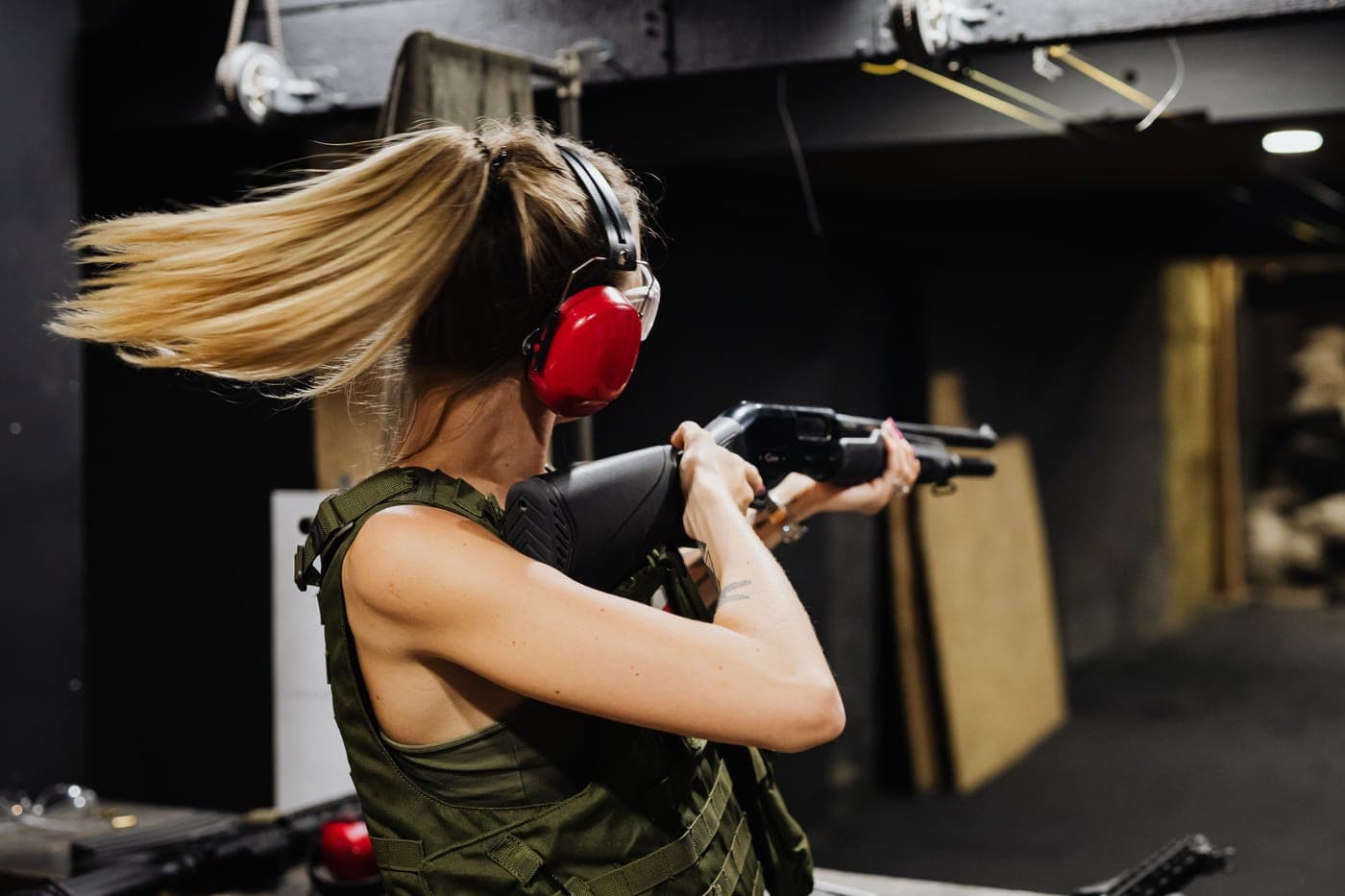
The short version
A 20 gauge throws less payload than a 12, which used to settle the argument. Tungsten reopened it: an 18 g/cc pellet carries a lead pellet's energy at a much smaller size, so a 1 1/2 oz 20-gauge payload now holds more pellets than a heavier lead 12-gauge load does.
So the 20-gauge decision comes down to what you are willing to spend per shell:
- Tungsten (TSS): published counts of 544 to 590 pellets, and a gun that is honestly good to 40 yards and beyond. Expensive per shell.
- Premium lead: 1 1/4 to 1 5/16 oz of copper-plated shot, far cheaper, and a shorter practical range.
Every figure below is published maker data, read 2026-09-26 and linked. There are no buy buttons on shells here, because Amazon does not sell ammunition; the picks further down are the 20-gauge chokes and the pattern targets that decide what any of these shells actually does.
Six 20-gauge loads, side by side
| Load | Shot | Shell & payload | Velocity | Pellet count (published) |
|---|---|---|---|---|
| Apex Turkey TSS | No. 9 / No. 8 / No. 7.5 TSS (18.1 g/cc) | 3 in, 1 5/8 oz | 1,175 fps | 590 (No. 9), 410 (No. 8), 358 (No. 7.5) |
| Federal HEAVYWEIGHT TSS | No. 9 TSS (18 g/cc) | 3 in, 1 1/2 oz | 1,100 fps | 544 |
| Federal HEAVYWEIGHT TSS | No. 7 TSS, or a No. 7/9 blend | 3 in, 1 1/2 oz (No. 7) or 1 5/8 oz (blend) | 1,100 fps / 1,000 fps | Not published for these SKUs |
| HEVI-18 TSS Turkey | No. 7 or No. 9 TSS (18 g/cc) | 3 in, 1 1/2 oz | 1,250 fps | Not published |
| Federal 3rd Degree | No. 6 FLITESTOPPER lead, No. 5 copper-plated lead, No. 7 HEAVYWEIGHT TSS | 3 in, 1 1/2 oz | 1,100 fps | 285 |
| Federal Grand Slam | No. 5 copper-plated lead | 3 in, 1 5/16 oz | 1,185 fps | Not published |
| Winchester Long Beard XR | No. 5 or No. 6 copper-plated lead | 3 in, 1 1/4 oz | 1,000 fps | Not published |
Federal also lists a 2.75 in 20-gauge HEAVYWEIGHT TSS at 1 1/8 oz and 1,000 fps, and HEVI-18 a 2.75 in at 1 1/4 oz and 1,200 fps — useful if your gun is chambered for 2.75 in only. Apex lists a 2.75 in 1 3/8 oz as well.
Why a 20 gauge works now
Compare two published payloads. Winchester's 20-gauge Long Beard XR carries 1 1/4 oz of No. 5 copper-plated lead. Apex's 20-gauge TSS carries 1 5/8 oz of No. 9 tungsten at a published 590 pellets. The tungsten load is heavier and its pellets are far smaller, so the count is in a different league entirely — and Apex states the pattern claim plainly, saying the load turns the gun into a consistent long-range proposition.
The density figures behind that: Apex publishes TSS at 18.1 g/cc, Federal HEAVYWEIGHT TSS at 18 g/cc, against lead at 11.34 g/cc and steel at 7.86 g/cc. As Apex puts it, “when the density is increased, the shot size can be reduced without losing knockdown performance.” The NWTF makes the same point in terms a hunter can use: a No. 9 HEAVYWEIGHT TSS pellet carries at least as much penetration energy as a No. 5 lead pellet at all ranges.
That is why a 20 gauge is now a legitimate first turkey gun rather than a compromise. The whole gauge argument is in 20 gauge vs 12 gauge for turkey, and the guns are in best turkey shotguns for beginners and best youth turkey shotguns.
The tungsten loads
Three makers, and they publish different things, which is worth knowing when you compare boxes on a shelf:
- Apex publishes per-shot-size pellet counts on the product page, which almost nobody else does: 590 for No. 9, 410 for No. 8 and 358 for No. 7.5 in its 3 in 1 5/8 oz load at 1,175 fps. Apex also publishes how it patterns its own loads, including the gun and choke used, which is unusually transparent.
- Federal publishes 544 pellets for its 3 in 1 1/2 oz No. 9 at 1,100 fps and names the wad: a “FLITECONTROL FLEX wad [that] provides extremely tight, consistent patterns through standard and ported turkey chokes.” It also offers No. 7 and a 7/9 blend in 20 gauge.
- HEVI-18 publishes the highest velocity in 20 gauge at 1,250 fps for its 3 in 1 1/2 oz No. 7 and No. 9, and credits a friction-reducing spherical buffer.
Choosing between No. 7, No. 8 and No. 9 tungsten is the one genuinely difficult decision here. More pellets (No. 9) means a denser pattern; bigger pellets (No. 7) means more energy each, and fewer of them. Both work; the makers offer all three because guns differ. For a beginner in 20 gauge, No. 9 gives the most forgiving pattern, and the pellet counts say why. Shot-size guidance with sources is in what size shot for turkey.
The lead options, and their honest limit
There are two premium lead loads worth naming in 20 gauge:
Winchester Long Beard XR, 3 in, 1 1/4 oz of No. 5 or No. 6 copper-plated lead at 1,000 fps. Winchester's Shot-Lok resin means, in its words, “Shot launches from barrel near perfectly round for extremely tight long-range patterns,” and the company claims twice the pellets in a 10 in circle at 60 yards against traditional lead. Note that the 20-gauge version is listed only in No. 5 and No. 6, not No. 4.
Federal Grand Slam, 3 in, 1 5/16 oz of No. 5 copper-plated lead at 1,185 fps, with the FLITECONTROL FLEX wad and a buffering material Federal says cushions pellets during ignition.
The honest limit: 1 1/4 oz of No. 5 lead is not many pellets, and a 20-gauge lead load asks you to keep shots closer than a tungsten load does. That is not a reason to avoid lead — it is a reason to pattern it and then hold yourself to what the paper shows, which for many 20-gauge lead setups is inside 35 yards. How to think about range at all is in how far can you shoot a turkey.
The blended option
Federal's 3rd Degree exists in 20 gauge too: a 3 in 1 1/2 oz load at 1,100 fps with a published 285 pellets and the three-stage payload Federal describes as “20 percent No. 6 FLITESTOPPER pellets for forgiving close-range patterns; 40 percent copper-plated No. 5 lead for lethal performance at mid-range; 40 percent HEAVYWEIGHT TSS (18 g/cc) for extra-dense, high-energy patterns at 40-plus yards.”
For a 20 gauge that will be used by a young or new hunter, that spread is a genuine argument: the hardest shot to make with an extra-full turkey choke is a bird at 12 yards, and a more forgiving close-range component helps. The counter is that a mixed payload is harder to interpret on paper, because the holes you count came from three different pellet types.
Recoil: the reason people choose a 20
Nobody in this group publishes a recoil figure, and we will not invent one. What is published is the payload and the velocity, and those two plus the gun's weight are what set recoil. A 1 1/2 oz 20-gauge tungsten load at 1,250 fps out of a 5.4 lb gun is not a gentle thing; a 1 1/4 oz lead load at 1,000 fps out of a 6 lb 4 oz pump is.
So if recoil is why you are shooting a 20 gauge — for a young hunter, a smaller-framed adult, or anyone who flinches — look at the slower, lighter published loads first, and remember that a semi-auto action absorbs part of the impulse. The guns are in best semi-automatic turkey shotguns. And whatever you choose, fire a couple at paper before the hunt rather than discovering the recoil on a live bird.
The choke is not a smaller 12-gauge tube
A 20-gauge turkey choke is its own part with its own constriction, and choke makers publish which loads a tube is cut for. Carlson's sells a TSS-specific 20-gauge tube for the small, hard pellets; its Long Beard tube is cut for premium copper-plated lead; and Kick's rates its 20-gauge Gobblin' Thunder for lead, Hevi-Shot and TSS alike.
Our picks for this
A 20-gauge choke for each kind of load
Chokes and targets are what we can point you at, since Amazon sells no firearms or ammunition. Each is scored on our published rubric from the maker's own specs, and we haven't shot any of them.
- Illustrative photo
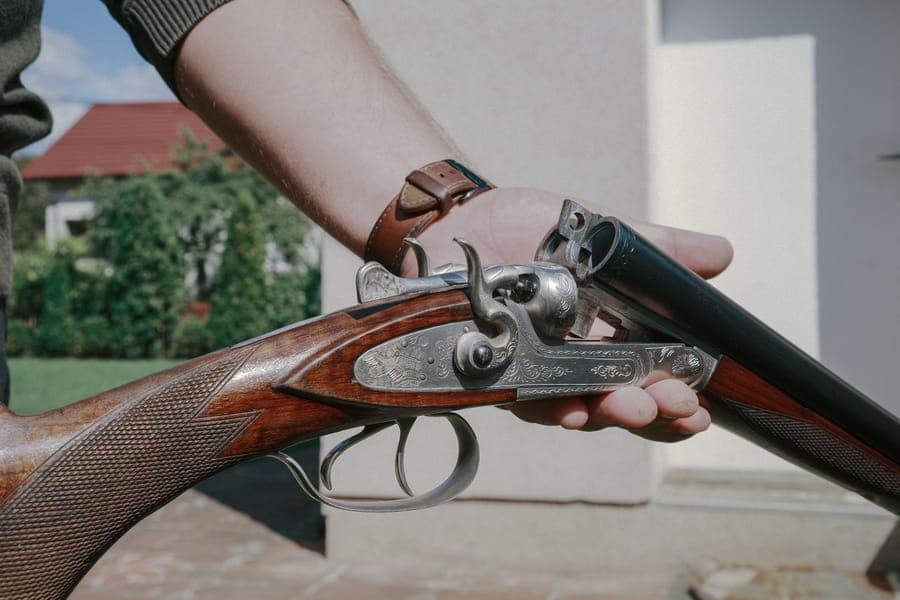
Best 20-gauge turkey choke
Kick's Gobblin' Thunder Turkey Choke Tube, 20 Gauge
Turkey choke8.7/10The do-everything 20-gauge tube: Kick's rates the Gobblin' Thunder for lead, Hevi-Shot and TSS, so one choke covers whichever shell your gun likes best.
Check price on Amazon#ad · Price set by Amazon · Disclosure for the link to Kick's Gobblin' Thunder Turkey Choke Tube, 20 Gauge
- Illustrative photo
Best 20-gauge TSS choke
Carlson's TSS Turkey Choke Tube, 20 Gauge
Turkey choke7.2/10For a committed TSS shooter in 20 gauge: Carlson's cuts this tube for the smaller shot sizes tungsten uses.
Check price on Amazon#ad · Price set by Amazon · Disclosure for the link to Carlson's TSS Turkey Choke Tube, 20 Gauge
- Illustrative photo
Best 20-gauge choke for lead Long Beard loads
Carlson's Long Beard Turkey Choke Tube, 20 Gauge
Turkey choke6.9/10For premium copper-plated lead: Carlson's Long Beard tube in 20 gauge, cut for Long Beard XR-style loads in No. 5 and No. 6.
Check price on Amazon#ad · Price set by Amazon · Disclosure for the link to Carlson's Long Beard Turkey Choke Tube, 20 Gauge
- Illustrative photo
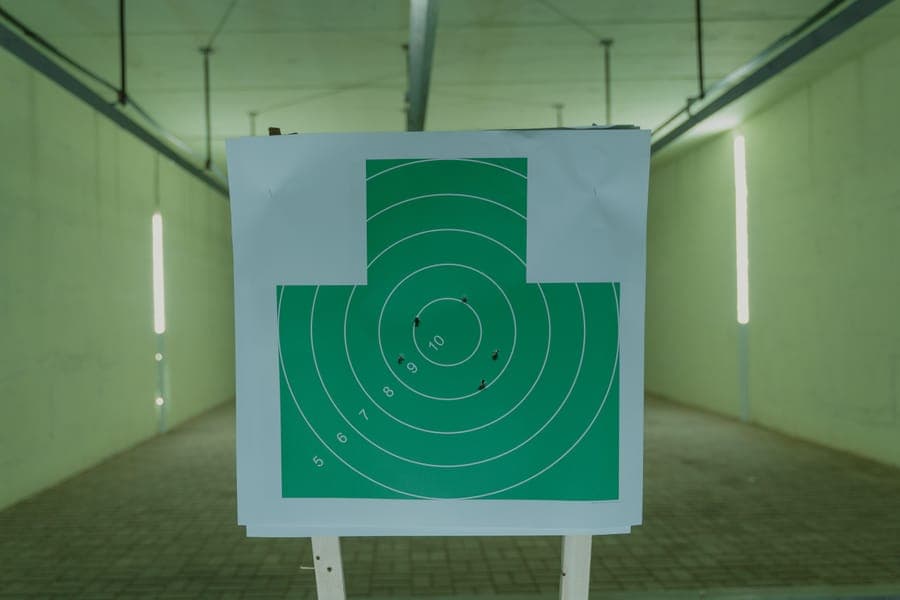
Best pattern target for a first gun
Allen Company EZ Aim Four Color Turkey Patterning Paper Target, 12 in Square, 6-Pack
Shooting accessory7.8/10Six 12 in paper targets Allen says are designed to test how a turkey shotgun patterns. With a sub-gauge gun, this is where your range limit comes from.
Check price on Amazon#ad · Price set by Amazon · Disclosure for the link to Allen Company EZ Aim Four Color Turkey Patterning Paper Target, 12 in Square, 6-Pack
The 20-gauge tubes are ranked in best 20 gauge turkey chokes, and the general choke argument is what choke for turkey hunting.
Pattern it, and set a limit
With a 20 gauge this is not optional, because the margin is thinner than in a 12. Mississippi State University Extension publishes the method in How to Pattern a Shotgun for Turkey Hunting, the NWTF's 5 Ways to Evaluate your Turkey Pattern explains how to read the paper, and Apex publishes its own reasoning for patterning at 40 yards in 10 in and 30 in circles.
Do it at the distance you intend to shoot, from a seated position, with the choke you will hunt. Then write the number down and hold yourself to it. Our walkthrough is how to pattern a turkey gun.
The cost problem
We do not print prices, because they move. The stable fact is the ratio: tungsten costs multiples of premium lead per shell, and in 20 gauge the tungsten loads are the ones that unlock the range. That leaves most hunters with a sensible split — pattern with cheaper lead to learn the gun, then buy a single box of tungsten for the season and shoot two of them at paper to confirm the point of impact.
Availability is the other practical issue. When we read Federal's store on 2026-09-26, several HEAVYWEIGHT TSS SKUs were listed as currently unavailable. Turkey shells sell out in late winter; buy in the autumn if a specific load matters to you.
Shot rules vary by state
Your state sets the shot sizes and materials you may carry, and the rules differ. Missouri publishes its turkey hunting equipment guidance, New York its turkey regulations; both are examples, not national rules. Check yours before you buy.
How we picked this
Gear we claim to have field-tested: none
Plenty of turkey sites say they ran every call on the list all spring. We don't say that, and we say so on every page. What we do instead: read each maker's published specs, materials and instructions; note the sounds a maker says a call makes and how it says the call handles rain; check a choke's load ratings and thread chart; compare published weights, pockets and seat heights; and score all of it on a published rubric built around a first-season hunter. Every spec links to where it came from.
Scores are computed from that documented research with fixed bands, not field trials. Commissions never set a score or decide a pick. The rubric and its bands are published.
Corrections & updates
- First published. Maker load data read 2026-09-26; several Federal TSS SKUs were listed as currently unavailable on that date.
Questions
Frequently asked
What is the best turkey load for a 20 gauge?
On published pellet counts, tungsten: Apex lists 590 pellets in its 3 in 1 5/8 oz No. 9 at 1,175 fps, and Federal lists 544 in its 3 in 1 1/2 oz No. 9 at 1,100 fps. For a cheaper option, Winchester Long Beard XR in 20 gauge (1 1/4 oz No. 5 or 6 at 1,000 fps) is the premium lead choice, with a shorter honest range.
Is a 20 gauge enough for turkey?
Yes, with the right shell and a pattern you have proved. Tungsten loads put 500-plus published pellets into a 20-gauge payload, which is more than most lead 12-gauge loads carry. The gauge comparison is 20 gauge vs 12 gauge for turkey.
How many pellets are in a 20 gauge TSS turkey load?
Apex publishes 590 pellets for No. 9, 410 for No. 8 and 358 for No. 7.5 in its 3 in 1 5/8 oz load. Federal publishes 544 for its 3 in 1 1/2 oz No. 9. Counts depend on shot size and payload weight, and most makers do not print them at all.
What shot size for a 20 gauge turkey load?
No. 5 or No. 6 in lead (Winchester lists only those two in 20 gauge), and No. 7, 8 or 9 in tungsten. Smaller tungsten pellets give the densest pattern; No. 7 gives more energy per pellet and fewer of them.
Can you use lead turkey loads in a 20 gauge?
Yes. Premium copper-plated lead like Winchester Long Beard XR or Federal Grand Slam works, and costs far less than tungsten. Expect a shorter practical range and confirm it on paper rather than assuming 40 yards.
Does a 20 gauge need a special turkey choke?
Yes. A 20-gauge turkey choke is its own part with its own constriction, and tubes are cut for particular loads. Carlson's sells separate TSS and Long Beard tubes in 20 gauge; Kick's rates its 20-gauge Gobblin' Thunder for lead, Hevi-Shot and TSS.
Did you shoot these loads?
No. We have not fired or patterned any of them, and we do not count pellets ourselves. Payloads, velocities and pellet counts are the makers' published figures, each linked, and where a maker publishes no count we say so.
Keep reading
Related on Strut & Slate
- 20 gauge vs 12 gauge for turkeyPayload, recoil and fit, with the choke for each.
- Best 20 gauge turkey chokesThe tubes cut for these loads.
- Best turkey loads for 12 gaugeThe same comparison, one gauge up.
- Best turkey loads for .410Where tungsten is the only real option.
- What size shot for turkeyThe shot-size table by gauge and material.
- How to pattern a turkey gunHow a sub-gauge hunter finds their limit.
Receipts
Sources
- Apex Ammunition — 20ga 3 in 1-5/8 oz Turkey TSS: No. 9 (590 pellets), No. 8 (410), No. 7.5 (358) at 1,175 fps (read 2026-09-26)
- Federal Premium — HEAVYWEIGHT TSS 20 gauge 3 in, No. 9, 1 1/2 oz, 1,100 fps, 544 pellets (PTSSX259F 9) (read 2026-09-26)
- Federal Premium — HEAVYWEIGHT TSS product line, every gauge and payload listed (read 2026-09-26)
- Federal Premium — 3rd Degree with HEAVYWEIGHT TSS, 20 gauge 3 in, No. 5/6/7, 1 1/2 oz, 1,100 fps, 285 pellets (PTDX258 567) (read 2026-09-26)
- Federal Premium — Grand Slam product line; 20 gauge 3 in, No. 5, 1 5/16 oz, 1,185 fps (PFCX258F 5) (read 2026-09-26)
- HEVI-Shot — HEVI-18 TSS Turkey SKU list; 20 gauge 3 in, No. 7 and No. 9, 1 1/2 oz, 1,250 fps (HS7007 / HS7009) (read 2026-09-26)
- Winchester — Long Beard XR turkey loads; 20 gauge 3 in, No. 5 and No. 6, 1 1/4 oz, 1,000 fps (STLB2035 / STLB2036) (read 2026-09-26)
- Apex Ammunition — The TSS Difference (read 2026-09-22)
- Apex Ammunition — Why We Pattern at 40 Yards in 10" & 30" Targets (read 2026-09-22)
- Federal Premium — How To Select The Best Turkey Loads (read 2026-09-22)
- Mississippi State University Extension — How to Pattern a Shotgun for Turkey Hunting (P3234) (read 2026-09-22)
- NWTF — 5 Ways to Evaluate your Turkey Pattern (read 2026-09-22)
- NWTF — Anatomy of a Miss: Why Turkey Hunters Whiff and How to Avoid It (read 2026-09-22)
- Missouri Department of Conservation — Turkey Hunting Equipment (read 2026-09-22)
- New York State DEC — Turkey Hunting Regulations (read 2026-09-22)
We don't claim to have field-tested, owned or hunted with the products on this page. Specs come from the maker's own product pages and manuals (or a named dealer's copy when the maker's site blocked us), sound and performance claims are attributed to the maker, and any third-party observation is attributed to whoever made it. Amazon prices change often, so we don't print them. Where a figure isn't published, we say so and it earns the lowest band. Read the full method.