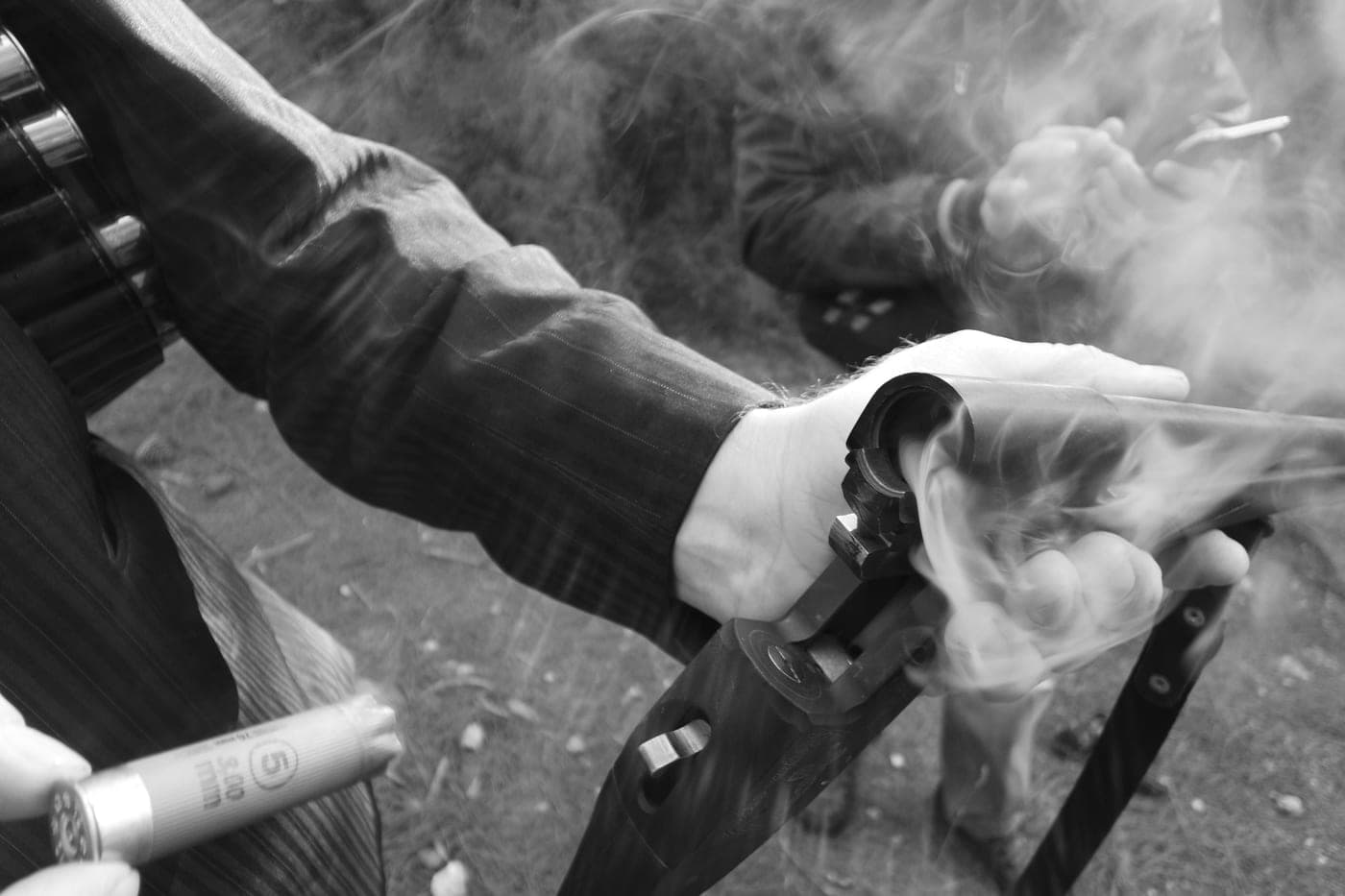
This question has a real answer, and it is not a number we can give you. It is the number your gun, your choke and your box of shells produce on paper. That is why every page in our guns, chokes and loads section comes back to the same instruction, and why this page starts with it: pattern your turkey gun, count the pellets in a 10-inch circle, and shoot birds inside the distance that count holds up. We have not fired these patterns ourselves; everything below is quoted from the agency, conservation-group and maker pages named and linked in the text.
What actually decides how far you can shoot
A turkey is killed with a head-and-neck shot, not a body shot. The Pennsylvania hunter safety course explains why: “because of the thick feathers and heavy wing bones protecting the vital organs, shot may not be able to penetrate to the vital organs,” so hunters aim for the head and neck. Texas Parks & Wildlife teaches the same in its hunter education course: “with a firearm, the head and neck are the best place to aim.” Our full breakdown of the aiming point is in where to aim on a turkey.
Writing for the NWTF, Federal Ammunition's JJ Reich sizes that target at about “4 square inches” — the head plus the spinal column in the neck. So the real question is not “how far will the shot carry,” it is “at what distance does my pattern still put enough pellets into 4 square inches.” The rule Reich states is at least 100 pellets in a 10-inch circle with at least 10 in the vital area. Distance is the thing that kills a pattern: Trulock publishes that with TSS it sees “50-60% of the total payload in a 10" circle at 40yds,” and that “for every 10yds further than 40yds you will lose about 10% of the core pattern.”
What the published sources actually say
The agencies and the ammunition makers do not agree, and it is worth seeing both sets of numbers side by side rather than picking the one you like.
| Who | What they publish | What it applies to |
|---|---|---|
| Missouri Department of Conservation | “Shooting at a turkey at more than 40 yards is not recommended, regardless of which gauge shotgun is used.” | General advice to hunters, any gauge |
| Missouri Department of Conservation (ethics) | “30 to 40 yards is about the average limit for a clean kill”; “never shoot at a turkey beyond the effective range of your shotgun.” | General advice to hunters |
| NWTF (Brian Lovett) | “Ideally, try to shoot turkeys at 20 to 40 yards, where you're sure to have a good, thick pattern.” | General advice to hunters |
| Federal Premium | TSS gives a “lethal range well past 50 yards, depending on the specific gun and choke.” | Federal's TSS ammunition, with the gun-and-choke caveat in the same sentence |
| Winchester (Long Beard XR, lead) | “Twice the number of pellets in a 10" circle out to 60 yards compared to traditional lead turkey loads”; “exceeds performance of standard lead loads beyond 50 yards.” | One premium lead load, compared with other lead loads |
| Winchester (Long Beard TSS) | Product manager Jimmy Wilson: “this is a legitimate 60-yard plus turkey load all day, every day,” and #9 TSS puts “over 8 times the pellets into a 10-inch circle at 60 yards” compared with traditional lead #5s. | One TSS load; a maker statement, not an independent test |
| Patternmaster | Claims “up to 70 yards effective range” for its Code Black Turkey tube. | One choke, with no published load rating |
Read the right-hand column and the contradiction mostly dissolves. The agencies are telling every hunter, with every gun, where the average person should stop. The makers are describing what their own product can do in a gun and choke that suit it. Neither one has patterned your shotgun.
What a maker's range claim does and does not mean
A range claim on a shell box is a claim about that shell, usually through a particular choke, often compared against a different product rather than against a pellet-count standard. Federal's own wording carries the limit inside it: TSS is lethal “well past 50 yards, depending on the specific gun and choke.” Winchester's 60-yard claim is a comparison against traditional lead #5s. Those are real statements about real products. They are not a promise about your barrel.
Trulock explains, in the plainest maker language we found, why the same tube behaves differently gun to gun: “a choke of a given exit diameter is usually going to give a different pattern when used in guns of different bore diameters. Take a Beretta at .723 a Remington at .727 a Browning I.P. at .740 and using a .660 in all three guns normally gives three different patterns.” Same choke number, three patterns. The same is true of shells: two loads in the same gauge can start with wildly different pellet counts, which is the whole subject of TSS vs lead turkey loads.
Does gauge or TSS change the answer?
It changes how many pellets you start with, which changes how far the count holds. It does not change the method, and Missouri's guidance is written to apply “regardless of which gauge shotgun is used.”
| Gauge and load | Published pellet figures | What that means for range |
|---|---|---|
| 12 ga, 2 oz No. 5 lead | Average pellet count of 340 (NWTF / JJ Reich) | Plenty of pellets at 30–40 yards in a gun that patterns well; the count thins fast past that |
| 12 ga premium lead (Long Beard XR) | Winchester: twice the pellets in a 10-inch circle out to 60 yards versus traditional lead | A maker comparison against other lead, not a pellet count for your gun |
| 12 ga, 2 oz No. 9 TSS | Average pellet count of 717 (NWTF / JJ Reich); Federal lists “more than 800 pellets in certain payloads” | The most pellets to spend on distance; also the most expensive way to find out |
| 20 ga | Missouri: “smaller gauges, particularly 20 gauges, are a great choice for young hunters” | Same 40-yard guidance; fewer pellets in the payload, so the count is what decides |
| .410 with No. 9 TSS | NWTF: a 13/16 oz load of No. 9 TSS has about 295 pellets, and test guns “averaged 125 to 150 pellets in a 10-inch circle at 40 yards” | Capable on paper; NWTF writer Scott Haugen still says “if shooting a .410, I want the bird inside 20 yards” |
Note what the .410 row shows. The pellet count cleared the 100-pellet bar at 40 yards in the guns the NWTF describes, and an experienced NWTF contributor still keeps his own birds inside 20. A pattern that passes is permission, not an obligation. Which shot size does what, gauge by gauge, is in what size shot for turkey.
How far is too far to shoot a turkey?
Too far is the first yard past what your targets proved, and the sources give a good default while you find out. Missouri's conservation agency: not past 40 yards, with 30 to 40 as the average limit for a clean kill. The NWTF's Lovett: ideally 20 to 40. If you have not patterned yet, treat 40 as a ceiling rather than a goal, and 30 as a comfortable place to take a first bird.
The cost of getting this wrong is a wounded bird, not a missed one. Missouri's hunter ethics page states it as a rule: “never shoot at a turkey beyond the effective range of your shotgun.” Writing for the NWTF about new hunters, Cody McLaughlin frames it as knowledge rather than nerve: “understanding the triangulation between your shotgun, choke and ammo allows you to understand at what distances and under what circumstances you can take an ethical shot.”
Too close is a real miss too
First-season hunters are surprised by this one. A turkey choke is built to squeeze the pattern down, and at very close range that pattern is tiny. Lovett's NWTF piece on missed birds is explicit: “with today's ultra-tight chokes, shooting a turkey closer than 20 steps can be tough,” and he describes measuring a pattern “the size of a quarter” at 11 steps after lobbing “2 ounces of expensive shot right past the gobbler's head.” Trulock says the same thing from the choke side: the pattern “can be so small it becomes easy to miss at close range.”
The fix is not a different choke. It is knowing what your pattern looks like at 10 and 20 yards, which is why the NWTF's J. Wayne Fears has you shoot targets at 20, 30 and 40 yards, and Apex Ammunition encourages patterning “in 10 yard increments from 10 – 60 yards.” At very close range the answer is usually to aim precisely rather than to point, because there is no forgiving spread to help you.
How to judge distance in the woods
Your pattern sets a number; judging is how you apply it with a gobbler drumming at you. Three habits do most of the work.
- Mark your range before the birds show up. When you sit down, pick a stump, a fence post or a clump of grass at what you believe is your maximum, and one at 20 yards. Decide in daylight, not with a bird coming.
- Use your decoy as a yardstick. If you stake a decoy at a distance you paced off, you have a reference standing in the open. Our decoy placement guide covers the distances NWTF writers publish for that.
- Learn your own pace. Measure 40 yards with a tape once, walk it a few times, and count. The NWTF's own writers talk in “steps” because that is how hunters actually measure.
Expect to underestimate. Apex's reason for standardizing on 40 yards includes “tunnel vision where the birds are a touch farther than you thought.” A gobbler in full strut looks enormous and therefore close. If you are not sure whether a bird is at 40 or 50, the answer is that he is at 50.
What to look for if you want honest reach
Three things move the number, and only in this order.
- A load with more pellets. The 340-versus-717 pellet gap between a 2 oz No. 5 lead load and a 2 oz No. 9 TSS load, as published by the NWTF, is the single biggest lever. TSS is also the most expensive box on the shelf, and it is not legal everywhere.
- A choke rated for that load. Not the tightest tube you can find: the one whose maker names the shells you are shooting. Our full ranking is in best turkey chokes.
- A sight you can aim with. A bead is for pointing; a dot gives you a precise aiming point on a 4-square-inch target. Indian Creek goes so far as to say its turkey tubes “achieve optimal performance when used with a turkey scope/red dot sight or other optic.” Add the sight, then pattern again.
What does not move the number: a tighter constriction on its own, or a longer barrel. Carlson's own choke chart says it “is to be used as a starting point; there are exceptions for every shotgun and load.”
A TSS choke and two dots worth patterning with
Our picks for this
The pieces that change what your pattern can do
Firearms and ammunition are not sold here, so these are the parts you can actually buy: a choke built around a named TSS load, and two sights that give you an aiming point instead of a bead. Each one is a reason to pattern again.
- Illustrative photo
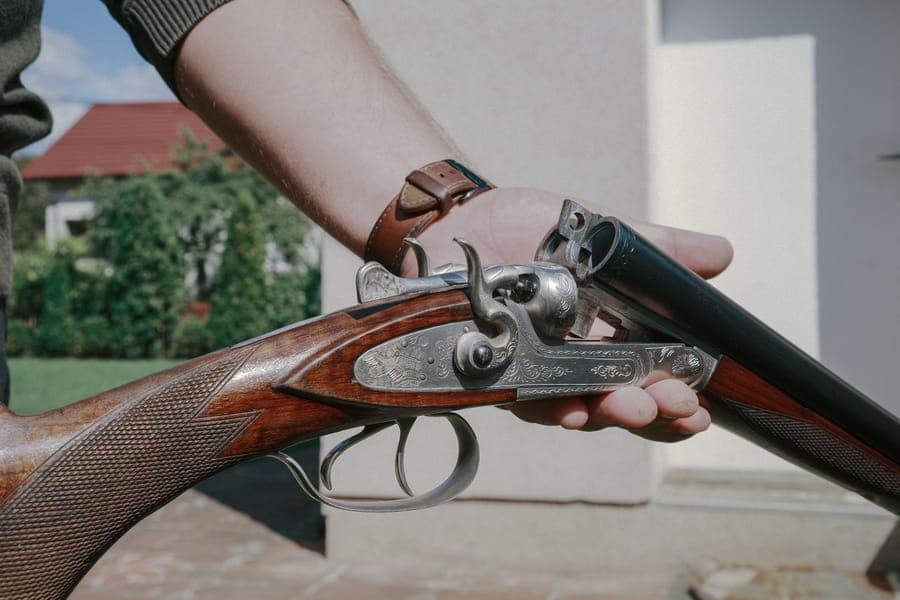
Best dedicated TSS choke for 12 gauge
Carlson's TSS Turkey Choke Tube, 12 Gauge
Turkey choke7.4/10Carlson's says it is "optimized for Federal Premium Heavyweight TSS Turkey Loads" and works with other makers' 7-9 TSS shot. It names no lead load, so do not buy it for lead. Lifetime warranty; one exit diameter per thread.
Check price on Amazon#ad · Price set by Amazon · Disclosure for the link to Carlson's TSS Turkey Choke Tube, 12 Gauge
- Illustrative photo
Best turkey red dot overall
Vortex Viper Shotgun Enclosed Micro Red Dot (Multi-Reticle)
Red dot9.2/10Vortex builds the shotgun mount into the sight, but it fits drilled-and-tapped receivers only. Check your exact model on Vortex's Compatible Shotguns list before ordering.
Check price on Amazon#ad · Price set by Amazon · Disclosure for the link to Vortex Viper Shotgun Enclosed Micro Red Dot (Multi-Reticle)
- Illustrative photo
Best red dot for picking your own reticle
Burris FastFire 4 Multi-Reticle Reflex Sight
Red dot9.5/10Four selectable reticles. Burris says of the 11 MOA dot: "the larger dot is easier to see under any lighting condition. A good choice for turkey or slug gun hunting at closer ranges." It needs a rail or a rib mount, sold separately.
Check price on Amazon#ad · Price set by Amazon · Disclosure for the link to Burris FastFire 4 Multi-Reticle Reflex Sight
One caution about circles inside a reticle. Vortex publishes what its circles are designed to do — the 32 MOA circle is “designed to roughly match the pattern of a full choke,” the 65 MOA circle a modified choke. Those are statements about full and modified chokes, not about the turkey tube in your barrel. Do not treat a reticle circle as your pattern; the paper tells you your pattern.
Set your line before opening day
Write your maximum on a piece of tape and stick it on your gun case if that is what it takes. The number should come from your own averaged targets at 20, 30 and 40 yards, capped by whatever your state agency recommends and by the distance you can honestly judge sitting on the ground in low light.
Then hold the line. The bird that hangs up at 55 yards and walks off is a bird you get to hunt again. The one you shoot at from 55 with a pattern that only holds to 40 may not be.
How we picked this
Gear we claim to have field-tested: none
Plenty of turkey sites say they ran every call on the list all spring. We don't say that, and we say so on every page. What we do instead: read each maker's published specs, materials and instructions; note the sounds a maker says a call makes and how it says the call handles rain; check a choke's load ratings and thread chart; compare published weights, pockets and seat heights; and score all of it on a published rubric built around a first-season hunter. Every spec links to where it came from.
Scores are computed from that documented research with fixed bands, not field trials. Commissions never set a score or decide a pick. The rubric and its bands are published.
Questions
Frequently asked
How far is too far to shoot a turkey?
Past the distance your own patterned gun still puts about 100 pellets in a 10-inch circle. As a default, Missouri's Department of Conservation does not recommend shooting at a turkey beyond 40 yards, and calls 30 to 40 yards the average limit for a clean kill.
How far can you shoot a turkey with TSS?
Federal claims a “lethal range well past 50 yards, depending on the specific gun and choke,” and Winchester calls its Long Beard TSS “a legitimate 60-yard plus turkey load.” Those are maker claims for their own loads. Your answer is whatever your patterned count supports, and state guidance may be shorter.
How far can you shoot a turkey with a 20 gauge?
The same way you decide for a 12 gauge: by counting pellets in a 10-inch circle at 40, 30 and 20 yards. Missouri calls 20 gauges “a great choice for young hunters” and applies its 40-yard guidance regardless of gauge.
How far can you shoot a turkey with a .410?
The NWTF reports .410 guns with No. 9 TSS averaging 125 to 150 pellets in a 10-inch circle at 40 yards. Even so, NWTF contributor Scott Haugen writes that with a .410 he wants the bird inside 20 yards. Pattern yours and decide from the paper.
Is 50 yards too far to shoot a turkey?
For most hunters and most guns, yes. Missouri's guidance stops at 40 yards, and Trulock publishes that you lose roughly 10% of the core pattern for every 10 yards past 40. If your averaged targets genuinely hold up at 50, you still have to judge 50 yards correctly in the woods.
Can you shoot a turkey too close?
Yes. The NWTF's Brian Lovett writes that “with today's ultra-tight chokes, shooting a turkey closer than 20 steps can be tough,” and measured a quarter-sized pattern at 11 steps. Pattern at 10 and 20 yards so you know how small your spread is up close.
Where should you aim when a turkey is at the far edge of your range?
At the head and neck, as hunter education courses teach, because shot may not penetrate the body's thick feathers and heavy wing bones. At distance the margin is smaller, not different, which is why a precise aiming point matters more the farther the bird is.
Keep reading
Related on Strut & Slate
- How to pattern a turkey gunThe session that produces your actual number.
- What size shot for turkeyPellet counts and shot sizes by gauge and load type.
- TSS vs lead turkey loadsDensity, pellet count and what each costs you.
- Where to aim on a turkeyThe head-and-neck shot, and why not the body.
- Best turkey chokes for TSSTubes their makers rate for tungsten super shot.
- Best red dots for turkey huntingAn aiming point for a 4-square-inch target.
Receipts
Sources
- Missouri Department of Conservation — Turkey Hunting Equipment (read 2026-09-22)
- Missouri Department of Conservation — Turkey Hunter Safety and Ethics (read 2026-09-22)
- Missouri Department of Conservation — Turkey: Regulations (read 2026-09-22)
- New York State DEC — Turkey Hunting (read 2026-09-22)
- NWTF — Anatomy of a Miss: Why Turkey Hunters Whiff and How to Avoid It (read 2026-09-22)
- NWTF — Is the Age-Old Pattern Rule Still Viable? (read 2026-09-22)
- NWTF — 5 Ways to Evaluate your Turkey Pattern (read 2026-09-22)
- Apex Ammunition — Why We Pattern at 40 Yards in 10" & 30" Targets (read 2026-09-22)
- Mississippi State University Extension — How to Pattern a Shotgun for Turkey Hunting (P3234) (read 2026-09-22)
- Federal Premium — How To Select The Best Turkey Loads (read 2026-09-22)
- Federal Premium — HEAVYWEIGHT TSS product line page (read 2026-09-22)
- Winchester — Long Beard XR Shotgun Shell Turkey Loads (read 2026-09-22)
- Winchester — Winchester Introduces Long Beard TSS To Its Legacy Lineup Of Turkey Ammunition (read 2026-09-22)
- NWTF — Are .410 Shotguns Ready for Turkey Hunting? (read 2026-09-22)
- NWTF — How Turkey Decoys Can Affect the Shot (read 2026-09-22)
- NWTF — Top 5 Mistakes Nobody Likes to Admit as a New Turkey Hunter (read 2026-09-22)
- Hunter-ed.com (Pennsylvania Hunter Safety Course) — Where to Aim When Turkey Hunting (read 2026-09-22)
- Texas Parks & Wildlife — Shots to the Vital Areas (hunter education course) (read 2026-09-22)
- Florida FWC — Safe Hunt (turkey) (read 2026-09-22)
- NWTF — 10 Commandments Of Public Land Turkey Hunting (read 2026-09-22)
- Carlson's Choke Tubes — Choke Tube Information page: 17-4 PH stainless, patterning information, turkey choke chart by load size (read 2026-09-22)
- Carlson's Choke Tubes — Winchester / Browning Inv / Moss 500 Carlson's TSS Turkey Choke Tubes, 12 ga, item 38005 (read 2026-09-22)
- Carlson's Choke Tubes — product category sitemap, thread-system categories per turkey line and gauge (read 2026-09-22)
- Indian Creek Shooting Systems — Tips And Tactics: patterning process at 40 yards, TSS guidance (read 2026-09-22)
- Trulock Chokes — Turkey Hunting page: TSS and Longbeard XR choke recommendations, patterning advice (read 2026-09-22)
- Patternmaster — 12ga Browning Invector Plus/Win SX2, SX3, SX4 Code Black Turkey 0.665 Choke Tube (5071) (store product data) (read 2026-09-22)
- Vortex Optics — Viper Shotgun Enclosed Micro Red Dot product page, SKU VPR-SGMRD3-MR-E (read 2026-09-22)
- Vortex Optics — Viper Shotgun Enclosed Micro Red Dot product manual PDF, M-00408 (read 2026-09-22)
- Vortex Optics — Viper Shotgun Enclosed Micro Red Dot "Compatible Shotguns" PDF, 2025 (read 2026-09-22)
- Burris Optics — FastFire 4 product page, item 300259 (read 2026-09-22)
- Burris Optics — FastFire 4 Multi-Reticles reticle page (read 2026-09-22)
We don't claim to have field-tested, owned or hunted with the products on this page. Specs come from the maker's own product pages and manuals (or a named dealer's copy when the maker's site blocked us), sound and performance claims are attributed to the maker, and any third-party observation is attributed to whoever made it. Amazon prices change often, so we don't print them. Where a figure isn't published, we say so and it earns the lowest band. Read the full method.