The contenders
Side by side
- Illustrative photo
Best for a 12 gauge
Kick's Gobblin' Thunder Turkey Choke Tube, 12 Gauge
Turkey choke9.3out of 10An extended, diagonally ported 17-4 PH stainless turkey tube that Kick's says "can be safely used with lead, TSS, or other non-toxic loads," sold in 19 separate 12 ga thread versions with up to 6 exit diameters in one thread (Invector Plus, 0.655 to 0.685 in).
Check price on Amazon#ad · Price set by Amazon · Disclosure for the link to Kick's Gobblin' Thunder Turkey Choke Tube, 12 Gauge
- Illustrative photo
Best for a 20 gauge
Kick's Gobblin' Thunder Turkey Choke Tube, 20 Gauge
Turkey choke8.7out of 10The 20 ga version of Kick's extended, ported 17-4 stainless turkey tube, rated by Kick's for lead, TSS and other non-toxic loads, in 0.560 or 0.570 in exits across 12 thread versions.
Check price on Amazon#ad · Price set by Amazon · Disclosure for the link to Kick's Gobblin' Thunder Turkey Choke Tube, 20 Gauge
- Illustrative photo
Best budget 20-gauge tube
Primos Tight Wad Turkey Choke Tube, 20 Gauge
Turkey choke6.2out of 10Primos's budget chrome-alloy-steel Tight Wad in 20 ga, a 0.570 in exit for Remington, Invector, Invector Plus and Beretta/Benelli Mobil threads, rated for lead, copper-plated lead and HEVI-Shot and not for steel.
Check price on Amazon#ad · Price set by Amazon · Disclosure for the link to Primos Tight Wad Turkey Choke Tube, 20 Gauge
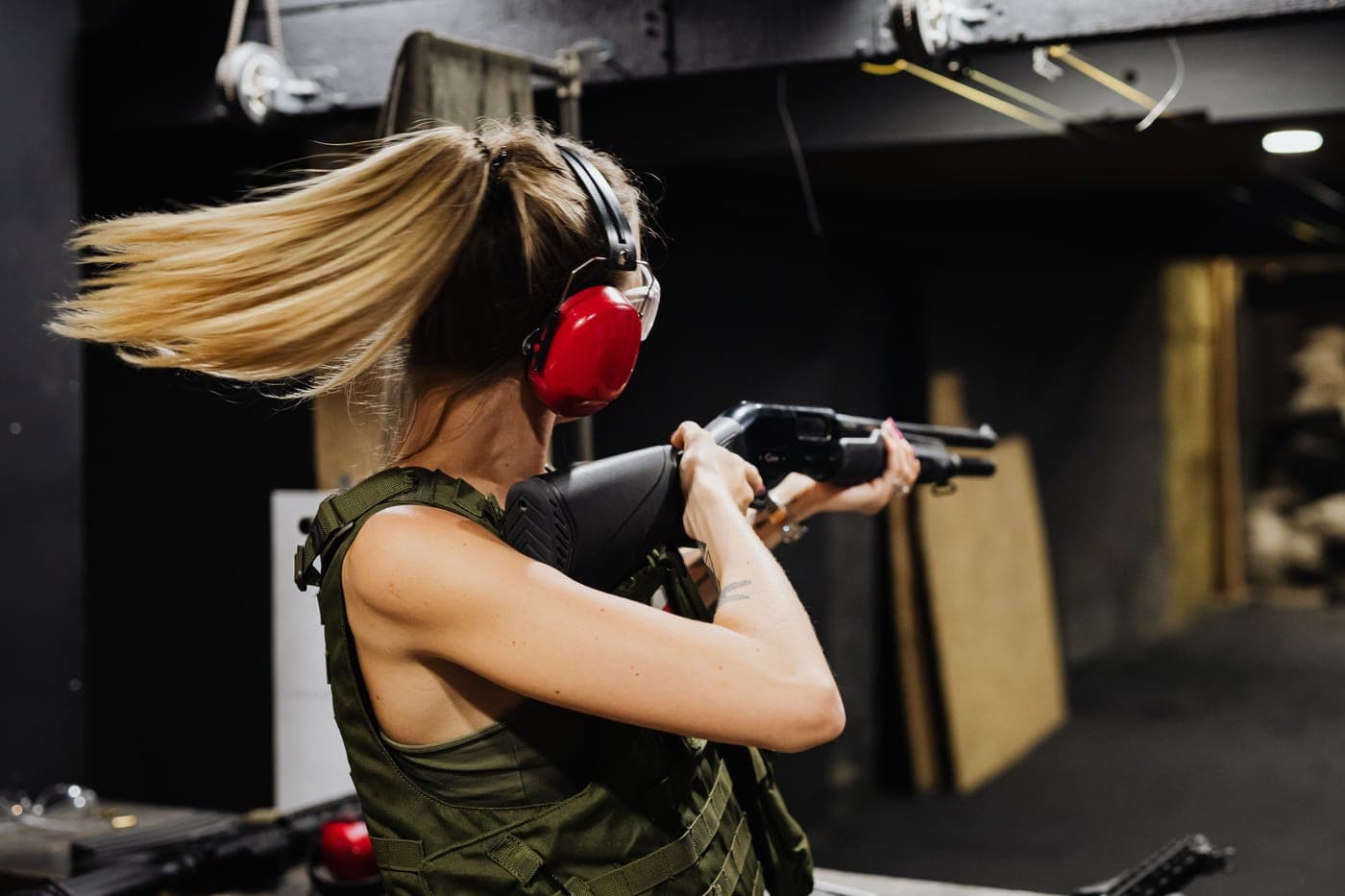
This question usually comes up twice: once when someone is buying a first turkey gun, and once when a parent is setting up a kid. The answer is different each time, and neither answer is “the 12 gauge, obviously.” Start at the guns and loads section if you want the whole path; this page is the head-to-head.
One note before the comparison. We do not sell guns or ammunition here, and we have not fired either gauge for this page. What we can do is quote what the load makers, the choke makers and a state wildlife agency publish, and be clear about what none of them publish.
The verdict
20 vs 12, side by side
| What you are comparing | 12 gauge | 20 gauge |
|---|---|---|
| Agency framing | “The standard among turkey hunters” (Missouri Dept. of Conservation) | “A great choice for young hunters” (same page) |
| Example payload, one tungsten line | 2 1/2 oz (Boss TOM, 12 ga) | 2 1/16 oz (Boss TOM, 20 ga) |
| Example lead load | 3 in, 1 3/4 oz of No. 6 — Federal calls it “a proven gobbler killer” | Winchester lists Long Beard XR in 20 ga in No. 5 and No. 6 only |
| TSS availability | Yes (Federal HEAVYWEIGHT TSS) | Yes — Federal lists the same line in 20 ga, 28 ga and .410 |
| Turkey choke exit diameters in our registry | 0.640 to 0.690 in | 0.555 to 0.570 in |
| Recommended maximum distance | The same for both: Missouri advises against shooting at a turkey past 40 yards, “regardless of which gauge shotgun is used” | |
Payload: what each gauge actually throws
Gauge is about bore size, and bore size decides how much shot a shell can sensibly carry. The cleanest way to see the difference is one load line in both gauges: Boss lists its Boss TOM turkey shells at 2 1/2 oz in 12 gauge and 2 1/16 oz in 20 gauge. That is the gap in a sentence — a 20 gauge starts with fewer pellets.
Fewer pellets matters because turkey shooting is a counting exercise. The standard, as Mississippi State University Extension publishes it, is “100 holes” in a 10-inch circle at 40 yards. A 12 gauge gets to that number with more room to spare. A 20 gauge gets there too, but it needs the right load and a choke that suits it, which is why the 20-gauge conversation is really a load conversation.
Recoil, and what nobody publishes
Here is the honest part: none of the load makers we read publishes recoil figures for turkey shells, so we are not going to print any. What is published is the payload difference above, and turkey loads in both gauges are heavy for their bore. A 3-inch magnum turkey load is not a gentle thing in any gauge.
What the choke makers do claim is that porting helps. Kick's says the “extended, ported section reduces recoil and muzzle rise” on its Gobblin' Thunder tubes, and JEBS sells its Head Hunter in a ported version labeled “Ported (Less Recoil).” Those are maker claims, not measurements, and ported tubes are louder at the bench. Hearing protection is not optional when you pattern.
Fit: the gun has to suit the shooter
A turkey shot is taken from the ground, often twisted around a tree, with the gun already up and your cheek welded to the stock for several minutes. That is a fit problem before it is a ballistics problem. A gun that is too long in the stock, too heavy to hold on a bird, or too punishing to practice with is the wrong gun no matter what the box of shells promises.
This is why the 20 gauge keeps showing up in the youth conversation, and why it is not only a youth answer. Smaller-framed adults, anyone with a shoulder or neck problem, and anyone who wants to carry less weight up a ridge all benefit from the same things a young hunter does. We work through what makes a gun suit a beginner on choosing your first turkey gun.
We deliberately do not print gun weights here. That is a model-by-model number, it varies by barrel length and stock material, and printing an average would be making something up.
What modern loads changed
Twenty years ago, this comparison had a simple answer, and it was the 12. Dense tungsten shot changed the arithmetic. Apex publishes TSS as “a 18.1 g/cc density tungsten alloy” against 11.34 g/cc for lead, and states the consequence: “when the density is increased, the shot size can be reduced without losing knockdown performance.” Smaller pellets mean more pellets in the same small payload — which is exactly what a 20 gauge needs.
The clearest evidence comes from the gauge below the 20. Writing about .410 shotguns, the NWTF reports that “a 13/16-ounce load of No. 9 TSS has about 295 pellets” and that such loads “averaged 125 to 150 pellets in a 10-inch circle at 40 yards” — above the 100-pellet standard, out of the smallest common shotgun. If a .410 can do that, a 20 gauge with TSS is not a handicap. Winchester's own product manager makes the same point about the .410 payload performing like a much larger lead load.
Lead has not been left behind in 20 gauge either, it is just narrower: Winchester lists Long Beard XR in 20 gauge in No. 5 and No. 6, against No. 4, 5 and 6 in 12 gauge. Which shot size belongs in which gauge is the subject of our guide to what size shot for turkey, where the table is cited row by row. If you are curious how far down the gauges this goes, see the .410 for turkey hunting.
The choke is not the same tube
A 20 gauge needs a 20-gauge choke. That sounds obvious, and people still order the wrong one, usually because they searched a model name rather than a thread. In our registry the published turkey exit diameters run 0.640 to 0.690 in for 12 gauge and 0.555 to 0.570 in for 20 gauge, and the thread pattern has to match your barrel too.
There is also less choice in 20. Kick's lists 19 separate 12-gauge versions of the Gobblin' Thunder against 12 in 20 gauge, and two exit diameters in 20 gauge (0.560 and 0.570 in) against up to six in a single 12-gauge thread. One quirk worth knowing if you shoot a Mossberg 500 in 20 gauge: Kick's does not name that gun on its own site, while Carlson's and Indian Creek both list it on their 20-gauge charts. Our 20-gauge choke picks go thread by thread; the 12-gauge field is in our best turkey chokes.
Whatever gauge you land on, Missouri's equipment page describes what you are after: “The most popular is an extra-full choke, which gives the tightest pattern. A tight pattern is important in order to strike the vital head-and-neck area.”
The three tubes, side by side
The two Kick's tubes are the same design in different bores, which makes them a fair way to see the gauge difference on paper. The Primos Tight Wad is the budget 20-gauge option: one exit diameter, chrome alloy steel rather than stainless, a 1-year warranty, and rated by Primos for lead and HEVI-Shot but not TSS. If your 20 is going to eat tungsten, that last line rules it out. Scoring bands are published at how we pick.
Range: the same answer for both
People reach for the 12 gauge because they believe it buys yards. Sometimes it does. It does not buy permission to take a longer shot. Missouri's guidance covers both gauges in one sentence: shooting at a turkey beyond 40 yards “is not recommended, regardless of which gauge shotgun is used.”
Your real limit is whatever your gun, choke and shell put in a 10-inch circle on paper. That is a morning at the range, not an internet argument — see how to pattern a turkey gun for the routine, and how far you can shoot a turkey for what to do with the answer.
Check your state before you buy shells
In detail
The contenders, in full
Best for a 12 gauge
Kick's Gobblin' Thunder Turkey Choke Tube, 12 Gauge
An extended, diagonally ported 17-4 PH stainless turkey tube that Kick's says "can be safely used with lead, TSS, or other non-toxic loads," sold in 19 separate 12 ga thread versions with up to 6 exit diameters in one thread (Invector Plus, 0.655 to 0.685 in).
Spec sheetSourced · not field-tested by us
How the 9.3 score breaks down
- Load compatibility (30%)
- 10
- Constriction options (20%)
- 9
- Thread fit coverage (20%)
- 9
- Build & porting (15%)
- 10
- Maker guidance (15%)
- 8
What the specs support
- Kick's rates it for lead, TSS and other non-toxic loads, so the same tube works whether your first box of shells is lead or TSS.
- Up to 6 exit diameters in a single thread (Invector Plus: 0.655 to 0.685 in), the widest choice in this lineup.
- 17-4 PH stainless, extended and ported, and Kick's says it goes in and out by hand with no wrench.
- Kick's publishes a choke selector tool for matching a size to your gun and load.
Where it falls short
- Kick's publishes no warranty terms.
- Some Kick's product pages are marked non-returnable (the Invector Plus 12G page says "NO RETURNS OR EXCHANGES ON THIS ITEM"), so confirm your thread before ordering.
- No weight is published.
Skip this if…
…you want a published warranty; Kick's shows no warranty terms, while Carlson's and Patternmaster publish lifetime coverage.
#ad · Price set by Amazon · Disclosure for the link to Kick's Gobblin' Thunder Turkey Choke Tube, 12 Gauge
Best for a 20 gauge
Kick's Gobblin' Thunder Turkey Choke Tube, 20 Gauge
The 20 ga version of Kick's extended, ported 17-4 stainless turkey tube, rated by Kick's for lead, TSS and other non-toxic loads, in 0.560 or 0.570 in exits across 12 thread versions.
Spec sheetSourced · not field-tested by us
How the 8.7 score breaks down
- Load compatibility (30%)
- 10
- Constriction options (20%)
- 6
- Thread fit coverage (20%)
- 9
- Build & porting (15%)
- 10
- Maker guidance (15%)
- 8
What the specs support
- Rated by Kick's for lead and TSS, which matters in 20 ga, where TSS is what stretches the range.
- Two exit diameters (0.560 and 0.570 in) in the common threads.
- 17-4 stainless, extended, ported and finger-tight (per Kick's).
- Sold in 12 separate 20 ga thread versions.
Where it falls short
- No warranty terms published.
- Kick's lists an Invector 20 ga version but does not name the Mossberg 500 on its own site.
- No weight published.
Skip this if…
…your 20 gauge is a Mossberg 500 and you want the maker to confirm the fit; Carlson's and Indian Creek both name the 20 ga Mossberg 500 on their charts, Kick's does not.
#ad · Price set by Amazon · Disclosure for the link to Kick's Gobblin' Thunder Turkey Choke Tube, 20 Gauge
Best budget 20-gauge tube
Primos Tight Wad Turkey Choke Tube, 20 Gauge
Primos's budget chrome-alloy-steel Tight Wad in 20 ga, a 0.570 in exit for Remington, Invector, Invector Plus and Beretta/Benelli Mobil threads, rated for lead, copper-plated lead and HEVI-Shot and not for steel.
Spec sheetSourced · not field-tested by us
How the 6.2 score breaks down
- Load compatibility (30%)
- 7
- Constriction options (20%)
- 5
- Thread fit coverage (20%)
- 7
- Build & porting (15%)
- 7
- Maker guidance (15%)
- 4
What the specs support
- Primos's wallet-friendly turkey tube, in a 20 ga size.
- Rated for lead and HEVI-Shot, the loads a first-season 20 ga shooter is likely to buy first.
- Tool-free knurled end (per Primos).
Where it falls short
- Not rated for TSS by Primos.
- One exit diameter (0.570 in); chrome alloy steel rather than stainless.
- No patterning instructions or load chart; 1-year warranty.
Skip this if…
…you plan to shoot TSS in your 20 gauge; Primos rates the Tight Wad for lead and HEVI-Shot only.
#ad · Price set by Amazon · Disclosure for the link to Primos Tight Wad Turkey Choke Tube, 20 Gauge
Carry a 12 if / carry a 20 if
Carry a 12 gauge if
- You already own one. A turkey choke and a patterning session cost far less than a second shotgun.
- You want the widest choice of loads and chokes — Kick's alone lists 19 12-gauge thread versions against 12 in 20 gauge.
- You shoot it comfortably from a seated, twisted position for three shells in a row.
- You plan to shoot lead, where the 12 has the broadest selection, including No. 4 shot.
Carry a 20 gauge if
- The shooter is young or small-framed. Missouri's conservation department names 20s as a great choice for young hunters.
- Recoil makes you flinch. A lighter payload you can shoot well beats a heavier one you cannot.
- You are willing to buy dense tungsten loads, which is what makes the 20 keep pace.
- You want less gun to carry and hold steady through a long sit against a tree.
Either way
- Buy the choke for your gauge and your barrel's thread pattern, from the maker's own fit chart.
- Pattern at 40 yards and count the holes in a 10-inch circle before you hunt.
- Keep your shot inside the distance that count supports, whichever gauge is in your hands.
How we picked this
Gear we claim to have field-tested: none
Plenty of turkey sites say they ran every call on the list all spring. We don't say that, and we say so on every page. What we do instead: read each maker's published specs, materials and instructions; note the sounds a maker says a call makes and how it says the call handles rain; check a choke's load ratings and thread chart; compare published weights, pockets and seat heights; and score all of it on a published rubric built around a first-season hunter. Every spec links to where it came from.
Scores are computed from that documented research with fixed bands, not field trials. Commissions never set a score or decide a pick. The rubric and its bands are published.
Corrections & updates
- First published. Specs read from maker pages 2026-09-22.
Questions
Frequently asked
Is a 20 gauge enough for turkey hunting?
Yes, within sensible distance and with the right load. Missouri's conservation department calls 20 gauges a great choice for young hunters, and Federal lists its HEAVYWEIGHT TSS line in 20 gauge. The NWTF reports that even .410 TSS loads averaged 125 to 150 pellets in a 10-inch circle at 40 yards.
What gauge is best for turkey hunting?
The 12 gauge is the standard, per Missouri's conservation department, because it throws the most shot and has the widest choice of loads and chokes. The best gauge for you is the one you can hold steady and shoot without flinching.
Does a 20 gauge kick less than a 12 gauge?
It throws a lighter payload — Boss lists its TOM loads at 2 1/16 oz in 20 gauge against 2 1/2 oz in 12 gauge — which is the main reason people find it more comfortable. No load maker we read publishes recoil figures, so we will not put a number on it.
Can I use my 12-gauge turkey choke in a 20 gauge?
No. Chokes are gauge-specific and thread-specific. The published turkey exit diameters in our registry run 0.640 to 0.690 in for 12 gauge and 0.555 to 0.570 in for 20 gauge, and the thread pattern must match your barrel as well.
What shot size should a 20 gauge shoot at turkeys?
Winchester lists Long Beard XR in 20 gauge in No. 5 and No. 6, and TSS loads use much smaller shot. Check what your state allows — New York permits nothing larger than No. 2 or smaller than No. 9, Missouri nothing larger than No. 4 — then pattern the sizes that are legal for you.
Can you shoot farther with a 12 gauge?
Not as a rule you can rely on. Missouri advises against shooting at a turkey beyond 40 yards “regardless of which gauge shotgun is used.” Your limit is whatever your own gun, choke and shell put in a 10-inch circle at 40 yards.
Did you shoot these guns and chokes?
No. We do not sell guns or ammunition, and we have not fired either gauge for this page. Every figure here is quoted from a maker's page, a university extension publication, the NWTF or a state wildlife agency, all read 2026-09-22.
Keep reading
Related on Strut & Slate
- Best turkey loads for 20 gaugeThe shells that closed the gap, up to 590 pellets.
- Best youth turkey shotgunsShort stocks and light guns in both gauges.
- Best 20-gauge turkey chokesThread by thread, with the diameters each maker publishes.
- Best turkey chokesThe 12-gauge field, lead-rated and TSS-rated.
- What size shot for turkeyShot sizes by gauge and load type, every number cited.
- Choosing your first turkey gunFit, sights and what actually matters in a first gun.
- TSS vs lead turkey loadsThe density and pellet-count case, with the chokes for each.
- How to pattern a turkey gunThe 40-yard routine that settles the range question.
Receipts
Sources
- Kick's Industries — Gobblin' Thunder Turkey Choke Tubes page (17-4 PH, ported, lead/TSS statement, choke selector) (read 2026-09-22)
- Kick's Industries — store product data (products.json), Gobblin' Thunder listings by thread system and gauge (read 2026-09-22)
- Kick's Industries — Invector Plus Gobblin' Thunder 12G product page (read 2026-09-22)
- Kick's Industries — Remington Gobblin' Thunder 20G product page (read 2026-09-22)
- Kick's Industries — Our Guarantee page (no warranty terms shown) (read 2026-09-22)
- Primos — Tight Wad Turkey Choke Tubes, Invector Plus 20 ga .570, SKU PS6778 (store product data) (read 2026-09-22)
- Primos — Tight Wad Turkey Choke Tubes, Remington 12 ga .660, SKU PS6771, incl. fit features list (read 2026-09-22)
- Primos — Warranty page, general warranty coverage (read 2026-09-22)
- Carlson's Choke Tubes — Winchester / Browning Inv / Moss 500 Carlson's TSS Turkey Choke Tubes 20ga, item 38008 (read 2026-09-22)
- Indian Creek Shooting Systems — 20 Gauge Turkey Choke Tubes (Black Diamond Strike) product page and fitment guide (read 2026-09-22)
- JEBS Choke Tubes — JEBS Turkey Choke 12 Gauge Head Hunter product page (read 2026-09-22)
- Federal Premium — HEAVYWEIGHT TSS shotshell line page (read 2026-09-22)
- Winchester Ammunition — Long Beard XR shotshell page (read 2026-09-22)
- Boss Shotshells — Boss TOM turkey loads listing (read 2026-09-22)
- Missouri Department of Conservation — Turkey Hunting Equipment (read 2026-09-22)
- Missouri Department of Conservation — Turkey: Regulations (read 2026-09-22)
- New York State DEC — Turkey Hunting (read 2026-09-22)
- Apex Ammunition — The TSS Difference (read 2026-09-22)
- NWTF — Are .410 Shotguns Ready for Turkey Hunting? (read 2026-09-22)
- Winchester — Winchester Introduces Long Beard TSS To Its Legacy Lineup Of Turkey Ammunition (read 2026-09-22)
- Mississippi State University Extension — How to Pattern a Shotgun for Turkey Hunting (P3234) (read 2026-09-22)
- Federal Premium — How To Select The Best Turkey Loads (read 2026-09-22)
We don't claim to have field-tested, owned or hunted with the products on this page. Specs come from the maker's own product pages and manuals (or a named dealer's copy when the maker's site blocked us), sound and performance claims are attributed to the maker, and any third-party observation is attributed to whoever made it. Amazon prices change often, so we don't print them. Where a figure isn't published, we say so and it earns the lowest band. Read the full method.