Season dates and the archery tail
For the 2026-27 license year CDFW publishes:
- Spring general: March 27 – May 2, 2027
- Spring archery only: May 3 – 16, 2027
- Junior hunt: March 20 – 21, 2027 and May 3 – 16, 2027
- Fall: November 14 – December 13, 2026
That late-March general opener is the headline. Most of the country is still waiting: Minnesota does not open until mid-April, and even Texas's earliest zone opens on March 20. For a hunter who wants a bird in the freezer before the eastern seasons start, California is the first real opportunity on the calendar.
The archery-only fortnight after the general season closes is the other structural quirk, and it is genuinely useful. Two more weeks of hunting with no firearms pressure, in country where the birds have mostly stopped being shot at. If you own a bow, it is the best two weeks of the California spring — and the approach is in turkey hunting with a bow.
The junior hunt is split either side of the general season: a weekend before the opener and the whole archery-only window. The fall season is a different hunt entirely, and the difference is in fall vs spring turkey hunting.
Three birds, one a day
CDFW's published spring limit is “one bearded turkey per day with a spring season limit of three birds,” and the possession limit is three per season, combined. In the fall it is one bird of either sex with a possession limit of two per season.
Three birds is a lot. Pennsylvania allows two; Minnesota, Iowa and Kansas allow one bearded bird per license. Coming from a one-bird state, the California limit reframes the whole season: the first bird stops being the season and starts being the beginning of it, and that changes what you do with a jake at 8 a.m. on opening day.
It also means you can afford to be deliberate. A three-bird limit is permission to pass the first jake and learn something, and knowing what you are looking at is the skill that makes that possible — jake vs tom vs hen.
The 5 p.m. cutoff
CDFW publishes shooting hours for spring turkeys as “one half-hour before sunrise to 5 p.m.” — not to sunset. In late April in California, sunset is well past 7:30 p.m., so the rule removes the last two and a half hours of daylight from your hunting day.
That has two practical consequences, and the first one is the one people get wrong:
- The afternoon hunt is real, and it is short. Midday and early afternoon gobblers are a genuine tactic, and in California you get them — up to a hard stop. Plan the afternoon sit to start by 2 p.m., not 4 p.m.
- Roosting a bird for the morning is still legal, and still useful. You may not shoot after 5 p.m. but nothing stops you walking out, listening, and marking where a gobbler goes to bed. That is the whole technique in how to roost a turkey, and in a 5 p.m. state the listening hour becomes more valuable, not less, because it is the only thing the last hours of daylight are good for.
The morning-versus-evening argument generally is in turkey hunting morning vs evening. California settles the question for you.
Nonlead is not optional
CDFW states it without qualification: “Nonlead Ammunition is required when taking any wildlife with a firearm anywhere in California.” Not in condor range, not on certain lands — anywhere, for any wildlife.
For a turkey hunter this is a buying decision, not a paperwork detail. The lead turkey loads most of the country patterns its gun with are illegal here, which leaves two practical options:
- Tungsten Super Shot (TSS). Denser than lead, so a smaller pellet carries the same energy, and the reason a .410 is now a legitimate turkey gauge at all. It is expensive per shell and worth it in a state where you are shooting non-toxic regardless. What TSS actually changes is in TSS vs lead turkey loads.
- Other non-toxic alloys — the bismuth and tungsten-iron blends sold for waterfowl and upland work. Cheaper than TSS, less dense, and your choke needs to be rated for them.
And then pattern it. A nonlead pellet of a different size and hardness does not print like the lead load you tested last year — how to pattern a turkey gun is the forty minutes at the range that makes the difference.
License and validation
California licensing is simpler than its reputation: a hunting license plus an Upland Game Bird Validation, unless you are hunting under the authority of a Junior Hunting License. There is no separate turkey tag, no draw for the general season, and no mandatory harvest report for turkey the way there is for deer.
The validation is the part people forget. It is an add-on to the license, it covers the upland birds generally, and a license without it does not make you legal for turkey. Buy both at once.
Shotguns, bows and crossbows
California's published method restrictions are tighter than most states', and two of them matter:
- Shotguns of 10 gauge or smaller, using shot shells only, and incapable of holding more than three shells in the magazine and chamber combined. If your gun holds more, it needs a plug. This is the rule most visiting hunters have never had to think about.
- Nonlead shot whenever you are hunting with a firearm, as above.
- Archery: arrows and crossbow bolts must carry a broadhead-type blade that will not pass through a hole seven-eighths of an inch in diameter, with mechanical and retractable broadheads measured in the open position.
- Crossbows may be used during the general turkey season but not during the archery-only season without a disabled archer's permit. If the archery fortnight is your plan, that distinction decides what you carry.
Gauge is still a genuine choice inside those rules — 20 gauge vs 12 gauge for turkey and .410 vs 20 gauge work through it, and the .410 case is unusually strong in a state where you are shooting TSS anyway.
Where the birds are
CDFW does not publish a California turkey population estimate or a statewide harvest figure, and it is worth saying that plainly rather than filling the gap with a number. What the department does publish is direction of travel: wild turkeys “have expanded their populations throughout California,” and in 2024 CDFW noted populations “flourishing in many parts of California” while acknowledging fluctuations over the previous decade driven by drought and wildfire.
That last clause is the one to plan around. In a dry year, California turkeys concentrate on water and on green feed, and a burned unit from two seasons ago can hold either no birds or a lot of them depending on what grew back. Scout before you commit a week to a property: how to find turkeys is the method, and in oak country the sign you are looking for is scratching under the canopy rather than tracks in mud.
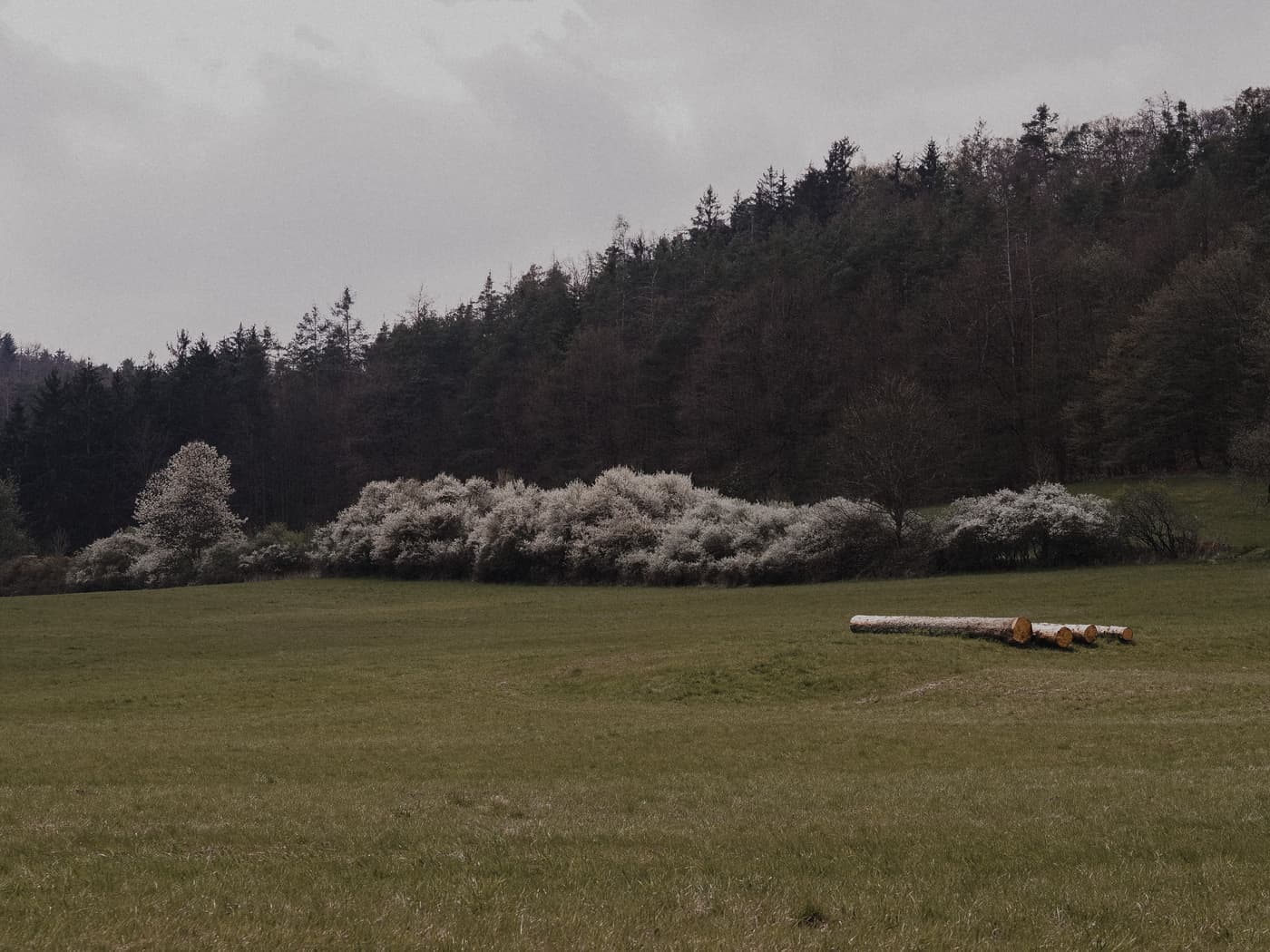
California turkeys are overwhelmingly a foothill and oak-woodland bird: the Sierra foothills, the Coast Ranges and the oak savanna between them, rather than the Central Valley floor or the high country. Three things about that terrain change the hunt — it is open enough that you will often see birds a long way off, steep enough that you will walk more than you expect, and warm enough by late April that a mid-morning move is work.
What to carry in California
The call box barely changes. What changes is what comes out of the muzzle, what you wear for warm hillsides and ticks, and your ability to find a bird across a canyon before you walk into it. These three are scored on the rubrics published with our First-Season Score — the choke on the choke rubric, the pants on the apparel rubric, the binocular on the binocular rubric — so their numbers are not interchangeable.
Our picks for this
A TSS-rated choke, warm-weather pants and glass
California's nonlead rule makes the choke a first-order decision rather than an upgrade, and spring in the foothills is warm, steep and tick country.
- Carlson's Choke TubesNo image
Best dedicated TSS choke for 12 gauge
Carlson's TSS Turkey Choke Tube, 12 Gauge
Turkey choke7.4/10A tube its maker rates for TSS, which is the practical answer to a statewide nonlead requirement. Buy the choke and the load together, then pattern them together.
Check price on Amazon#ad · Price as of November 3, 2026 · Disclosure for the link to Carlson's TSS Turkey Choke Tube, 12 Gauge
Best camo pants for warm-weather turkey hunts
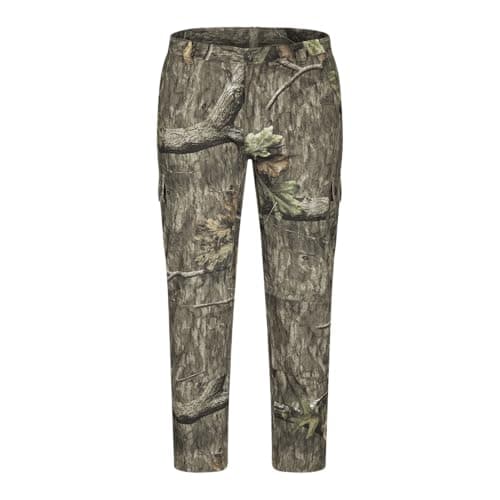
Mossy Oak Tibbee Flex Hunt Pant
Camo7.9/10Built for hot mornings, with the widest waist range in our apparel registry. A late-April California hillside is the weather this pant is for.
$69.99Amazon#ad · Price as of November 3, 2026 · Disclosure for the link to Mossy Oak Tibbee Flex Hunt Pant
- LeupoldNo image
Best binocular guarantee
Leupold BX-1 McKenzie HD 8x42mm Binocular
Binoculars8.4/10Oak savanna is see-a-long-way country. Confirming a beard across a canyon before you drop into it saves an hour of climbing.
Check price on Amazon#ad · Price as of November 3, 2026 · Disclosure for the link to Leupold BX-1 McKenzie HD 8x42mm Binocular
The rest is the standard kit: a vest that carries your calls, a pot call for close work, a face mask and gloves. The full list is in the turkey hunting gear list.
Two California-specific additions worth the money. Ticks are a year-round concern in the Coast Ranges and the foothills — the CDC's own tick prevention guidance is the reference, and the clothing side is in best turkey hunting pants. And rattlesnakes are awake by the general opener in the southern foothills, which is the one case for a taller boot: best snake boots for turkey hunting.
Access: walk-in areas and drawn hunts
This is where California quietly beats states with better reputations. CDFW publishes that “dozens of CDFW-managed wildlife areas will be open to wild turkey hunting on a walk-in basis throughout the season” — no draw, no reservation, no guide. For a hunter without private ground, that is the single most useful sentence CDFW writes about turkeys.
The access ladder, in rough order of how most California hunters get it done:
- Walk-in state wildlife areas. Open throughout the season. Check the entry procedure for the specific property, because CDFW's own advice is to “check with the local management of the individual property” — some areas want a daily permit or a check-in at a kiosk.
- National forest and BLM ground. Enormous acreage overlapping the foothill oak belt, with general-season access and no turkey-specific permit. Expect to walk.
- CDFW drawn hunts. A small number of controlled hunts on specific properties, by application. The fall turkey hunts at Cosumnes River run as two-day hunts with a quota of one hunter per draw, a winner may bring one hunting or non-hunting partner, and a mandatory orientation has to be attended before the first hunt day. The spring draws are published as junior, opening weekend, balance-of-season and archery-only categories, each with its own application deadline on the CDFW wild turkey hunts page.
- Private permission. Ranch country in the Coast Ranges and the Sierra foothills, where turkeys are often regarded as a nuisance around feed and water.
Wherever you end up, the public-land etiquette and safety rules matter more in open country where you can see a long way and so can everyone else: public land turkey hunting.
If you are comparing California against other destinations, the published harvest and season comparison is in best turkey hunting states, and the two other state guides on this site are turkey hunting in Texas and turkey hunting in Minnesota — between them, three completely different ways a state can run a spring season. CDFW's season-opening release and its 2024 season preview are the two news pages worth reading before a first California spring.
How we picked this
Scored on the specs that decide your season
Every pick is read off the maker's own specs, materials and instructions, then scored on a public rubric built around a first-season hunter: the sounds a call is made to produce and how it holds up in rain, a choke's load ratings and thread chart, the weights, pockets and seat heights you carry all morning. Each figure links straight to the page it came from, so you can check any pick in one click.
Scores come from that documented research with fixed bands, and prices come live from Amazon with the date they were checked. Commissions never set a score or decide a pick. The rubric and its bands are published.
Corrections & updates
- First published. Season dates, bag and possession limits, shooting hours, the statewide nonlead requirement, validation rules, method restrictions and the walk-in and drawn-hunt access routes all from the California Department of Fish and Wildlife's own pages and news releases, read 2026-10-26.
Questions
Frequently asked
When is turkey season in California?
CDFW publishes the 2027 spring general season as March 27 – May 2, with an archery-only season May 3 – 16 and junior hunts March 20 – 21 and May 3 – 16. The fall season is November 14 – December 13, 2026. Check the current CDFW wild turkey page before you plan a trip.
How many turkeys can you shoot in California?
One bearded turkey per day in spring, with a spring season limit of three birds and a possession limit of three per season combined. In the fall it is one turkey of either sex with a possession limit of two per season.
What time do you have to stop turkey hunting in California?
Shooting hours for spring turkeys are one half-hour before sunrise to 5 p.m. That is a hard cutoff well before sunset, so plan an afternoon sit to start by about 2 p.m. Listening for a roosting bird after 5 p.m. is still worth doing.
Do you need nonlead ammunition for turkey hunting in California?
Yes. CDFW states that “Nonlead Ammunition is required when taking any wildlife with a firearm anywhere in California.” In practice that means TSS or another non-toxic load, and a choke your maker rates for it.
What license do you need to hunt turkeys in California?
A California hunting license plus an Upland Game Bird Validation, unless you are hunting under the authority of a Junior Hunting License. There is no separate turkey tag for the general season.
Can you use a crossbow for turkey hunting in California?
Crossbows may be used during the general turkey season, but not during the archery-only season without a disabled archer's permit. Bolts need a broadhead that will not pass through a seven-eighths-inch hole, measured in the open position for mechanical heads.
Where can you hunt turkeys in California without private land?
CDFW publishes that dozens of its managed wildlife areas are open to turkey hunting on a walk-in basis throughout the season, and national forest and BLM ground across the foothill oak belt is open on the general season. CDFW also runs a small number of drawn hunts with their own application deadlines. Check entry procedures with the management of each individual property.
Is California good for turkey hunting?
On the published rules, it is better than its reputation: the earliest general spring opener among the big turkey states, a three-bird season limit, an extra archery-only fortnight and dozens of walk-in wildlife areas. The constraints are the 5 p.m. cutoff, the nonlead requirement and the fact that CDFW publishes no population or harvest figure to plan against.
Keep reading
Related on Strut & Slate
- TSS vs lead turkey loadsThe load decision California's nonlead rule makes for you.
- Turkey hunting in TexasThe other big western destination, run on county lines instead of statewide rules.
- Turkey hunting in MinnesotaA one-bird northern state with a six-period season, for contrast.
- Best turkey hunting statesHow states compare on published harvest, season length and limits.
Receipts
Sources
- California Department of Fish and Wildlife — Wild Turkey: 2026-27 fall and spring season dates, archery-only period, junior hunt dates, bag and possession limits and validation requirement (read 2026-10-26)
- California Department of Fish and Wildlife — Upland Game Bird Hunting: "Nonlead Ammunition is required when taking any wildlife with a firearm anywhere in California" and the Upland Game Bird Validation rule (read 2026-10-26)
- CDFW news release, March 18 2025 — "Time to Trot to the Woods: Spring Turkey Season Opens in California": shooting hours of one half-hour before sunrise to 5 p.m., one bearded turkey per day, three per spring season (read 2026-10-26)
- CDFW news release, March 27 2024 — "California Offers Abundant Opportunities for 2024 Spring Turkey Season": dozens of CDFW-managed wildlife areas open on a walk-in basis, and drought and wildfire effects on populations (read 2026-10-26)
- California Department of Fish and Wildlife — Wild Turkey Hunts: the drawn hunt properties, quotas, partner rule, mandatory orientation and application deadlines (read 2026-10-26)
- CDC — Preventing Tick Bites (read 2026-09-22)
- Carlson's Choke Tubes — Winchester / Browning Inv / Moss 500 Carlson's TSS Turkey Choke Tubes, 12 ga, item 38005 (read 2026-09-22)
- Mossy Oak Store — Tibbee Flex Hunt Pant product page (read 2026-09-22)
- Leupold — BX-1 McKenzie HD 8x42mm binocular product page (read 2026-09-22)
Every spec on this page comes from the maker's own product pages and manuals (or a named dealer's copy where the maker's site blocked us), with sound and performance claims attributed to the maker and any third-party observation attributed to whoever made it. Prices come live from Amazon with the date they were checked. Where a maker leaves a figure unpublished, the page says so and that spec earns the lowest band. Read the full method.