Quick picks
The rankings at a glance
| # | Product | Best for | Score | Price |
|---|---|---|---|---|
| 1 | 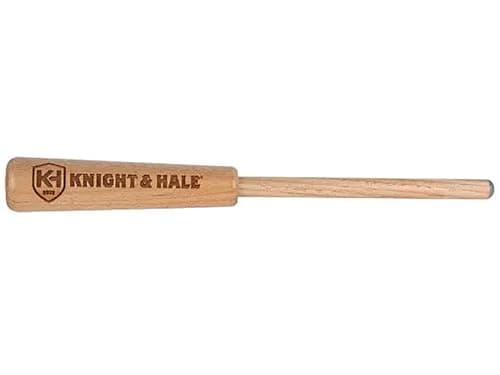 Knight & Hale Waterproof Striker The only striker here whose maker makes a weather claim: a 2-piece hickory striker with a proprietary Powertip tip that Knight & Hale says "performs in all weather conditions" and "delivers consistent, reliable sound" rain or shine. | Best striker overall, and the only rain pickCall accessory | 7.4out of 10 | $26.99Amazon |
| 2 | 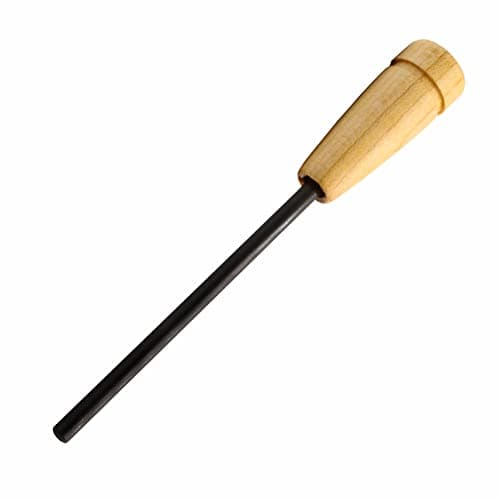 WoodHaven Custom Calls Carbon Striker A hollow 1/4 in carbon dowel under a turned maple head: WoodHaven says it "creates raspy, high pitched yelps and crisp cuts" and changes tone with surface and pressure, which is exactly the second voice a one-striker hunter is missing. | Best for a higher, raspier henCall accessory | 7.0out of 10 | $19.99Amazon |
| 3 | 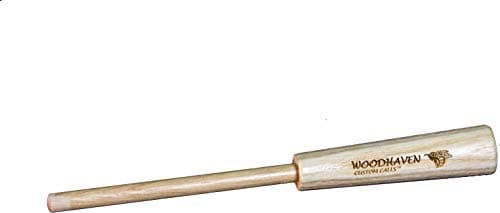 WoodHaven Custom Calls Hickory Striker WoodHaven's cheapest striker and the one it calls "the foundation of our lineup": a 5/16 in hickory dowel with a turned maple head, built for "sharp, clean front-end yelps with a smooth, natural rollover." | Best cheap second voiceCall accessory | 6.8out of 10 | $11.99Amazon |
| 4 | 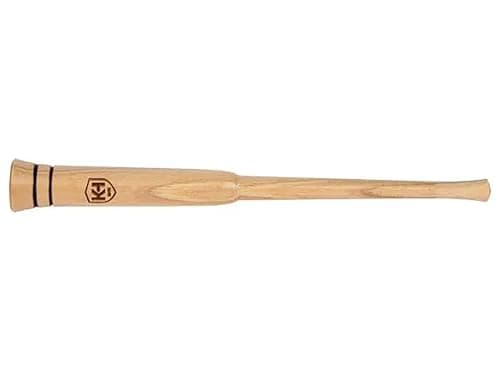 Knight & Hale Hickory One-Piece Striker A one-piece, flared-tip, hand-turned hickory striker that Knight & Hale says is "crafted for the perfect weight and balance" and "creates a smooth, rich sound" on pot calls. | Best one-piece hickoryCall accessory | 6.6out of 10 | $24.99Amazon |
| 5 | 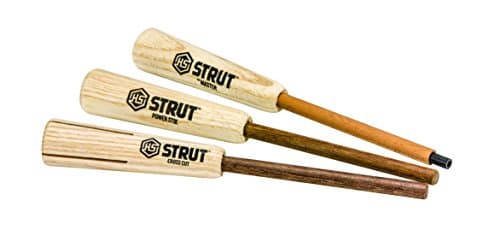 H.S. Strut Quick Strike Peg Pack (3 strikers) Three strikers in one box in three different materials: a rosewood Cross-Cut with cuts in the bell to change resonance, an ipe hardwood Power Stik, and a mahogany-shafted Master with a carbon tip. The cheapest way to hear what striker material actually does. | Best way to try three materialsCall accessory | 6.3out of 10 | $24.97Amazon |
| 6 | 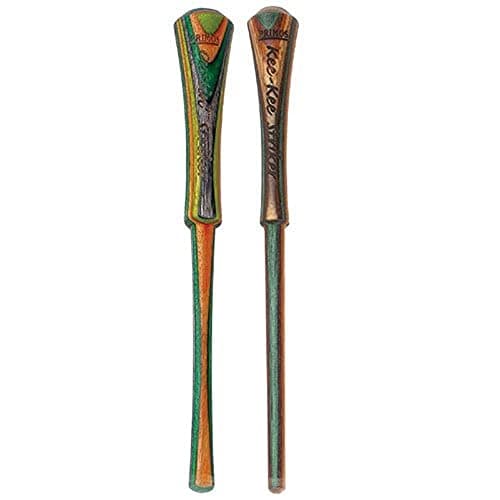 Primos Custom Striker 2-Pak Two specialty pot-call strikers in one pack: a tapered-tip Kee-Kee Striker for high-pitched hen sounds and a mushroom-tip Cuttin' Striker that Primos calls "very forgiving allowing for fewer mistakes." | Best for kee-kees and cuttingCall accessory | 6.1out of 10 | $31.47Amazon |
#ad · Prices come live from Amazon, last checked November 3, 2026. Scores are ours, computed from published specs and maker claims with the bands on our methodology page, not from field testing. Photos come from each product's Amazon listing. Tap a row for the full write-up.
How we picked
Every striker here is currently sold by its maker or on Amazon, and every one was scored on the accessory rubric published with our First-Season Score: documented function 30%, ease of use 25%, build and materials 20%, carry and weight 15%, and published warranty 10%. Each figure in the tables below was read on a maker's own product page on 5 October 2026 and links back to it.
That rubric is harsh on strikers, and it should be. A striker is a stick with a head on it, so there is nothing to measure except what the maker is willing to print: the wood, the dowel diameter, whether the tip survives water, and whether anything is guaranteed. Four of the six strikers on this page publish no length, no weight and no warranty. One publishes a weather claim. That single difference decides the top of the list, and the rest of this page explains why we think it should.
If you have not bought the call yet, start at best slate calls instead, and come back here when your yelp is consistent. A new striker will not teach you to call. It will give you a second voice once you can already make the first one.
Why the striker is half the call
A pot call makes no sound on its own. The surface is one half of the instrument and the striker is the other, and swapping the striker changes the pitch, the rasp and how forgiving the call is, without touching the call itself. The makers say this plainly on their own product pages, which is the strongest evidence available to anyone who does not own all six.
- WoodHaven ships its Anodized Ninja with two strikers specifically so the call delivers “two distinct, ultra-realistic hen tones.” Same pot. Same surface. Two voices.
- On its Fusion Aluminum page, WoodHaven writes: “Need kee-kees? Pair it with the carbon striker.” The maker is telling you the sound you want is a striker decision, not a call decision.
- Knight & Hale describes its hickory one-piece striker as one that “creates a smooth, rich sound,” and sells a separate Powertip striker for weather. Two strikers, two jobs, one brand.
- Primos sells its two specialty strikers as a pair because they do different things: a tapered Kee-Kee Striker that “specializes in reproducing the kee-kee run” and a mushroom-tipped Cuttin' Striker that “specializes in breaking into the sharp notes required to sound like a hen cutting.”
This is the cheapest upgrade in turkey calling. A second pot call costs the price of a pot call. A second striker is a fraction of that and arrives in an envelope. For a first-season hunter who owns one slate and one box, a striker is the highest-value next purchase in the vest, which is why it sits in our turkey hunting gear list rather than in the nice-to-have pile.
The six strikers, side by side
Every value links to the page it came from. A dash or a “not published” means the maker does not print that figure, and the score treats it as missing rather than guessing at it.
| Evidence | Knight & Hale Hickory One-Piece Striker | H.S. Strut Quick Strike Peg Pack (3 strikers) | Primos Custom Striker 2-Pak |
|---|---|---|---|
| Material | Hickory | Rosewood, ipe hardwood, and mahogany with a carbon tip (per H.S. Strut) | Cuttin' Striker: "custom laminated colored wood" (Primos single-striker page); Kee-Kee Striker material not published |
| Sounds (per maker) | — | — | — |
| Weather | — | No weather claim on the product page | — |
| Dimensions | Not published | Not published | Not published |
| Warranty | Standard 1-year from date of purchase; excludes weather-related conditions (Knight & Hale warranty page) | Not published on the product page | 1 year against defects, original purchaser only (Primos warranty page) |
| Score | 6.6/10 | 6.3/10 | 6.1/10 |
Why the rain striker wins
Knight & Hale's Waterproof Striker scores 7.4 and it earns that on one line of copy the other five makers decline to write. Knight & Hale says the striker's proprietary Powertip “performs in all weather conditions” and that the striker “delivers consistent, reliable sound” rain or shine, on a 2-piece hickory shaft that it says “works with all pot calls.” Nobody else on this page makes a weather claim at all.
We weight that heavily because of what a wet pot call does to a hunt. It does not sound worse. It goes silent, or it squeals, at the exact moment a gobbler is working toward you in a drizzle and you need one soft cluck. A striker that the maker says keeps working in humidity is insurance on the whole morning, not a tonal preference.
The honest catch sits in that last line. Knight & Hale sells this striker for weather and then writes a warranty that excludes weather-related conditions. That is a real mark against it, it is why the warranty line scores a 5 rather than a 7, and it is the kind of thing a page that only quoted the marketing copy would leave out.
Behind it, WoodHaven's Carbon Striker is 7.0, the WoodHaven Hickory 6.8, the Knight & Hale Hickory One-Piece 6.6, the H.S. Strut Quick Strike Peg Pack 6.3 and the Primos Custom Striker 2-Pak 6.1. Those gaps are narrow on purpose. On a product this simple, the spread between first and last is mostly a spread in how much each maker tells you.
What each material actually does
Striker material changes the pitch and the bite on the surface. Here is what these makers publish about their own sticks, with no additions from us.
- Hickory. The default, and the stick most pot calls ship with. WoodHaven pairs a 5/16 in hickory dowel with a maple head and says hickory's “strength and density provide excellent bite on the surface,” while the maple head gives “balance and consistency.” The result it describes is “sharp, clean front-end yelps with a smooth, natural rollover.”
- Carbon. A hollow 1/4 in carbon dowel, in WoodHaven's case, under the same turned maple head. WoodHaven says it “creates raspy, high pitched yelps and crisp cuts with realism” and that it “creates different tones and pitches based on different pot call surfaces and pressure.” This is the striker its own aluminum-call page recommends for kee-kees.
- Dense tropical hardwoods. H.S. Strut's three-pack uses a rosewood rod, an ipe hardwood rod and a mahogany rod with a carbon tip, and the Cross-Cut has literal cuts in the bell of the head “to change the resonance and produce different tones.” Different densities, different pitches, one box.
- Synthetic tips. Knight & Hale's Powertip is the only one here sold on weather performance. The shaft is still hickory; the part that touches a soaked surface is not bare wood.
- Shaped tips. Primos goes after specific sounds with shape rather than material: a tapered tip for the kee-kee run and a mushroom tip for cutting, which Primos calls “very forgiving allowing for fewer mistakes.”
One point that is easy to miss in a spec table: dowel diameter changes how the striker feels in a new hand. WoodHaven's hickory dowel is 5/16 in and its carbon dowel is 1/4 in. The thicker stick is steadier to hold at the light pressure pot calls want, which is a small argument for learning on wood and adding carbon later. How the stroke itself works is in how to use a slate call, and which surface you are striking is argued out in slate vs glass vs aluminum pot calls.
Rain is the thing that beats a pot call
A box call has a lid you can chalk and a pot call has a surface you condition, and both of them stop cooperating when they are wet. The striker is half of that problem: a soaked wood tip skates instead of grabbing, and no amount of conditioning fixes a tip that is damp.
The maintenance side is not our opinion either. Primos tells pot-call owners: “You must keep the tip of your striker clean and free of any build up.” Writing for the NWTF on turkey call care, Steve Hickoff puts it as “Keeping calls clean is the best way I know” to keep them working, and notes that some hunters use light-grain sandpaper on a striker tip while others scrape it gently with a pocket knife.
If your spring is routinely wet, the striker is only half the fix. An aluminum or glass surface sheds water better than open slate, and a waterproof box call keeps working when both are beaten. Best box calls covers the all-weather boxes worth owning as a backup, and best turkey calls for beginners lays out the two-call starting kit we recommend.
Which striker to buy second
Most people reading this own one pot call with one striker in the pocket on the back of it. Here is the order we would spend in.
- If you hunt rain: the Knight & Hale Waterproof Striker. It is the only one with a published weather claim, and it is the only striker here that solves a problem rather than adding a tone.
- If your calling sounds flat and low: the WoodHaven Carbon Striker. Raspy, higher-pitched yelps and crisp cuts, per WoodHaven, and the one its own pages pair with aluminum for kee-kees.
- If you want the cheapest real change: the WoodHaven Hickory Striker, at WoodHaven's entry striker price with a turned maple head rather than a stamped-out dowel.
- If you do not know what you want: the H.S. Strut Quick Strike Peg Pack. Three materials for about the price of one custom striker, and the fastest way to learn what your particular call likes.
- If you already yelp cleanly and want new sounds: the Primos Custom Striker 2-Pak, built for the kee-kee run and for cutting specifically.
One thing not to do: buy three strikers and a second pot call in the same week. The NWTF's own list of calling gaffes hunters keep repeating is mostly about calling too much and too loud, not about owning the wrong stick, and its case for soft talk over loud yelp sequences points the same direction. Gear is the easy part of this to fix, and the cheap part. Restraint is the expensive part. How much to call, and when, is covered in how often to call turkeys.
A new striker will not fix a slick call. Scuff the surface and the tip together, in the straight-line pattern the NWTF specifies: how to condition a slate call walks through both.
In detail
The picks, in full
Rank 1
Best striker overall, and the only rain pick
Knight & Hale Waterproof Striker
The only striker here whose maker makes a weather claim: a 2-piece hickory striker with a proprietary Powertip tip that Knight & Hale says "performs in all weather conditions" and "delivers consistent, reliable sound" rain or shine.
Spec sheetEvery row sourced to the maker
How the 7.4 score breaks down
- Documented function (30%)
- 8
- Ease of use (25%)
- 9
- Build (20%)
- 8
- Carry & weight (15%)
- 4
- Warranty (10%)
- 5
What the specs support
- The only striker on this page whose maker publishes a wet-weather claim rather than leaving you to guess.
- 2-piece hickory with a synthetic tip, so the part that touches a soaked surface is not bare wood.
- Knight & Hale says it works with all pot calls, which matters if you own a slate and a glass.
- The product page teaches five sounds, not just the sales pitch.
- 1-year Knight & Hale warranty, handmade in the U.S.A.
Where it falls short
- Roughly twice the price of a plain hickory striker, which makes it the most expensive single striker here.
- "Powertip" is a trade name; Knight & Hale does not publish what the tip is made of.
- The warranty excludes weather-related conditions, which is an odd line on a striker sold for weather.
- No length or weight published, so you cannot compare its balance to another striker on paper.
Skip this if…
…you hunt a dry spring and already call well with the striker you own; a second voice from a cheaper striker will change your calling more than this one will.
#ad · Price as of November 3, 2026 · Disclosure for the link to Knight & Hale Waterproof Striker
Rank 2
Best for a higher, raspier hen
WoodHaven Custom Calls Carbon Striker
A hollow 1/4 in carbon dowel under a turned maple head: WoodHaven says it "creates raspy, high pitched yelps and crisp cuts" and changes tone with surface and pressure, which is exactly the second voice a one-striker hunter is missing.
Spec sheetEvery row sourced to the maker
How the 7.0 score breaks down
- Documented function (30%)
- 7
- Ease of use (25%)
- 9
- Build (20%)
- 8
- Carry & weight (15%)
- 5
- Warranty (10%)
- 3
What the specs support
- A carbon shaft and a maple head is a different sound from solid wood, so it genuinely adds a voice rather than a spare.
- WoodHaven names the sounds it is built for: raspy, high-pitched yelps and crisp cuts.
- The maker states the tone changes with surface and pressure, so one striker covers a slate and a glass differently.
- WoodHaven lists it in the same mid price band as its Deluxe striker and Ninja Stick, not at flagship money.
Where it falls short
- No published weather claim despite the carbon shaft; the head is still wood.
- No overall length or weight published, so balance is unknowable until it is in your hand.
- No warranty published, only a returns policy.
- A high, raspy voice is not what you want for soft tree talk at first light.
Skip this if…
…you only own one pot call and have not learned a clean yelp on it yet; a striker that rewards pressure changes is a second-season tool.
#ad · Price as of November 3, 2026 · Disclosure for the link to WoodHaven Custom Calls Carbon Striker
Rank 3
Best cheap second voice
WoodHaven Custom Calls Hickory Striker
WoodHaven's cheapest striker and the one it calls "the foundation of our lineup": a 5/16 in hickory dowel with a turned maple head, built for "sharp, clean front-end yelps with a smooth, natural rollover."
Spec sheetEvery row sourced to the maker
How the 6.8 score breaks down
- Documented function (30%)
- 7
- Ease of use (25%)
- 9
- Build (20%)
- 7
- Carry & weight (15%)
- 5
- Warranty (10%)
- 3
What the specs support
- The cheapest way to put a second voice in your vest, at WoodHaven's entry striker price.
- WoodHaven explains why the materials are paired: hickory for "bite on the surface," maple for "balance and consistency."
- Covers the whole volume range the maker lists, from tree talk to excited yelping.
- A thicker 5/16 in dowel than the Carbon Striker's 1/4 in, which is a steadier stick for a new hand.
Where it falls short
- Bare wood with no weather claim, and a soaked wood tip on a wet slate is the classic beginner failure.
- Closest in sound to the plain wood striker most pot calls already ship with, so it adds the least.
- No overall length, weight or warranty published.
Skip this if…
…your pot call already came with a one-piece hickory striker; buy a carbon or an all-weather striker instead and get a genuinely different sound.
#ad · Price as of November 3, 2026 · Disclosure for the link to WoodHaven Custom Calls Hickory Striker
Rank 4
Best one-piece hickory
Knight & Hale Hickory One-Piece Striker
A one-piece, flared-tip, hand-turned hickory striker that Knight & Hale says is "crafted for the perfect weight and balance" and "creates a smooth, rich sound" on pot calls.
Spec sheetEvery row sourced to the maker
How the 6.6 score breaks down
- Documented function (30%)
- 6
- Ease of use (25%)
- 9
- Build (20%)
- 7
- Carry & weight (15%)
- 4
- Warranty (10%)
- 5
What the specs support
- A second striker gives any pot call another voice, and Knight & Hale says this one "creates a smooth, rich sound."
- One-piece hickory with a flared tip, hand-turned in the U.S.A.
- The product page walks through five sounds on a pot call.
- 1-year Knight & Hale warranty.
Where it falls short
- No length or weight published.
- Plain hickory, not a wet-weather striker; Knight & Hale sells a separate Waterproof Striker for that.
Skip this if…
…you call in the rain a lot; Knight & Hale's separate Waterproof Striker is the one it builds for wet or humid conditions.
#ad · Price as of November 3, 2026 · Disclosure for the link to Knight & Hale Hickory One-Piece Striker
Rank 5
Best way to try three materials
H.S. Strut Quick Strike Peg Pack (3 strikers)
Three strikers in one box in three different materials: a rosewood Cross-Cut with cuts in the bell to change resonance, an ipe hardwood Power Stik, and a mahogany-shafted Master with a carbon tip. The cheapest way to hear what striker material actually does.
Spec sheetEvery row sourced to the maker
How the 6.3 score breaks down
- Documented function (30%)
- 7
- Ease of use (25%)
- 8
- Build (20%)
- 7
- Carry & weight (15%)
- 4
- Warranty (10%)
- 2
What the specs support
- Three materials for roughly the price of one custom striker, which is the fastest way to learn what your call likes.
- H.S. Strut explains the one real design feature: cross cuts in the Cross-Cut's bell change its resonance.
- A carbon tip, a dense tropical hardwood and a rosewood are three genuinely different sounds, not three colors.
- Widely stocked, so you are not waiting on a custom shop in March.
Where it falls short
- No weather claim, no dimensions, no weight and no published warranty: the thinnest spec sheet on this page.
- Three strikers is three things rattling in a vest pocket unless you sleeve them.
- Production-turned rather than hand-turned, so head-to-head sound against a custom striker is a step down.
- You will likely keep only one of the three, which is the point and also the waste.
Skip this if…
…you already know which striker material your call sounds best with; buy that one striker from a custom shop instead.
#ad · Price as of November 3, 2026 · Disclosure for the link to H.S. Strut Quick Strike Peg Pack (3 strikers)
Rank 6
Best for kee-kees and cutting
Primos Custom Striker 2-Pak
Two specialty pot-call strikers in one pack: a tapered-tip Kee-Kee Striker for high-pitched hen sounds and a mushroom-tip Cuttin' Striker that Primos calls "very forgiving allowing for fewer mistakes."
Spec sheetEvery row sourced to the maker
How the 6.1 score breaks down
- Documented function (30%)
- 6
- Ease of use (25%)
- 8
- Build (20%)
- 6
- Carry & weight (15%)
- 4
- Warranty (10%)
- 5
What the specs support
- Two strikers built for two specific jobs: the kee-kee run and cutting (per Primos).
- Primos calls the Cuttin' Striker "very forgiving," which helps a new caller make "fewer mistakes."
- 1-year Primos warranty.
Where it falls short
- No lengths, weights or Kee-Kee Striker material published.
- No wet-weather claim for either striker.
Skip this if…
…you don't own a pot call yet; start with a pot call that includes a striker, like the Knight & Hale Slate Hammer.
#ad · Price as of November 3, 2026 · Disclosure for the link to Primos Custom Striker 2-Pak
Buyer's guide: picking a striker without hearing it first
Match the striker to the surface you own
Carbon and synthetic-tipped strikers tend to be paired with glass, crystal and aluminum, and wood with slate. WoodHaven makes this explicit on its own aluminum call page, where the carbon striker is the one it names for kee-kees. If you only own an open-slate call, a wood striker is the natural first spare and carbon is the interesting second one. If you own glass or aluminum, start with carbon.
Read the dowel diameter, because it is usually the only number
WoodHaven publishes 5/16 in for its hickory dowel and 1/4 in for the hollow carbon. Nobody on this page publishes an overall length or a weight. A thicker dowel is easier to hold lightly, and light pressure is what a pot call wants: the NWTF's Brian Lovett tells friction callers to “grip it with two, three or even four fingers, use a light touch, and make sure your fingers are about an inch above the striker tip,” then “use light, even pressure to drag the striker across the call surface.”
Buy one striker, not four
Every striker you add is another voice to learn and another thing to find in the dark. One new striker, run for a whole season until you know what it does on your call, teaches you more than a drawer of them. The exception is the three-pack, which exists precisely so you can decide which material to buy properly later.
Expect no warranty, and check what a warranty excludes
Knight & Hale is the only maker here with a published warranty on a striker, at one year, and it excludes weather-related conditions. WoodHaven publishes a returns and shipping policy instead of a warranty, and H.S. Strut publishes nothing on the product page. That is normal for a hand-turned wooden stick, and it is a reason to buy the cheap one first.
Protect the tip, not the shaft
The tip is the working surface and the part that breaks or fouls. Keep it clean, keep it dry, and keep it from rattling against your box call and your mouth-call case in the same pocket. A striker tube or even a cut length of foam pipe insulation in a vest pocket does more for your calling than the next striker you buy. Where everything goes in the vest is covered in how to choose a turkey vest.
The first-season mistake: blaming the striker
If your yelp is rough, the striker is the least likely cause. The common ones, in the order the makers and the NWTF name them, are too much grip on the pot, too much grip on the striker, a surface that needs conditioning, a dirty striker tip and oil from your fingers on the playing surface. Work through those first. A new striker fixes a sound you do not like. It does not fix a stroke you have not learned yet, which is what how to use a slate call is for.
How we picked this
Scored on the specs that decide your season
Every pick is read off the maker's own specs, materials and instructions, then scored on a public rubric built around a first-season hunter: the sounds a call is made to produce and how it holds up in rain, a choke's load ratings and thread chart, the weights, pockets and seat heights you carry all morning. Each figure links straight to the page it came from, so you can check any pick in one click.
Scores come from that documented research with fixed bands, and prices come live from Amazon with the date they were checked. Commissions never set a score or decide a pick. The rubric and its bands are published.
Corrections & updates
- First published. Materials, dowel diameters, weather claims and warranty terms read from maker pages 2026-10-05.
Questions
Frequently asked
What is the best slate call striker?
On published evidence, Knight & Hale's Waterproof Striker: a 2-piece hickory striker with a proprietary Powertip that Knight & Hale says “performs in all weather conditions” and “works with all pot calls.” It is the only striker here whose maker commits to a weather claim, and it scores 7.4 of 10 on our accessory rubric. For a different tone rather than rain protection, WoodHaven's Carbon Striker at 7.0 is the pick.
Does the striker really change the sound of a pot call?
Yes, and the makers say so themselves. WoodHaven ships its Anodized Ninja with two strikers for “two distinct, ultra-realistic hen tones,” and on its Fusion Aluminum page writes “Need kee-kees? Pair it with the carbon striker.” Primos sells one striker shaped for the kee-kee run and another for cutting. Same call, different stick, different voice.
Carbon or hickory striker: which should a beginner buy?
Hickory first if your call came without a striker, because it is cheaper, the dowel is thicker and easier to hold lightly, and WoodHaven describes it as the clean front-end yelp. Carbon second, when you want a higher, raspier hen or you are calling on glass or aluminum. If you cannot decide, the H.S. Strut three-pack puts rosewood, ipe and a carbon-tipped mahogany striker in your hand for about the price of one custom stick.
Can you use a slate call in the rain?
Not well. A wet surface and a damp wood striker tip skate instead of gripping, which is why Knight & Hale sells a Powertip striker specifically for wet or humid conditions and why aluminum and glass surfaces are the usual wet-weather answer. A waterproof box call is the other backup. The maintenance habit matters too: Primos says to keep the striker tip “clean and free of any build up.”
How do you clean and condition a striker tip?
Lightly. Writing for the NWTF on turkey call care, Steve Hickoff notes that some hunters use a light-grain sandpaper on the tip while others scrape it gently with a pocket knife, and that keeping calls clean is the best way he knows to keep them working. Do not oil a striker, do not touch the playing surface of the call with your fingers, and condition the call surface in the direction its maker tells you to.
How many strikers do I need?
Two is a real kit: the one that came with your call, plus one that sounds different or survives rain. Three is for someone who already knows what each does. The best argument for owning a second one is not tone, it is that a striker is small, cheap and the one half of the call you can replace in the dark if you drop it on a wet log.
Where do the specs on this page come from?
Materials, dowel diameters, sounds, weather claims and warranty terms come from the makers' own product pages, read on 5 October 2026, and every figure in the tables links to its source. We do not test strikers, and no listening claim on this page is ours: the quoted sounds are the makers' own wording, which is why it is in quotation marks.
Keep reading
Related on Strut & Slate
- WoodHaven Anodized Ninja reviewA close read of our top-ranked pot call, including the no-returns policy.
- Best slate callsThe pot calls these strikers go with, ranked for a first season.
- How to use a slate callThe grip, the angle and the stroke, from the makers' own instructions.
- Slate vs glass vs aluminum pot callsWhich surface you are striking, and which one survives a wet morning.
- Best turkey calls for beginnersThe two-call starting kit, before you start buying strikers.
- Best box callsThe all-weather backup for mornings a pot call cannot win.
- How often to call turkeysThe restraint that matters more than any striker you buy.
Receipts
Sources
- Knight & Hale — Waterproof Striker product page, SKU KHT0233 (read 2026-09-22)
- Knight & Hale — Hickory One-Piece Striker product page, SKU KHT0227 (read 2026-09-22)
- Knight & Hale — Warranty Information page (read 2026-09-22)
- WoodHaven Custom Calls — Carbon Striker product page (hollow 1/4 in carbon dowel, maple head) (read 2026-10-05)
- WoodHaven Custom Calls — Hickory Striker product page, SKU WH032 (5/16 in hickory dowel, maple head) (read 2026-10-05)
- WoodHaven Custom Calls — Strikers category listing (11 striker models and their list prices) (read 2026-10-05)
- WoodHaven Custom Calls — Anodized Ninja product page, SKU WH086 (read 2026-09-22)
- WoodHaven Custom Calls — Fusion Aluminum product page, SKU WH210 (read 2026-09-22)
- WoodHaven Custom Calls — Returns & Shipping page (read 2026-09-22)
- H.S. Strut — Quick Strike Peg Pack product page, SKU HS-STR-06943 (read 2026-10-05)
- Primos — Custom Striker 2-Pak product page, SKU PS1510 (read 2026-09-22)
- Primos — Cuttin' Striker product page, SKU PS1508 (read 2026-09-22)
- Primos — Jackpot Slate Turkey Pot Call product page, SKU 216 (read 2026-09-22)
- Primos — Warranty page (read 2026-09-22)
- NWTF — Help! (Part 1) My Friction Calling Stinks!, Brian Lovett, August 25, 2021 (read 2026-09-22)
- NWTF — Turkey Call Care (read 2026-09-22)
- NWTF — Calling Gaffes Turkey Hunters Keep Repeating (read 2026-09-22)
- NWTF — Soft Talk Kills: Why Subtle Calling Consistently Outperforms Loud Yelp Sequences (read 2026-09-22)
Every spec on this page comes from the maker's own product pages and manuals (or a named dealer's copy where the maker's site blocked us), with sound and performance claims attributed to the maker and any third-party observation attributed to whoever made it. Prices come live from Amazon with the date they were checked. Where a maker leaves a figure unpublished, the page says so and that spec earns the lowest band. Read the full method.