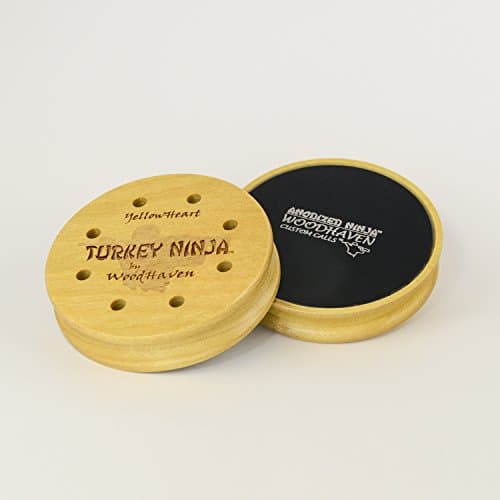
WoodHaven Anodized Ninja Pot Call
Five named sounds, two hand-matched strikers for "two distinct" hen tones, and the only aluminum call here whose maker calls it "engineered for ease of use."
#ad · Price as of November 23, 2026 · Disclosure for the link to WoodHaven Anodized Ninja Pot Call
Quick picks
The rankings at a glance
| # | Product | Best for | Score | Price |
|---|---|---|---|---|
| 1 | WoodHaven Anodized Ninja Pot Call Five named sounds, two hand-matched strikers for "two distinct" hen tones, and the only aluminum call here whose maker calls it "engineered for ease of use." | Best aluminum turkey call overallPot call | 9.1out of 10 | $124.99WoodHaven Anodized Ninja Pot Call |
| 2 | 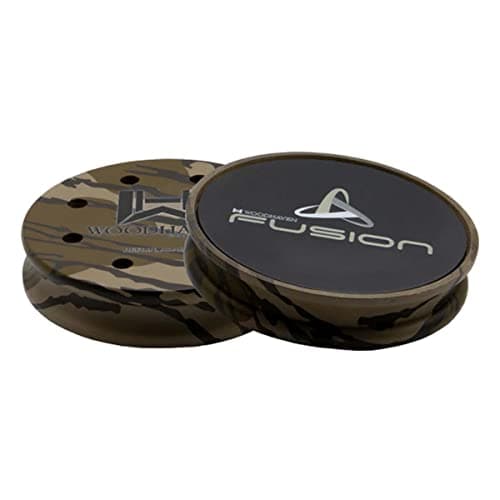 WoodHaven Fusion Aluminum Pot Call The only call on this page with an all-weather claim from its maker, and both included strikers are listed as running when wet. | Best aluminum call for rain and windPot call | 9.1out of 10 | $94.99WoodHaven Fusion Aluminum Pot Call |
| 3 | 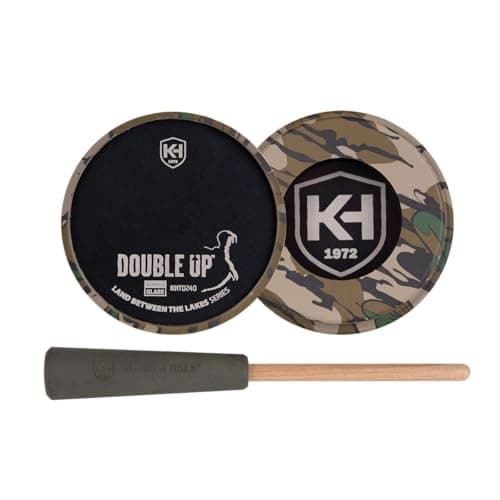 Knight & Hale Double Up Aluminum/Glass Pot Call Aluminum on top for distance, glass underneath for close birds, a hickory striker and a scouring pad in the box, and a 1-year Knight & Hale warranty - which neither WoodHaven offers. | Best value, and the one with a warrantyPot call | 9.1out of 10 | $39.99Knight & Hale Double Up |
| 4 | 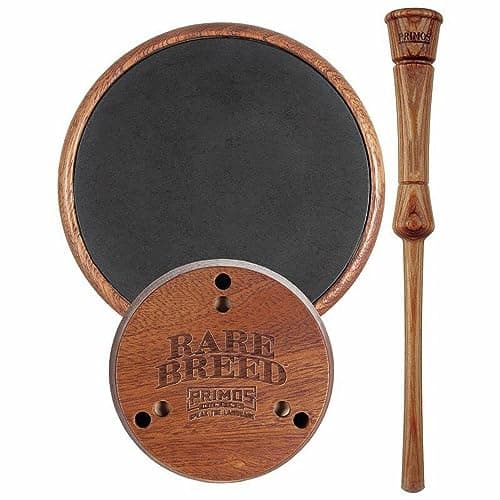 Primos Rare Breed Aluminum Turkey Pot Call Primos says it "requires no conditioning, so it's ready to call out of the box" and calls aluminum its "most weather-resistant calling surface." | Best no-conditioning aluminum callPot call | 8.9out of 10 | $53.33Primos Rare Breed Aluminum Turkey |
| 5 | 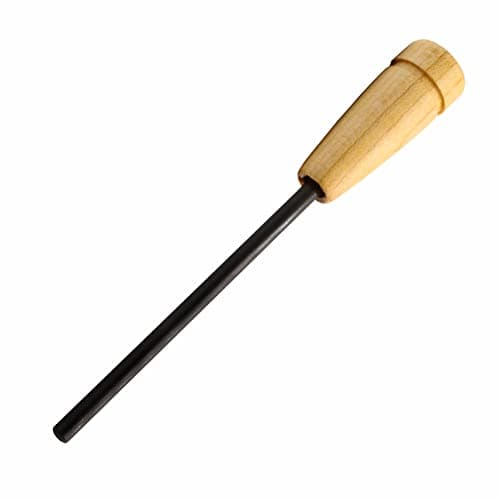 WoodHaven Custom Calls Carbon Striker Scored on our accessory rubric, so its number is not comparable with the call scores. WoodHaven builds it for "raspy, high pitched yelps and crisp cuts" - the voice aluminum is already good at. | Best striker to pair with aluminumCall accessory | 9.1out of 10 | $19.99WoodHaven Custom Calls Carbon |
#ad · Prices come live from Amazon, last checked November 23, 2026. Scores are ours, built from published specs and maker claims against the rubric on our methodology page, and published on our 8.4-9.8 recommendation scale. Photos come from each product's Amazon listing. Tap a row for the full write-up.
How we picked
This page covers one surface only: the four aluminum-surface pot calls in our registry. A pot call is the round call you rub with a striker, and the disc in the top of it is the part that decides how the call sounds, how much care it needs and how it copes with a wet morning. Slate and glass get their own pages — best slate calls and best glass turkey calls — and the three surfaces go head to head on one pot in slate vs glass vs aluminum pot calls.
Every sound description here is the maker's own and attributed to the maker. Each call is scored on the First-Season Score for calls behind our methodology — beginner learning curve 30%, sounds the maker documents 20%, weather tolerance 20%, build and materials 15%, carry and vest noise 15% — read from maker product pages and warranty terms and re-checked on 23 November 2026. We do not test calls against each other in the woods, and we do not score a call on how it sounds to us. What we score is how completely a maker documents the thing you are about to buy. The striker at the end is scored on our accessory rubric, so its number is not comparable with the call scores, and it is listed last for that reason.
What the aluminum surface actually changes
Three things, and the makers are unusually clear about all of them.
It is the loud one. Primos says aluminum makes “louder and bolder high pitches” than its other surfaces, and WoodHaven's FAQ puts it in plain terms: aluminum “cuts well in wind or on pressured birds.” That is a specific job. A bird three ridges away in a 15 mph wind is not going to hear soft slate. On a still morning with a gobbler at 60 yards, the same volume is a liability.
It needs the least looking after. Slate has to be kept roughed up and your fingers have to stay off it. Glass wants a sanding stone rather than the scouring pad a slate call ships with. Primos says its anodized aluminum “requires no conditioning, so it's ready to call out of the box.” For a first season that is worth more than it sounds, because the most common reason a new hunter's pot call goes quiet is not technique, it is a surface nobody prepared.
It is the better bet in weather, but only one maker will say so outright. Primos calls aluminum its “most weather-resistant calling surface” and publishes the fix for a wet one: wipe it with an alcohol wipe, let it dry and keep calling. In our rubric an aluminum surface with no explicit waterproof claim scores 7 for weather, against 5 for a slate call with no claim; a maker that states all-weather performance outright scores 9. Only one call here earns that 9, and it is the Fusion.
The four aluminum calls, side by side
Every value links to the maker page it came from. A dash means the maker does not publish that figure, and the score treats silence as missing rather than assuming the best. None of these makers publishes a weight for a pot call.
Why the WoodHaven Anodized Ninja ranks first
It wins on two of the five metrics and ties on the rest. On sound range, WoodHaven names five sounds for it — yelps, cutts, cackles, purrs and clucks — and packs two hand-matched strikers, a yellowheart “Ninja Stick” and a hickory one, for “two distinct” hen tones. Two voices in one box is the cheapest way to sound like two birds, and it is also the difference between a call that can shout and a call that can also whisper.
On learning curve it is the only call on this page whose maker makes an ease-of-use claim at all: WoodHaven says the surface is “engineered for ease of use.” That is worth one point in our rubric and it is the point that puts the Ninja clear of the Fusion. The cup is yellowheart, a named hardwood, where the Fusion's pot is machined acrylic and the two mass-market calls are injection-molded polymer.
Now the honest part, because the score does not capture it. The Anodized Ninja is a handmade custom-shop call and it is priced like one — it is the most expensive call on this page by a wide margin. WoodHaven publishes no warranty, and its returns page says plainly that it “does not accept returns or refunds on products.” That is the whole trade: you get the best-documented aluminum call on the page and a second striker from day one, and you get no way out if you do not get along with it. If you already know you will keep a pot call for years, that is a fine trade. If this is your first pot call, read the value pick below first. The longer read on this one is our WoodHaven Anodized Ninja review.
The wet-morning pick: WoodHaven Fusion Aluminum
A pot call goes silent two ways in the rain: a wet surface and a wet striker tip. The Fusion Aluminum (9.1) is the only call here whose maker addresses both. WoodHaven builds it for “true turkey sounds in all weather conditions” and calls it an “all-weather performer,” and it ships with a Rain Check striker — water-resistant tip, rubberized grip — plus a carbon striker, with both listed as running when wet. That combination is what earns the only 9 for weather on this page.
It names five sounds too, including kee-kees with the carbon striker, so it is level with the Ninja on sound range. It loses the top spot on two points: the pot is machined acrylic rather than wood, and WoodHaven makes no ease-of-use claim for it. Same no-warranty, no-returns policy as the Ninja. If your springs are genuinely wet — and in much of the turkey range the opener is — this is the aluminum call to own, and it is the one we also pick in best waterproof turkey calls and turkey hunting in the rain.
The value pick, and the warranty question
Knight & Hale's Double Up Aluminum/Glass (9.1) is the budget pick of the four and the one we would hand a first-season hunter. It is a two-sided polymer pot: an aluminum top that Knight & Hale builds for “sharp, high-pitched volume for far off calling” and a glass bottom for when you need to be “clear and soft when the gobblers get in close.” It covers cackle, cluck, cut, purr and yelp, comes with a hickory striker and a scouring pad, and wears a Mossy Oak Greenleaf finish.
It is also the only call on this page from a maker that will stand behind it in writing. Knight & Hale publishes a 1-year warranty from the date of purchase, and Primos publishes 1 year against defects for the original purchaser. WoodHaven publishes neither a warranty nor returns. For two calls at custom-shop money against two with a year of cover, that is a real part of the decision and not a footnote.
The honest catch on the Double Up is the striker count: one hickory striker has to serve two very different surfaces, and Knight & Hale makes no beginner claim for this call the way it does for its single-surface Glass Hammer and Slate Hammer. If you want the simplest possible first pot call rather than the most versatile one, those two are in best turkey calls for beginners.
The one that needs no conditioning: Primos Rare Breed Aluminum
The Primos Rare Breed Aluminum (8.9) ranks fourth and still earns a place, because it is the call that solves the problem nobody warns a beginner about. Primos says it “requires no conditioning, so it's ready to call out of the box,” calls the surface its “most weather-resistant,” and publishes a one-line recovery for a wet or oily surface: alcohol wipe, let it dry, keep calling. Primos also describes where the tone lives on the disc — higher on the outer edges, lower and deeper toward the middle — which is practical information most makers leave out.
It ranks last of the four on documentation, not on quality. Primos names only three sounds (yelps, cuts, clucks) where the others name five, the product text does not say whether a striker is included, and the cup material, dimensions and weight are all unpublished. The 1-year Primos warranty partly makes up for it. If you want an aluminum call that will work the first time you pick it up and you are willing to add a striker to the cart, this is the one.
Caring for an aluminum surface
Less than slate, more than “nothing.” Primos is the only maker here that says its anodized aluminum needs no conditioning at all; WoodHaven ships a Surface Conditioning Kit with both of its aluminum calls, which tells you it expects the surface to be freshened at some point. The NWTF's own turkey call care guidance and its friction calling guidance are the reference worth reading once: keep the surface clean and oil-free, keep the striker tip clean, and condition in straight lines rather than circles.
Three habits specific to aluminum. Keep your fingers off the disc — hand oil slicks aluminum just as it slicks slate, and a slick aluminum surface squeals rather than yelps. Keep the surface-saver lid on it in the vest, because the thing most likely to ruin an aluminum call is another call rubbing against it. And carry a dry striker, or a striker sold for wet weather, because an aluminum surface that still works under a wet wooden tip is doing you no good at all. The full routine, surface by surface, is in how to condition a slate call.
The striker aluminum rewards
A pot call is two parts and people buy one. The surface sets the ceiling; the striker decides what you actually get out of it. Three of the four calls here already include at least one striker, and the WoodHavens include two, which is a real part of their value.
If you are adding one, WoodHaven's Carbon Striker is the natural partner for an aluminum surface. It is a hollow 1/4 in carbon dowel under a turned maple head, and WoodHaven says it “creates raspy, high pitched yelps and crisp cuts with realism” and that its tone changes with the surface and the pressure you use. On aluminum that lands exactly where the surface is already strong: a high, carrying, raspy hen. It publishes no weather claim, no overall length and no warranty, which is why it scores where it does on our accessory rubric rather than higher.
The counter-argument is worth stating. If you own one aluminum call and have not yet got a clean, two-note yelp out of it, a second striker is not your next purchase — practice is. Six strikers including a waterproof one are ranked on their own page, best slate call strikers, and the grip and striker angle are in how to use a slate call.
When to leave the aluminum in the vest
An aluminum call is a specialist pretending to be an all-rounder, and the honest version of this page has to say where it is the wrong tool.
Soft tree talk at first light. The quiet single clucks and tree yelps you make to a roosted bird are not what a surface built for “louder and bolder high pitches” does best. The NWTF's own guidance on soft calling is a good reminder of how little noise it takes to hold a bird that is already coming. Slate is the forgiving surface for that, which is the argument in best slate calls.
A bird inside 50 yards. Volume that reached him across a hollow will push him back once he is close. This is the single most common way a called-in gobbler gets lost, and it is covered in how often to call turkeys. The Double Up's glass underside exists precisely for this moment, which is part of why it is the pick for a hunter who owns one pot call.
Your first ever turkey call. A pot call takes both hands, and for most new hunters a box call is the easier place to start. If you are at the very beginning, best box calls and box call vs slate call are the right pages, and the calls hub lays out the order to buy in.
In detail
The picks, in full
Rank 1
Best aluminum turkey call overall
WoodHaven Anodized Ninja Pot Call
Five named sounds, two hand-matched strikers for "two distinct" hen tones, and the only aluminum call here whose maker calls it "engineered for ease of use."
Spec sheetEvery row sourced to the maker
| Category | Pot call |
|---|---|
| Type | Pot call |
| Sounds (per maker) | Yelps, cutts, cackles, purrs, clucks (per WoodHaven) |
| Surface | Anodized aluminum |
| Striker | Two hand-matched: YellowHeart "Ninja Stick" and hickory |
| Material | YellowHeart cup |
| Weather | No explicit weather claim (aluminum surface) |
| Weight | Not published |
| Included | Two strikers, Surface Saver Lid, Surface Conditioning Kit |
| Warranty | Not published (WoodHaven says it "does not accept returns or refunds on products") |
The rubric behind the 9.1
- Beginner learning curve (30%)
- 7
- Sound range (20%)
- 9
- Weather tolerance (20%)
- 7
- Build & materials (15%)
- 7
- Carry & vest noise (15%)
- 6
Rubric points: 7.3 of 10, weighted as shown. Published as 9.1 on our recommendation scale, where 8.4 is the floor for a pick we would put in front of a first-season hunter. How the scale works.
What the specs support
- WoodHaven says it is "engineered for ease of use."
- Two matched strikers give "two distinct" hen tones (per WoodHaven).
- Five sounds named, from soft purrs and clucks to cackles.
- Surface-saver lid and conditioning kit included.
Where it falls short
- No warranty, and WoodHaven does not accept returns or refunds.
- A handmade custom-shop call, so expect premium pricing.
- No explicit weather claim.
Skip this if…
…you want a published warranty or a way to return it; WoodHaven accepts neither returns nor refunds.
#ad · Price as of November 23, 2026 · Disclosure for the link to WoodHaven Anodized Ninja Pot Call
Rank 2
Best aluminum call for rain and wind
WoodHaven Fusion Aluminum Pot Call
The only call on this page with an all-weather claim from its maker, and both included strikers are listed as running when wet.
Spec sheetEvery row sourced to the maker
The rubric behind the 9.1
- Beginner learning curve (30%)
- 6
- Sound range (20%)
- 9
- Weather tolerance (20%)
- 9
- Build & materials (15%)
- 6
- Carry & vest noise (15%)
- 6
Rubric points: 7.2 of 10, weighted as shown. Published as 9.1 on our recommendation scale, where 8.4 is the floor for a pick we would put in front of a first-season hunter. How the scale works.
What the specs support
- Built for wet weather: WoodHaven promises "true turkey sounds in all weather conditions."
- Both included strikers are listed as running when wet.
- Five sounds including kee-kees, with two strikers for "multiple hen voices" (per WoodHaven).
- Surface-saver lid and conditioning kit included.
Where it falls short
- Acrylic pot rather than wood.
- No warranty, and WoodHaven does not accept returns or refunds.
- No beginner or ease-of-use claim from the maker.
Skip this if…
…you want a traditional wood-pot call; the Fusion's pot is machined acrylic.
#ad · Price as of November 23, 2026 · Disclosure for the link to WoodHaven Fusion Aluminum Pot Call
Rank 3
Best value, and the one with a warranty
Knight & Hale Double Up Aluminum/Glass Pot Call
Aluminum on top for distance, glass underneath for close birds, a hickory striker and a scouring pad in the box, and a 1-year Knight & Hale warranty - which neither WoodHaven offers.
Spec sheetEvery row sourced to the maker
The rubric behind the 9.1
- Beginner learning curve (30%)
- 6
- Sound range (20%)
- 9
- Weather tolerance (20%)
- 7
- Build & materials (15%)
- 7
- Carry & vest noise (15%)
- 6
Rubric points: 7.0 of 10, weighted as shown. Published as 9.1 on our recommendation scale, where 8.4 is the floor for a pick we would put in front of a first-season hunter. How the scale works.
What the specs support
- Two surfaces with different published tones: aluminum for distance, glass for close birds.
- Five sounds covered by the maker's technique section.
- Mossy Oak Greenleaf finish on a durable polymer pot.
- 1-year Knight & Hale warranty.
Where it falls short
- No beginner or ease-of-use claim from the maker.
- No explicit weather claim.
- One striker for two very different surfaces.
Skip this if…
…you want one simple surface to learn on first; start with the single-surface Slate Hammer or Glass Hammer.
#ad · Price as of November 23, 2026 · Disclosure for the link to Knight & Hale Double Up Aluminum/Glass Pot Call
Rank 4
Best no-conditioning aluminum call
Primos Rare Breed Aluminum Turkey Pot Call
Primos says it "requires no conditioning, so it's ready to call out of the box" and calls aluminum its "most weather-resistant calling surface."
Spec sheetEvery row sourced to the maker
The rubric behind the 8.9
- Beginner learning curve (30%)
- 6
- Sound range (20%)
- 6
- Weather tolerance (20%)
- 7
- Build & materials (15%)
- 7
- Carry & vest noise (15%)
- 6
Rubric points: 6.4 of 10, weighted as shown. Published as 8.9 on our recommendation scale, where 8.4 is the floor for a pick we would put in front of a first-season hunter. How the scale works.
What the specs support
- No surface conditioning needed; Primos says it's "ready to call out of the box."
- Primos calls aluminum its "most weather-resistant calling surface" and publishes a wipe-and-dry fix for a wet surface.
- Primos says aluminum makes "louder and bolder high pitches" for reaching quiet toms.
- 1-year Primos warranty.
Where it falls short
- Only three sounds are named (yelps, cuts, clucks).
- The product text doesn't say whether a striker is included.
- Cup material, dimensions and weight are not published.
Skip this if…
…you mostly want soft, mellow calling for birds already close; Primos pitches aluminum for louder, bolder high pitches.
#ad · Price as of November 23, 2026 · Disclosure for the link to Primos Rare Breed Aluminum Turkey Pot Call
Rank 5
Best striker to pair with aluminum
WoodHaven Custom Calls Carbon Striker
Scored on our accessory rubric, so its number is not comparable with the call scores. WoodHaven builds it for "raspy, high pitched yelps and crisp cuts" - the voice aluminum is already good at.
Spec sheetEvery row sourced to the maker
The rubric behind the 9.1
- Documented function (30%)
- 7
- Ease of use (25%)
- 9
- Build (20%)
- 8
- Carry & weight (15%)
- 5
- Warranty (10%)
- 3
Rubric points: 7.0 of 10, weighted as shown. Published as 9.1 on our recommendation scale, where 8.4 is the floor for a pick we would put in front of a first-season hunter. How the scale works.
What the specs support
- A carbon shaft and a maple head is a different sound from solid wood, so it genuinely adds a voice rather than a spare.
- WoodHaven names the sounds it is built for: raspy, high-pitched yelps and crisp cuts.
- The maker states the tone changes with surface and pressure, so one striker covers a slate and a glass differently.
- WoodHaven lists it in the same mid price band as its Deluxe striker and Ninja Stick, not at flagship money.
Where it falls short
- No published weather claim despite the carbon shaft; the head is still wood.
- No overall length or weight published, so balance is unknowable until it is in your hand.
- No warranty published, only a returns policy.
- A high, raspy voice is not what you want for soft tree talk at first light.
Skip this if…
…you only own one pot call and have not learned a clean yelp on it yet; a striker that rewards pressure changes is a second-season tool.
#ad · Price as of November 23, 2026 · Disclosure for the link to WoodHaven Custom Calls Carbon Striker
Buy aluminum second, not first
Aluminum is the surface you add when you know what you want from a pot call: volume, a high raspy yelp, and something that still works on a damp morning. As a first and only call it is a slightly awkward choice, because the thing it is worst at — soft calling to a close bird — is the thing that kills the most hunts. The exception is the two-surface Double Up, which has a glass side for exactly that.
Decide whether you are paying for a warranty or a second striker
That is genuinely the choice on this page. Both WoodHavens come with two strikers, a surface-saver lid and a conditioning kit, and come with no warranty and no returns. Both the Knight & Hale and the Primos come with a 1-year warranty and one striker between them, and the Primos does not confirm a striker at all. Neither answer is wrong; just know which one you picked.
Check that a striker is in the box
Primos's product text for the Rare Breed Aluminum does not say, so read the listing before you order or add a striker to the cart. An aluminum pot with no striker is an expensive coaster.
Match the striker tip to the weather, not just the surface
A waterproof surface under a soaked wooden striker tip is still a silent call. WoodHaven lists both Fusion strikers as running when wet, and Knight & Hale sells a separate Waterproof Striker it says performs in all weather conditions. If rain is your normal opener, that is the part to spend on.
Keep your fingers off the disc
The cheapest way to ruin any pot call is to handle the playing surface. Hand oil creates a slick spot, and on aluminum that shows up as a squeal instead of a yelp. Carry it with the lid on, and if it does get oily, Primos publishes the fix: alcohol wipe, dry, keep calling.
Practice before the season, not during it
One aluminum call and one striker, run for ten minutes an evening for a few weeks, will do far more for you than a vest full of surfaces you have never practiced on. The NWTF's advice is to start with one call and learn it.
The bottom line
Our recommendation
WoodHaven Anodized Ninja Pot Call
Best aluminum turkey call overall
Five named sounds, two hand-matched strikers for "two distinct" hen tones, and the only aluminum call here whose maker calls it "engineered for ease of use."
#ad · Price as of November 23, 2026 · Disclosure for the link to WoodHaven Anodized Ninja Pot Call
WoodHaven Fusion Aluminum Pot Call
Best aluminum call for rain and wind
The only call on this page with an all-weather claim from its maker, and both included strikers are listed as running when wet.
#ad · Price as of November 23, 2026 · Disclosure for the link to WoodHaven Fusion Aluminum Pot Call
How we picked this
Scored on the specs that decide your season
Every pick is read off the maker's own specs, materials and instructions, then scored on a public rubric built around a first-season hunter: the sounds a call is made to produce and how it holds up in rain, a choke's load ratings and thread chart, the weights, pockets and seat heights you carry all morning. Each figure links straight to the page it came from, so you can check any pick in one click.
Scores come from that documented research with fixed bands, and prices come live from Amazon with the date they were checked. Commissions never set a score or decide a pick. The rubric and its bands are published.
Corrections & updates
- First published. Surfaces, sounds, included strikers, weather claims and warranty terms read from WoodHaven, Knight & Hale and Primos product, FAQ, returns and warranty pages; care guidance from the NWTF. All re-checked 2026-11-23.
Questions
Frequently asked
What is the best aluminum turkey call?
On published evidence, the WoodHaven Anodized Ninja at 9.1 of 10: five named sounds, two hand-matched strikers for “two distinct” hen tones, a yellowheart cup, and a maker that calls the surface “engineered for ease of use.” It is also the most expensive call on the page and comes with no warranty and no returns, so for a first aluminum call the Knight & Hale Double Up Aluminum/Glass is the better buy.
Is an aluminum turkey call better than slate?
Not better, different. WoodHaven says aluminum “cuts well in wind or on pressured birds” and Primos says it makes “louder and bolder high pitches,” while WoodHaven describes slate as forgiving and Knight & Hale describes its slate as making natural, clear yelps, clucks, cuts and purrs. Aluminum wins on volume, weather and low maintenance; slate wins on soft, close-range calling. In our weather band an aluminum surface with no claim scores 7 against 5 for slate with no claim.
Do aluminum turkey calls need conditioning?
Less than slate or glass, and Primos says its anodized aluminum “requires no conditioning, so it's ready to call out of the box.” WoodHaven still ships a Surface Conditioning Kit with both of its aluminum calls, so expect to freshen the surface occasionally. The NWTF's call care guidance is to condition in straight lines rather than circles and to keep the surface and the striker tip free of oil.
Does an aluminum turkey call work in the rain?
Better than slate, and one of them is built for it. Primos calls aluminum its “most weather-resistant calling surface” and publishes an alcohol-wipe recovery for a wet one. WoodHaven goes further on the Fusion Aluminum, promising “true turkey sounds in all weather conditions” and listing both included strikers as running when wet. Remember that a wet striker tip silences a call just as surely as a wet surface does.
What striker should I use on an aluminum call?
A carbon or hard-tipped striker suits aluminum, because it plays to what the surface already does. WoodHaven says its Carbon Striker “creates raspy, high pitched yelps and crisp cuts with realism” and that its tone changes with surface and pressure. For rain, Knight & Hale sells a Waterproof Striker it says performs in all weather conditions. Both are ranked alongside four others in best slate call strikers.
Is aluminum the same as an anodized call?
In practice on these calls, yes. All three aluminum-surface calls from WoodHaven and Primos here are described by their makers as anodized aluminum, which is aluminum with a hardened oxide finish. Knight & Hale describes the top of its Double Up simply as aluminum. None of the makers publishes a thickness or a hardness figure for the disc.
Where do the specs and scores on this page come from?
Maker product pages, FAQs and warranty terms, every one of them linked beside the figure it supplied and listed in the sources at the foot of the page. The scores are computed from those published specs using the bands on our methodology page. We do not pattern, test or rank these calls by ear.
Keep reading
Related on Strut & Slate
- Best slate callsEvery pot call in the registry across all three surfaces, ranked together.
- Best glass turkey callsThe other surface page: raspier than slate, and it wants a stone not a pad.
- Slate vs glass vs aluminum pot callsThe three surfaces compared on one pot, with a pick for each.
- Best slate call strikersThe other half of the call, including the one sold for rain.
- How to condition a slate callThe surface-by-surface routine, including what aluminum does and does not need.
Receipts
Sources
- WoodHaven Custom Calls — Anodized Ninja product page, SKU WH086 (read 2026-09-22)
- WoodHaven Custom Calls — Fusion Aluminum product page, SKU WH210 (read 2026-09-22)
- WoodHaven Custom Calls — Carbon Striker product page (hollow 1/4 in carbon dowel, maple head) (read 2026-10-05)
- WoodHaven Custom Calls — Strikers category listing (11 striker models and their list prices) (read 2026-10-05)
- WoodHaven Custom Calls — FAQ page (read 2026-09-22)
- WoodHaven Custom Calls — Returns & Shipping page (read 2026-09-22)
- Knight & Hale — Double Up Aluminum/Glass Pot Call (LBL Series) product page, SKU KHT0240 (read 2026-09-22)
- Knight & Hale — Waterproof Striker product page, SKU KHT0233 (read 2026-09-22)
- Knight & Hale — Warranty Information page (read 2026-09-22)
- Primos — Rare Breed Aluminum Turkey Pot Call product page, SKU PS2905 (read 2026-09-22)
- Scheels (dealer) — Primos Rare Breed Aluminum Turkey Pot Call listing (read 2026-09-22)
- Primos — Warranty page (read 2026-09-22)
- NWTF — Help! (Part 1) My Friction Calling Stinks! (read 2026-09-22)
- NWTF — Turkey Call Care (read 2026-09-22)
- NWTF — Soft Talk Kills: Why Subtle Calling Consistently Outperforms Loud Yelp Sequences (read 2026-09-22)
Every spec on this page comes from the maker's own product pages and manuals (or a named dealer's copy where the maker's site blocked us), with sound and performance claims attributed to the maker and any third-party observation attributed to whoever made it. Prices come live from Amazon with the date they were checked. Where a maker leaves a figure unpublished, the page says so and that spec earns the lowest band. Read the full method.
Brands: want your product tested? For Brands.