What transfers from the deer woods
More than beginners realize. If you deer hunt, you are not starting at zero.
- Reading country. Terrain, edges, food, water, travel corridors, pinch points — the skill of looking at a map and picking where animals will be transfers almost completely. Turkeys use ridges, benches, field edges and logging roads for the same reasons deer do.
- Sitting still and shooting straight. Both still decide the outcome.
- The gun. Your deer shotgun is very likely your turkey shotgun with a different choke in it. What changes is the tube and the load — see what choke for turkey hunting.
- Clothing, mostly. Camo is camo. What you add is coverage for your face and hands, and lighter layers, because spring mornings warm up fast.
- Licensing and hunter education. Already handled, in almost every case. If you are new to both, IHEA-USA lists hunter education programs by state.
Five habits you have to unbuild
- You are the one making noise now. Deer hunting rewards silence; turkey hunting runs on calling. The NWTF's ABCs of hunting wild turkeys is built around calling as the core skill, and it is the skill a deer hunter is most likely to be short of. Start at how to call a turkey for beginners.
- Stop worrying about the wind, start worrying about your face. A turkey's defense is its eyes, not its nose. That means a bare face, bare hands, a shiny gun barrel and a shifting shoulder are the things that lose you birds. Full coverage is not optional.
- Stop hunting from a stand, and stop hunting the edges of the day. Turkey hunting happens on the ground, frequently mid-morning, and often involves moving to a bird rather than waiting for one.
- Forget the vitals. This is the big one and it has killed plenty of birds badly. More below.
- Accept a season that is six weeks, not four months. Spring turkey seasons are short and tied to breeding behavior: the NWTF's breeding cycle notes breeding beginning in late February or early March in southern habitats and April in northern states, which is why your state's dates are what they are.
Is turkey hunting harder than deer hunting?
It is harder in the last 40 yards and easier everywhere else, which is why hunters who do both tend to disagree about this.
Easier: turkeys tell you where they are. A gobbling bird at daylight is information no deer ever gives you, and it means you can start a hunt by finding your animal rather than guessing. Spring woods are comfortable, days are long, and you can cover ground.
Harder: closing the deal. You have to persuade the bird to cross the last 100 yards into the open, in daylight, while you sit against a tree in plain view with nothing between you and an animal that notices a blinking eyelid. A deer that walks past at 25 yards is a shot; a gobbler at 60 yards that will not commit is the defining turkey-hunting experience.
The practical consequence for a crossover hunter: expect your first spring to be more about setups and patience than about calling skill. The most common beginner failures are collected in turkey hunting mistakes.
The gear you already own, and the four things you don't
Missouri's Department of Conservation keeps its turkey hunting equipment guidance short, and so should you. The honest list of what a deer hunter still needs is four items.
- A call you can run on day one. A box call or a push-button, not a mouth call. Ranked picks: best turkey calls for beginners.
- A face mask and gloves. The cheapest meaningful turkey purchase there is, and the one that fixes the problem your deer setup never had.
- Something to sit on, with a back. You will sit on the ground for hours against trees that are not shaped for you. A turkey vest with a seat solves this and carries the calls too — see how to choose a turkey vest.
- A turkey choke, and a patterned gun. A deer or waterfowl tube is far too open for a head-and-neck target at 40 yards. Fit a turkey tube, then prove it on paper: how to pattern a turkey gun.
Optional, and in this order after those four: a hen decoy, binoculars, a locator call. The full list is in the turkey hunting gear list.
The shot is completely different
Turkey safety is its own subject
This is the part crossover hunters most often skip, and it is the part with the highest stakes. Turkey hunting has its own safety literature for one reason: everybody in the woods is camouflaged, sitting still, and making turkey sounds.
Two rules you did not need in a deer stand. First, colors: the Pennsylvania Game Commission's safe hunting tips say “never wear red, white, blue or black clothing. These are the colors found on mature gobblers.” Check your undershirt collar, your socks, your glove liners and your cap logo. Second, never stalk a gobble — the sound you are walking toward may be another hunter, and positive identification before the safety comes off is absolute. The full treatment, including how to carry a decoy or a harvested bird, is in public land turkey hunting and what to wear turkey hunting.
The three purchases that close the gap
Assuming you own a shotgun, boots and camo, these three are what a deer hunter is genuinely missing. They are scored on the rubrics published with our First-Season Score — the call on the call rubric, the vest on the vest rubric, the mask on the apparel rubric, so the numbers are not interchangeable.
Our picks for this
A call, a seat that carries it, and the coverage your deer setup never needed
One purchase per problem: making a hen sound on day one, sitting on the ground for three hours, and hiding the two things that move.
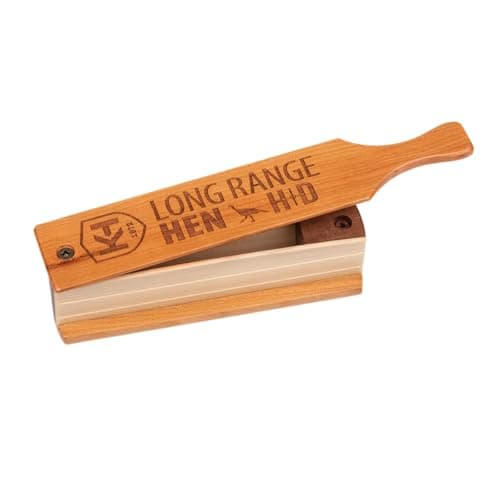
Best box call for beginners
Knight & Hale HD Long Range Hen Box Call
Box call7.1/10A box call is the call to start with: it makes a believable yelp the first time you run it and it is loud enough to reach a bird across a hollow, which is the job calling has to do before anything else matters.
$37.38Amazon#ad · Price as of November 3, 2026 · Disclosure for the link to Knight & Hale HD Long Range Hen Box Call
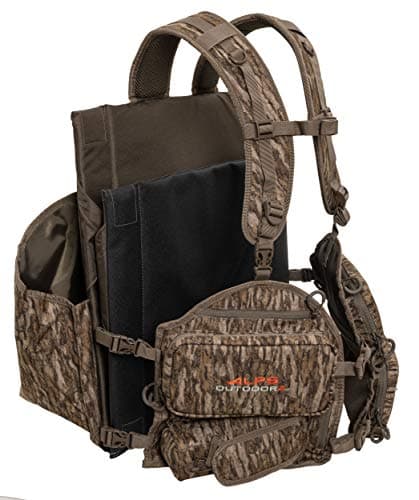
Best light sit-anywhere vest for smaller frames
ALPS OutdoorZ Impact Turkey Vest
Vest with seat6.3/10A vest with a flip-down seat and a backrest, so you can sit anywhere there is no good tree - which in spring green-up is most places. It also carries the calls, which is half the point.
$105.99Amazon#ad · Price as of November 3, 2026 · Disclosure for the link to ALPS OutdoorZ Impact Turkey Vest
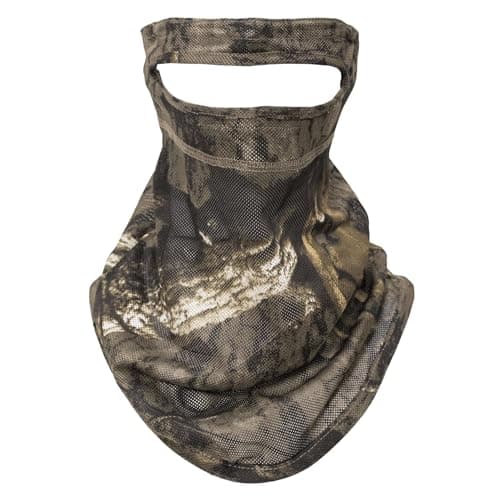
Best 3/4 mask for spring
Mossy Oak Tibbee 3/4 Mesh Mask
Mask / gloves6.6/10A 3/4 mesh mask leaves room for your own cap and covers the pale oval that turns every time you look at a bird. Pair it with gloves; between them they fix the thing a deer hunter has never had to think about.
$17.99Amazon#ad · Price as of November 3, 2026 · Disclosure for the link to Mossy Oak Tibbee 3/4 Mesh Mask
A realistic first spring
If you are a competent deer hunter, here is an honest expectation for your first turkey season. You will locate birds sooner than you expect, because they announce themselves. You will have birds gobble at your calling in the first week. And you will probably lose the first two or three to the last 80 yards — a bird that hangs up, a hen that leads him away, a shift of your shoulder at the wrong moment.
None of that is a calling problem, which is where most beginners look. It is a setup problem, and setup is the skill that transfers least from a stand. Spend your pre-season effort on three things: learning one call well, learning to pick a tree and a sight line, and patterning your gun. The sequence is laid out in how to turkey hunt for beginners, and the hub for the whole path is first season.
One last piece of good news for the deer hunter: the two seasons barely overlap. Spring turkey hunting fills the dead months between deer seasons, uses the gun you already own, and will make you better at reading the same woods you hunt in November.
How we picked this
Scored on the specs that decide your season
Every pick is read off the maker's own specs, materials and instructions, then scored on a public rubric built around a first-season hunter: the sounds a call is made to produce and how it holds up in rain, a choke's load ratings and thread chart, the weights, pockets and seat heights you carry all morning. Each figure links straight to the page it came from, so you can check any pick in one click.
Scores come from that documented research with fixed bands, and prices come live from Amazon with the date they were checked. Commissions never set a score or decide a pick. The rubric and its bands are published.
Corrections & updates
- First published. Aim point from the Pennsylvania hunter safety course, clothing-color rule from the Pennsylvania Game Commission, equipment guidance from the Missouri Department of Conservation, calling and breeding-cycle context from the NWTF.
Questions
Frequently asked
Is turkey hunting harder than deer hunting?
Harder in the last 40 yards, easier before that. Turkeys tell you where they are by gobbling, which no deer does, so finding your animal is simpler. Getting a wary gobbler to cross open ground to a call, in daylight, while you sit in plain sight, is harder than waiting for a deer to walk a trail.
Can I use my deer hunting gear for turkey hunting?
Most of it. The same shotgun, boots and camo work. What you need to add is a turkey choke and a patterned gun, a call you can run on day one, a face mask and gloves, and something with a back to sit on. A deer or waterfowl choke is far too open for a head-and-neck shot at 40 yards.
Where do you aim on a turkey compared with a deer?
At the head and neck with a shotgun, not the body. Pennsylvania's hunter safety course puts the aim point at the head and neck; body feathers and a dense body absorb shot, which is why the behind-the-shoulder habit from deer hunting does not transfer.
Does wind direction matter for turkey hunting?
Far less than for deer. A turkey's primary defense is eyesight, so concealment of your face, hands and movement matters more than scent. Wind matters mainly because it affects how far your calling carries and how well you can hear a gobble.
Is turkey hunting a good way to start hunting?
It is one of the best: short seasons, affordable gear, comfortable weather, and an animal that tells you where it is. The skills are calling, setup and patience rather than long-range shooting. Our whole first-season path assumes you have never called a bird in.
Do you need a blind for turkey hunting if you deer hunt from a stand?
No, and most turkey hunting is done sitting against a tree. A blind helps with kids, bowhunters and open fields, and it costs you mobility. The honest case either way is in our guide to whether you need a blind.
Keep reading
Related on Strut & Slate
- How to turkey hunt for beginnersThe whole path, start to finish, if you are new to spring.
- Turkey hunting gear listEverything you need, in buying order, including what you already own.
- Where to aim on a turkeyThe single biggest difference from the deer woods.
- Fall vs spring turkey huntingThe fall season a deer hunter is most likely to run into first.
Receipts
Sources
- NWTF — The ABCs of Hunting Wild Turkeys (read 2026-09-22)
- Hunter-ed.com (Pennsylvania Hunter Safety Course) — Where to Aim When Turkey Hunting (read 2026-09-22)
- Pennsylvania Game Commission — Safe Hunting Tips (read 2026-09-22)
- Missouri Department of Conservation — Turkey Hunting Equipment (read 2026-09-22)
- NWTF — Wild Turkey Breeding Cycle (read 2026-09-22)
- IHEA-USA — Hunter Education Programs By State (read 2026-09-22)
- Knight & Hale — HD Long Range Hen Box Call product page, SKU KHT0207 (read 2026-09-22)
- ALPS OutdoorZ — ALPS OutdoorZ Impact Vest product page (read 2026-09-22)
- Mossy Oak Store — Tibbee 3/4 Mesh Mask product page (read 2026-09-22)
Every spec on this page comes from the maker's own product pages and manuals (or a named dealer's copy where the maker's site blocked us), with sound and performance claims attributed to the maker and any third-party observation attributed to whoever made it. Prices come live from Amazon with the date they were checked. Where a maker leaves a figure unpublished, the page says so and that spec earns the lowest band. Read the full method.