What a decoy actually does
Separate two jobs that get muddled together. Calling is how a gobbler learns a hen exists and heads your way. A decoy is what he looks for when he arrives, and the thing that explains why the hen he heard has not come to him.
That is the real mechanic. A gobbler that has walked 200 yards toward your yelping and sees nothing has a decision to make, and a mature bird frequently makes the safe one: he stops short, struts out of range and waits for the hen to close the last gap, because that is how it works in nature. A decoy answers the question he is asking. It gives him something to come to, and it buys you the two or three minutes of his attention being somewhere other than on you.
The second effect is the one experienced hunters value most: a decoy positions the bird. The NWTF's piece on how turkey decoys can affect the shot describes setting one upright hen decoy facing a pop-up blind, no more than 10 yards away, precisely so the bird presents at a known distance. You are choosing where the shot happens before the bird arrives.
The four times a decoy earns its weight
- In open country. Fields, pastures, logging roads, power lines, burns. A bird that can see 150 yards will not commit into open ground toward a sound with nothing attached to it. This is where decoys do their most obvious work.
- When you need the bird to stop at a set distance. Small gauges and bows both depend on this. If you shoot a .410 or hunt with a bow, a decoy at a measured distance converts a guessing game into a known shot — see .410 vs 20 gauge for turkey and turkey hunting with a bow.
- When you are hunting from a blind. A blind hides movement but also hides you from the bird's curiosity; the decoy is what gives him a reason to walk into the window you can shoot through.
- Early in the breeding cycle. The NWTF's rundown of the wild turkey breeding cycle puts the start of breeding in late February or early March in southern habitats and April in northern states. When gobblers are actively seeking hens, a hen decoy is at its most persuasive; later, when hens are incubating 10 to 12 eggs for 26 to 28 days, the same decoy means less, because the gobbler has learned that hens come to him.
The four times it costs you a bird
Decoys are not free. Here is the honest other side, and it is why plenty of good hunters carry none.
- In thick timber. If a bird cannot see 40 yards, he cannot see your decoy either, and you have carried and staked it for nothing. In timber, your setup — the tree you sit against and the opening you watch — does the work instead. See turkey hunting setup.
- With a jake or strutter against a wary tom. A dominant-looking male decoy is a challenge, and a challenge gets one of three answers: he comes to fight, he leaves, or he shuts up. Two of those end your morning. A lone hen is the low-risk choice, which is the argument in jake vs hen decoy.
- On heavily pressured ground late in the season. Birds that have walked past the same plastic hen for three weeks have learned something. The NWTF's public-land advice is built around how fast pressured turkeys adapt.
- When it pins you in place. A staked decoy is a commitment. If you hunt by moving — striking a bird, closing the distance, setting up fast — a decoy you must stake, then retrieve, then re-stake, slows the thing you are actually good at. The lightweight answer is in best turkey decoys for run-and-gun.
There is also the fall answer, which is different in kind. In autumn the flock structure changes: the NWTF's fall flock dynamics describes hens flocking with hens and males grouping with males, so breeding-pair theater is beside the point. Fall hunting runs on scattering flocks and calling them back — see fall vs spring turkey hunting.
What a decoy changes about the shot
This is the part worth rehearsing before opening morning, because a decoy changes the geometry of your shot in two ways.
Second, distance. A decoy at 15 yards sets your shot at roughly 15 to 20 yards, and that is where the shot should be. Do not stake a decoy at the far edge of your pattern and plan to shoot it; stake it well inside what you have proved on paper in how to pattern a turkey gun.
Public land: the safety question
This is the one place where “do decoys work?” is the wrong question. The right question is whether using one is safe where you are hunting.
How many, and which kind
For a first season, one hen. Not three, not a jake-and-hen pair, not a strutter.
One hen in a relaxed, upright or feeding posture is the setup with the fewest ways to go wrong: it does not challenge a dominant bird, it reads as safe to a cautious one, and it is the cheapest and lightest thing to carry. The next step up, once you understand how birds react to yours, is a jake with a hen — the combination that suggests a breedable hen with a beatable rival. Rankings for each are in best hen decoys and best jake and hen decoy combos, and placement is in how to set up turkey decoys.
Realism matters less than you would think at the distances that decide a turkey hunt, which is good news for your wallet. What matters more is posture (relaxed, not alarmed), a stake that holds the decoy still in wind, and packability, because a decoy in the truck has a zero percent success rate.
Three decoys that answer this
These three are scored on the decoy rubric published with our First-Season Score — realism 20%, packability 25%, setup speed 20%, durability 20% and public-land safety 15%. Every figure on their cards links to the maker page it came from.
Our picks for this
One hen, one ultralight hen, one starter pair
If the answer to this page is yes, this is the order to buy in: a single collapsible hen first, a pair only once you know how birds react to yours.
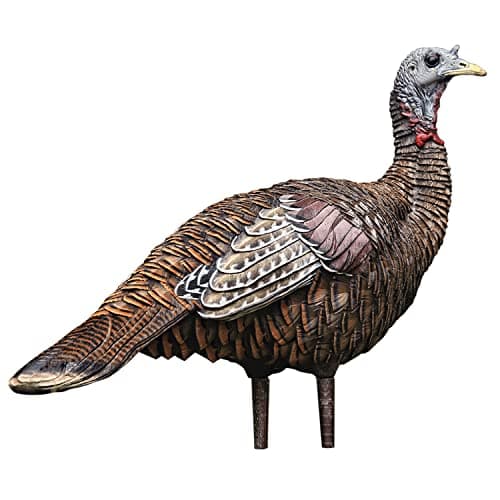
Best packable hen decoy for a first season
Avian-X LCD Lookout Hen
Hen decoy7.8/10A collapsible upright hen in the alert-but-calm posture that reads as safe to an approaching gobbler, light enough to carry all morning and quick to stake.
$79.79Amazon#ad · Price as of November 3, 2026 · Disclosure for the link to Avian-X LCD Lookout Hen
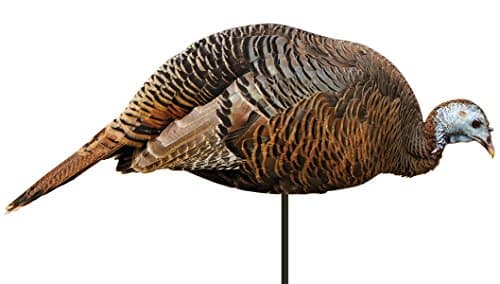
Best budget, ultralight hen decoy
Montana Decoy Dinner Belle Hen Decoy
Hen decoy7.5/10The ultralight answer at 8 oz including the stake, folded to 9 by 6 in. It is a photo-fabric 2D decoy, so it is less convincing from the side, and it is the decoy most likely to actually be in your vest.
$39.57Amazon#ad · Price as of November 3, 2026 · Disclosure for the link to Montana Decoy Dinner Belle Hen Decoy
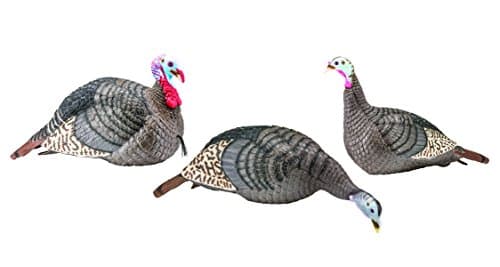
Best simple foldable jake-and-hen pair
Hunter's Specialties H.S. Strut Strut-Lite Jake & Hen Combo
Decoy combo6.7/10The second-season step: a foldable jake and hen pair for the breeding-pair setup. Buy this after you have watched birds respond to a lone hen, not instead of one.
$119.97Amazon#ad · Price as of November 3, 2026 · Disclosure for the link to Hunter's Specialties H.S. Strut Strut-Lite Jake & Hen Combo
So should you buy one?
Buy one hen decoy if you hunt open ground, hunt from a blind, shoot a small gauge or a bow, or simply want the bird to stop somewhere you chose. That is most first-season hunters, and one hen plus a stake is among the cheapest meaningful upgrades in turkey hunting.
Skip it if you hunt thick timber, if you hunt by moving and striking birds, or if you hunt crowded public ground where a visible decoy makes you uncomfortable. None of those are failures of the decoy; they are situations where your setup and your calling do the job instead.
And if you do buy one, learn to use it before you judge it. A decoy staked in the wrong place — too far out, facing away, where the bird has to cross open ground to reach it — is worse than no decoy, and that is a placement problem rather than a product problem. Fifteen minutes with how to set up turkey decoys and turkey decoy setups by season is the difference.
How we picked this
Scored on the specs that decide your season
Every pick is read off the maker's own specs, materials and instructions, then scored on a public rubric built around a first-season hunter: the sounds a call is made to produce and how it holds up in rain, a choke's load ratings and thread chart, the weights, pockets and seat heights you carry all morning. Each figure links straight to the page it came from, so you can check any pick in one click.
Scores come from that documented research with fixed bands, and prices come live from Amazon with the date they were checked. Commissions never set a score or decide a pick. The rubric and its bands are published.
Corrections & updates
- First published. Decoy placement, shot geometry, breeding-cycle timing and public-land safety from the NWTF and Maryland DNR.
Questions
Frequently asked
Do turkey decoys really work?
Yes, in the last 40 yards. A decoy does not bring a gobbler from the next ridge — calling does that — but it gives him something to walk to and explains why the hen he heard has not come to him. It also lets you set where the shot will happen, which is the benefit most beginners underrate.
Do you need a decoy to turkey hunt?
No. Plenty of hunters kill birds every spring with a call and a good setup, especially in timber where a decoy cannot be seen. Decoys matter most in open country, from a blind, and when you need a bird to stop at a known distance.
Can a turkey decoy scare a gobbler away?
A male decoy can. A jake or strutter is a challenge, and a mature tom may come to fight, leave, or go quiet. A single hen in a relaxed posture is the low-risk option, which is why it is the right first decoy.
Are turkey decoys safe on public land?
Only with care. The NWTF warns that exposed parts of a decoy can look like the real thing and provoke an accidental shooting, and says never to walk with parts of a decoy or a harvested bird showing. Carry decoys covered, set them where you can see anyone approaching, and hunt without one if the ground is crowded.
How far should a turkey decoy be from you?
Close enough that a bird working the decoy is well inside your patterned range — commonly 10 to 20 yards. The NWTF describes setting an upright hen facing a pop-up blind no more than 10 yards away. Do not stake one at the far edge of your pattern.
Do turkey decoys work in the fall?
Less, and differently. Fall flocks group by sex — hens with hens, males with males — so breeding-pair setups are beside the point. Fall hunting runs on scattering a flock and calling it back together.
Do cheap turkey decoys work?
At turkey-hunting distances, posture and stillness matter more than paint detail, so an inexpensive decoy in a relaxed posture does most of the job. The real trade with budget decoys is durability and how they behave in wind, not whether a gobbler believes them.
Keep reading
Related on Strut & Slate
- How to set up turkey decoysPlacement, distance and facing, step by step.
- Jake vs hen decoyWhich decoy for which situation, and the risk a jake carries.
- Best hen decoysSix hens ranked, with the four postures explained.
- Do you need a blind for turkey hunting?The same honest treatment for the other big purchase.
Receipts
Sources
- NWTF — How Turkey Decoys Can Affect the Shot (read 2026-09-22)
- NWTF — 10 Commandments Of Public Land Turkey Hunting (read 2026-09-22)
- NWTF — Wild Turkey Breeding Cycle (read 2026-09-22)
- NWTF — Fall Flock Dynamics (read 2026-09-22)
- Maryland DNR — Turkey Hunting Safety Tips (read 2026-09-22)
- Hunter-ed.com (Pennsylvania Hunter Safety Course) — Where to Aim When Turkey Hunting (read 2026-09-22)
- Avian-X — LCD Lookout Hen product page (read 2026-09-22)
- Montana Decoy — Dinner Belle Hen Decoy product page (read 2026-09-22)
- Sportsman's Warehouse (dealer) — Hunter's Specialties Strut Lite Jake & Hen Combo Turkey Decoys listing (read 2026-09-22)
Every spec on this page comes from the maker's own product pages and manuals (or a named dealer's copy where the maker's site blocked us), with sound and performance claims attributed to the maker and any third-party observation attributed to whoever made it. Prices come live from Amazon with the date they were checked. Where a maker leaves a figure unpublished, the page says so and that spec earns the lowest band. Read the full method.